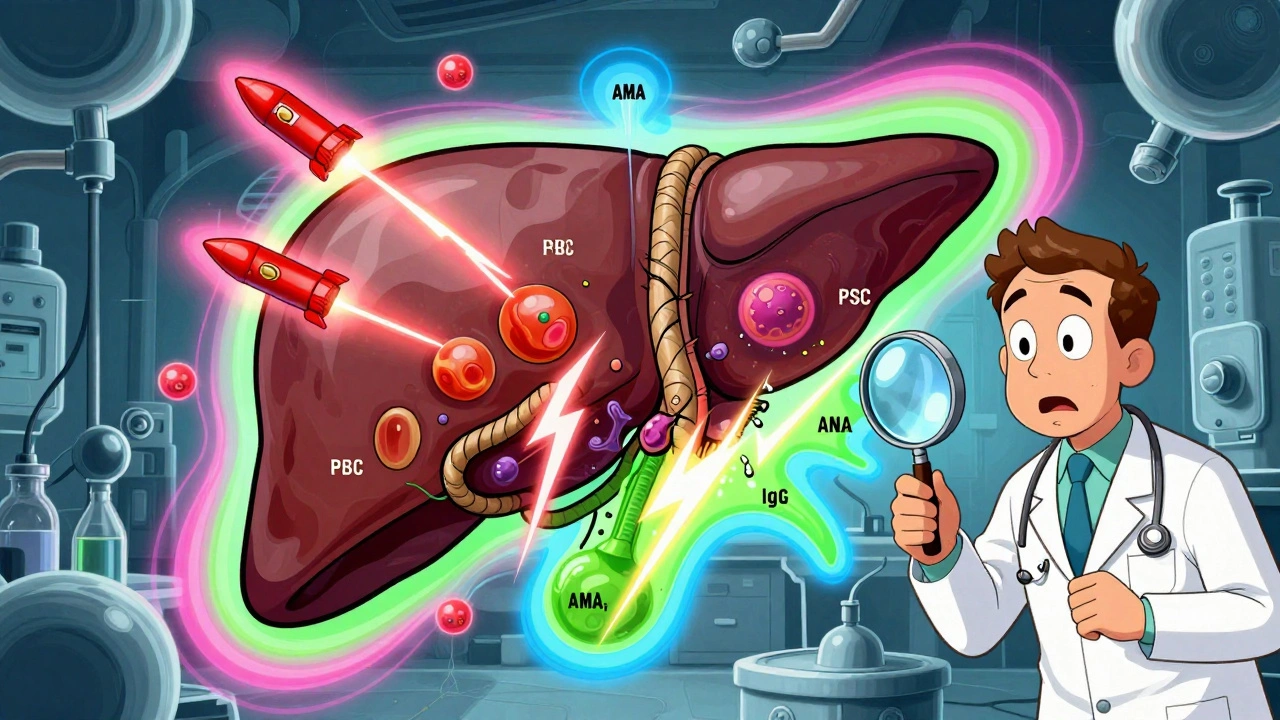
PBC: Understanding Primary Biliary Cholangitis and Its Treatment Options
When your body’s immune system turns against your own bile ducts, you’re dealing with primary biliary cholangitis, a chronic autoimmune liver disease that destroys the small bile ducts inside the liver. Also known as primary biliary cirrhosis, it’s not caused by alcohol or viruses—it’s your own immune cells slowly attacking the tubes that carry bile out of your liver. This damage leads to bile buildup, which scars the liver over time and can lead to cirrhosis if left unchecked.
PBC mostly affects women over 40, and it often shows up quietly—fatigue, itchy skin, or dry eyes long before jaundice or pain appear. Blood tests usually catch it early by spotting elevated liver enzymes and the presence of AMA antibodies, which are found in over 90% of PBC patients. Once diagnosed, the go-to treatment is ursodiol, a bile acid that helps move bile out of the liver and reduces liver damage. Many patients respond well to it, especially when started early. But for those who don’t, newer drugs like obeticholic acid, a farnesoid X receptor agonist that reduces bile acid production and inflammation, are now used alongside or after ursodiol.
PBC isn’t just about liver function—it affects your whole life. Bone density drops, cholesterol rises, and vitamin deficiencies (especially A, D, E, and K) become common because bile can’t do its job of helping absorb fats and fat-soluble nutrients. That’s why managing PBC means more than just taking pills: it’s about regular monitoring, dietary adjustments, and knowing when to ask for help with symptoms like intense itching or unexplained fatigue. You’re not alone in this—thousands live full lives with PBC, especially when they stay on top of their care plan.
The posts below dive into the real-world details: how medications like ursodiol actually work in your body, what side effects to watch for, why some patients need to switch treatments, and how liver health connects to everything from skin issues to medication safety. You’ll also find guides on tracking symptoms, understanding blood test results, and avoiding drug interactions that could make things worse. Whether you’re newly diagnosed or have been living with PBC for years, these resources are here to help you take control—without the jargon or fluff.
Autoimmune Overlap: Understanding PBC, PSC, and AIH Combined Features
Dec, 9 2025
Autoimmune overlap syndromes like AIH-PBC occur when the immune system attacks the liver in multiple ways at once. Learn how PBC, PSC, and AIH combine, why diagnosis is tricky, and what treatments actually work.