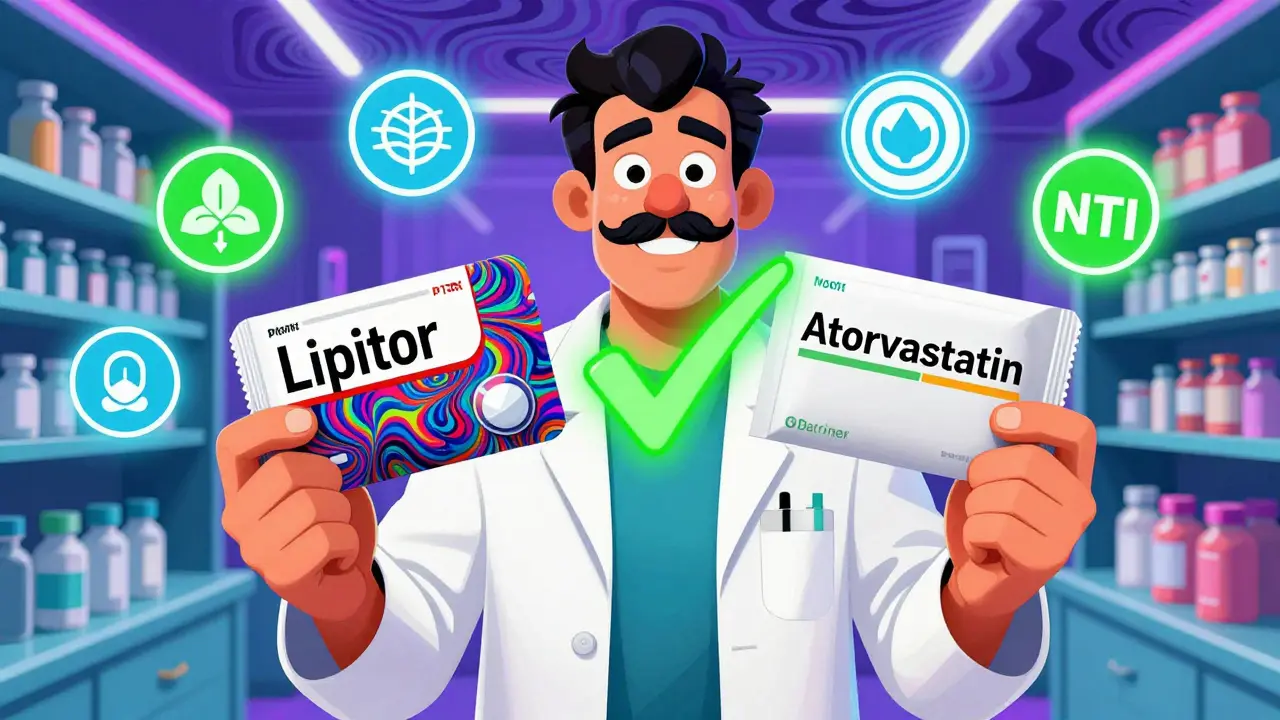
When a patient walks into the pharmacy with a prescription for a brand-name drug, the pharmacist’s first thought isn’t always about cost-it’s about safety. And that’s where authorized generics come in. They’re not just cheaper versions of brand-name drugs. They’re the exact same pills, made by the same company, with the same active and inactive ingredients. But most patients don’t know that. And many pharmacists don’t use them as often as they should.
What Exactly Is an Authorized Generic?
An authorized generic is the brand-name drug, but without the brand name on the label. It’s manufactured by the original company-like Pfizer or Merck-or under their direct license-and sold under a different name or packaging. The FDA defines it as a drug approved under the same New Drug Application (NDA) as the brand, just repackaged without the trademark.
That means if you’re taking Lipitor (atorvastatin), the authorized generic is chemically identical. Same active ingredient. Same fillers. Same coating. Same everything. The only difference? The label says "Atorvastatin Calcium Tablets" instead of "Lipitor."
Regular generics? They’re different. They meet FDA bioequivalence standards, meaning they deliver the same amount of active ingredient into your bloodstream. But they can-and often do-have different inactive ingredients. That’s where problems start.
When Pharmacists Should Always Recommend Authorized Generics
Not every patient needs an authorized generic. But for some, it’s the only safe option. Here are the three key situations where you should make the switch without hesitation.
1. Patients With Allergies or Dietary Restrictions
Let’s say a patient has celiac disease. They’ve been on a brand-name medication for years, and it’s worked fine. But when the pharmacy switches them to a regular generic, they start getting stomach cramps and fatigue. Why? Because the generic uses wheat starch as a filler. The brand didn’t. The authorized generic? Same as the brand. No wheat.
Same goes for patients avoiding lactose, gelatin, or artificial dyes. Regular generics often contain these. Authorized generics? They match the brand’s exact formulation. If the brand is safe for a vegan, gluten-free, or dairy-free diet, the authorized generic is too.
2. Narrow Therapeutic Index (NTI) Drugs
Some drugs have a razor-thin margin between helping and harming. Warfarin. Levothyroxine. Phenytoin. Even a 5% change in blood levels can cause a clot, a seizure, or a thyroid crisis.
Studies show that switching NTI drugs from brand to regular generic leads to therapeutic problems in 3-5% of patients. That’s not rare. That’s one in every 20-30 people. And in many cases, switching back to the authorized generic fixes the issue-because it’s the same drug they were on before.
Pharmacists who manage anticoagulation clinics or endocrine services know this. They don’t just accept the first generic they get. They ask: "Is there an authorized version?" If yes, they recommend it.
3. Modified-Release Formulations
Think extended-release pills, delayed-release capsules, or patches. These aren’t just about dosage-they’re about timing. How the drug is released over hours matters.
Regular generics for these drugs are tested for bioequivalence in a lab. But real-world performance? Not always the same. Some patients report feeling the effects too quickly or too slowly after switching. Authorized generics? They use the same manufacturing process, same coating, same release mechanism. No guesswork.
How to Spot an Authorized Generic
It’s not always obvious. The pill might look different. Maybe it’s blue instead of white. Or oval instead of round. That doesn’t mean it’s not the same drug.
To confirm, pharmacists need to check two things:
- The FDA’s quarterly list of authorized generics (updated every three months). As of September 2023, there were 257 authorized generics on the list-about 5% of all brand-name drugs with generic alternatives.
- The National Drug Code (NDC). If the labeler code matches the brand manufacturer (like Pfizer or Merck) or an authorized distributor like Prasco or Greenstone, it’s an authorized generic. If it’s a traditional generic company like Teva or Mylan, it’s not.
Don’t rely on the Orange Book. Authorized generics don’t appear there. They’re not listed as separate entries because they’re considered identical to the brand. That’s the whole point.
Cost vs. Coverage: The Hidden Trap
Authorized generics usually cost 20-80% less than the brand. That’s huge. But here’s the catch: insurance plans often treat them like brand-name drugs.
According to a 2022 analysis, 63% of pharmacy benefit managers (PBMs) put authorized generics in the brand-tier formulary. That means the patient pays more out-of-pocket than they would for a regular generic-even though the medication inside is identical.
So before you recommend it, check the patient’s plan. Call the pharmacy benefits line. Ask: "Is the authorized generic covered under generic or brand tier?" If it’s brand-tier, you might be better off sticking with the regular generic-unless the patient has an allergy or NTI issue.
But if the patient is paying cash? Authorized generics are often the cheapest option. GoodRx data shows they’re cheaper than both the brand and many regular generics.
What Patients Need to Know
Patients get confused when their pill changes color or shape. A 2022 study found that 27% of patients stopped taking their medication after an unexpected appearance change-because they thought it wasn’t the same drug.
That’s why counseling isn’t optional. You need to say this clearly:
- "This is the same medicine as your old pill. Same active ingredient. Same fillers. Same everything."
- "The only difference is the label. It’s cheaper because it doesn’t have the brand name."
- "If you had no problems with your brand-name version, you won’t have problems with this one."
For patients with chronic conditions-diabetes, epilepsy, heart disease-this conversation can mean the difference between adherence and hospitalization.
Legal and Documentation Requirements
Federal law allows pharmacists to substitute a brand-name drug with an authorized generic unless the prescriber wrote "Do Not Substitute." But state laws vary.
Forty-two states allow substitution without prescriber approval. Eighteen require notification. Massachusetts, for example, explicitly permits it in its 2022 circular letter. Always check your state’s pharmacy board rules.
When you make the switch, document it. Use the correct modifier code-usually "DA" for drug substitution-in your billing system. Keep a record showing the authorized generic matches the brand in formulation. That’s your protection if there’s ever a question.
Why Authorized Generics Are Becoming More Important
The number of authorized generics has grown 18% per year since 2010. More manufacturers are offering them. More patients are asking for them. GoodRx reports a 47% jump in consumer searches for "authorized generics" between 2021 and 2022.
And it’s not just about price. It’s about precision medicine. As we move toward personalized treatment-especially for patients with allergies, sensitivities, or complex regimens-having a substitution that’s truly identical matters more than ever.
Professional organizations like the American Pharmacists Association are updating their guidelines to include specific recommendations for authorized generics. Expect formal guidance in 2024.
Limitations to Keep in Mind
Not every brand has an authorized generic. Only about 5% do. And while they’re usually identical, rare cases exist where the manufacturer made minor changes-like switching a filler-when launching the authorized version. The FDA usually discloses this, so always double-check the label and the official list.
Also, distribution can be spotty. Some authorized generics are only available through certain wholesalers. Prasco’s products, for example, are often carried by AmerisourceBergen and Cardinal Health-but not McKesson. If you can’t get it in stock, you can’t recommend it.
And while authorized generics don’t need separate bioequivalence testing (because they’re identical), that also means there’s no independent verification of performance. You’re trusting the brand manufacturer’s original data. Which is usually fine-but it’s something to be aware of.
Final Thought: It’s Not Just About Saving Money
Pharmacists don’t just fill prescriptions. We protect patients. Sometimes that means choosing the cheapest option. Sometimes it means choosing the safest one.
Authorized generics aren’t a trick. They’re a tool. And when used correctly-for patients with allergies, NTI drugs, or complex formulations-they’re one of the most powerful tools we have to improve outcomes without increasing cost.
Next time you see a brand-name prescription, ask: "Is there an authorized generic?" If yes, and the patient fits one of the three scenarios above-recommend it. Explain it. Document it. That’s not just good practice. That’s patient care.
Are authorized generics the same as brand-name drugs?
Yes. Authorized generics are made by the same company that makes the brand-name drug, using the exact same active and inactive ingredients. The only difference is the label and packaging-they’re sold without the brand name. This means they’re chemically identical, not just similar.
Why do authorized generics cost less than brand-name drugs?
They cost less because they don’t include the marketing, advertising, or brand-name licensing fees. The manufacturer saves money by skipping the brand packaging and promotion, and those savings are passed on to the pharmacy and patient-without changing the drug itself.
Can I substitute an authorized generic without the prescriber’s permission?
In most cases, yes. Federal law allows substitution unless the prescriber writes "Do Not Substitute." But state laws vary. Forty-two states permit it without notification; 18 require the prescriber to be informed. Always check your state’s pharmacy board rules before making the switch.
Why might my insurance charge me more for an authorized generic than a regular generic?
Many pharmacy benefit managers (PBMs) classify authorized generics under the brand-name tier instead of the generic tier. Even though the drug is identical, the PBM treats it like the brand for billing purposes. This can result in higher out-of-pocket costs for patients. Always check your plan’s formulary before recommending one.
How do I know if a generic is authorized?
Check the FDA’s quarterly list of authorized generics on their website. You can also look at the National Drug Code (NDC). If the labeler code matches the original brand manufacturer (like Pfizer or Merck) or an authorized distributor like Prasco or Greenstone, it’s an authorized generic. If it’s a traditional generic company like Teva or Mylan, it’s not.
Doreen Pachificus
January 5, 2026 AT 06:39So if the pill looks different but has the same ingredients, why do people freak out so much? I’ve switched to generics before and never noticed a thing. Maybe we need better patient education, not just pharmacist recommendations.
Charlotte N
January 7, 2026 AT 03:41i’ve seen patients cry because their pill changed color… like it was a betrayal. and then they stop taking it. and then they end up in the er. it’s not just about chemistry-it’s about trust. the brand name is a psychological crutch. authorized generics fix the chemistry but not the fear. we need to talk more. like, actually talk. not just hand them a bottle and say ‘it’s the same.’
Vicki Yuan
January 7, 2026 AT 20:00This is one of the most important discussions in pharmacy today. Authorized generics are the hidden gem of cost-effective, safe substitution. For patients on levothyroxine or warfarin, switching to a regular generic isn't just risky-it's dangerous. The bioequivalence standards are too broad for narrow therapeutic index drugs. Pharmacists need to be trained to ask, 'Is there an authorized version?' before dispensing. And insurance companies need to stop treating them like brand-name drugs. This isn't about profit-it's about patient safety.
Ethan Purser
January 7, 2026 AT 20:57Let’s be real-this whole thing is just corporate theater. The brand companies create authorized generics to keep their monopoly alive. They let you pay less, but only if you accept their version. Meanwhile, real generics get stuck in the 'cheap but sketchy' category. It’s a scam dressed up as patient care. They don’t care about your allergies-they care about keeping you hooked on their brand name. The FDA? They’re asleep at the wheel.
Chris Cantey
January 9, 2026 AT 03:11It’s funny how we treat drugs like they’re sacred objects. You change the label, people think it’s a different god. The pill doesn’t know what’s printed on it. But we’ve turned medicine into religion. Brand = holy. Generic = heresy. Authorized generic = heresy with a discount. We need to stop anthropomorphizing tablets and start thinking like scientists. The chemistry doesn’t lie. The label does.
Uzoamaka Nwankpa
January 9, 2026 AT 17:43My aunt in Lagos was switched to a generic for her blood pressure meds and ended up in the hospital. They said it was 'bioequivalent.' But her body knew the difference. She said the pill tasted wrong. No one listened. I’m not saying all generics are bad. But when your life depends on consistency, you don’t gamble with fillers. Authorized generics are the only way to be sure. Why don’t we push for them everywhere?
Oluwapelumi Yakubu
January 11, 2026 AT 12:19Y’all are overcomplicating this. It’s simple: if the same company makes it, same ingredients, same factory, same everything-then it’s the same drug. The label is just a sticker. You wouldn’t refuse to eat a McDonald’s burger because it came in a different box, right? Same logic. The real issue? Pharma’s marketing machine has brainwashed us into thinking branding = quality. It’s not. It’s just fancy packaging. Let’s stop letting corporations dictate our health choices.
Abhishek Mondal
January 13, 2026 AT 03:32Actually, the entire premise is flawed. The FDA’s bioequivalence standard allows for 80–125% variability in AUC and Cmax-this means a generic can be 25% weaker or 25% stronger than the brand. That’s not 'equivalent'-that’s statistically chaotic. Authorized generics circumvent this by being identical, but the system still treats them as 'substitutes' rather than 'identicals.' This isn’t patient care-it’s regulatory arbitrage. And don’t even get me started on the NDC codes being manipulated by PBMs to force brand-tier pricing. It’s a rigged game.
Terri Gladden
January 13, 2026 AT 14:15OMG I just realized my dad’s cholesterol med changed color last month and he stopped taking it because he thought it was fake?? I’ve been so busy with work I didn’t even notice… like why didn’t the pharmacist call?? This is terrifying. I’m calling my pharmacy right now. Also, I think my insurance is scamming me. I paid $45 for what I thought was a generic but it was an authorized one?? This is a nightmare. I need a flowchart.
Catherine HARDY
January 14, 2026 AT 15:17They’re hiding something. Why would a company make an identical drug and sell it under a different name unless they’re trying to control the market? Who benefits? Big Pharma. Who gets hurt? Patients who can’t afford the brand but get charged brand prices anyway. And the FDA? They’re in bed with them. You think they don’t know this is a loophole? They let it happen. It’s not about safety-it’s about profit. And they’re using your allergies and your fear to justify it. Wake up.