Medication Side Effect Timing Checker
Check if your symptoms match typical side effect timing
Enter the dates you started your medication and noticed symptoms. Select your drug class to see if your timing aligns with known patterns.
Enter information above to see if your symptom timing matches known patterns.
Ever started a new medication and wondered, "Is this side effect from the drug or just bad luck?" You’re not alone. Many people panic when they feel weird after taking a pill-headache, dizziness, muscle pain, swelling-and assume the medicine is to blame. But here’s the truth: not all side effects show up the same way, or at the same time. Some hit within hours. Others creep in after weeks. A few don’t show up until months later. Knowing when to expect trouble can save you from unnecessary panic, misdiagnosis, or even stopping a drug you actually need.
Why Timing Matters More Than You Think
It’s easy to think of side effects like a light switch-flip it on, and boom, you feel it. But in reality, your body’s reaction to a drug follows a pattern. That pattern is called time-to-onset (TTO). Researchers have spent decades mapping these patterns across hundreds of drugs. And what they found is surprising: different classes of drugs don’t just have different side effects-they have different timelines for those side effects to appear. This isn’t just academic. If your doctor knows that a certain side effect usually shows up after 2 days, and you report symptoms on day 3, they can connect the dots fast. But if you get a reaction on day 45, and your doctor only thinks about side effects in the first week? You might be misdiagnosed. That’s why understanding TTO isn’t just helpful-it’s critical for safe treatment.Fast-Acting Side Effects: Hours to Days
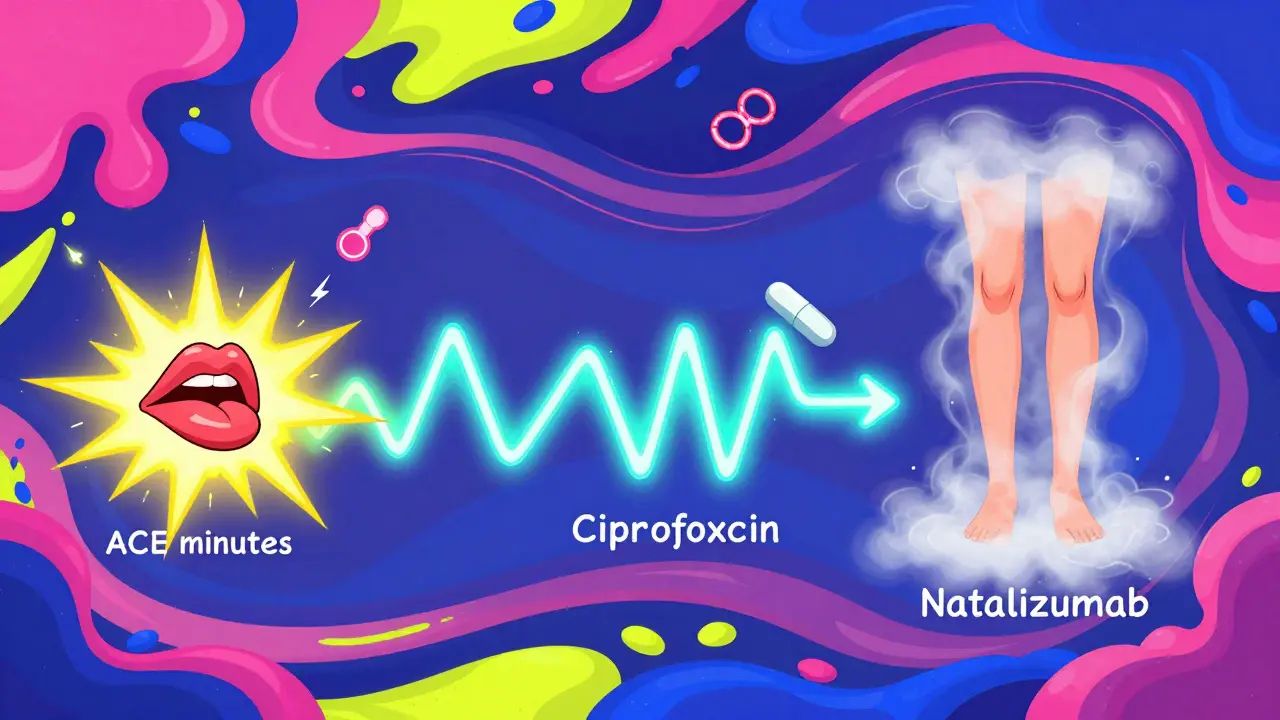
Some drugs hit you fast. Really fast. If you’ve ever had swelling in your lips or throat after taking a new pill, you’ve experienced one of these. Angioedema from ACE inhibitors (like lisinopril or enalapril) is a classic example. Histamine-driven reactions can strike within minutes to hours. But here’s the twist: the kind caused by bradykinin buildup? That one can take weeks to months to show up. A patient might take lisinopril for 4 months, then suddenly develop severe facial swelling. If their doctor doesn’t know about this delayed pattern, they’ll blame allergies, stress, or even a virus. But research shows this delayed onset is well-documented-up to 6 months after starting the drug. Antibiotics like ciprofloxacin are another fast hitter. The median time for peripheral nerve pain (tingling, burning, numbness) to appear? Just 2 days. And women tend to feel it faster than men-by about 2 full days. That’s not a fluke. A 2025 study tracked over 12,000 cases and found this pattern held across age groups and health conditions. If you’re on cipro and start feeling odd sensations in your hands or feet after day 1 or 2, it’s worth mentioning to your doctor. Acetaminophen (Tylenol) overdose is another fast one. Liver damage can begin within 24 hours. That’s why emergency rooms check your drug history so quickly after a suspected overdose. It’s not just about how much you took-it’s about when the damage starts.Weeks to a Month: The Silent Onset Zone
Many side effects don’t scream for attention-they whisper. And by the time you notice, they’ve already built up. Statins (like atorvastatin or simvastatin) are a big one. Most people think muscle pain starts right away. But data shows it usually begins between 1 and 4 weeks after starting. A major 2021 study found that even people on placebo reported muscle pain during this window-suggesting that a lot of what we call "statin intolerance" might be psychological or unrelated to the drug. Still, if you’re feeling unexplained soreness after 2 weeks on a statin, don’t ignore it. Get it checked. Pregabalin and gabapentin (used for nerve pain and seizures) have median onset times of 19 and 31 days, respectively. Patients often report dizziness, fatigue, or brain fog within the first week. But that’s not the full picture. The median means half the people feel it after that point. So if you’ve been on pregabalin for 3 weeks and suddenly feel like you’re walking through syrup, it’s likely the drug-not your job stress. Drug-induced hepatitis (liver damage from meds) usually shows up around 42 days. That’s long enough that many patients think they’ve "gotten over" the new drug. But liver enzymes can rise silently. That’s why doctors often order blood tests at 4 to 6 weeks when starting new medications like antibiotics, antifungals, or certain antidepressants.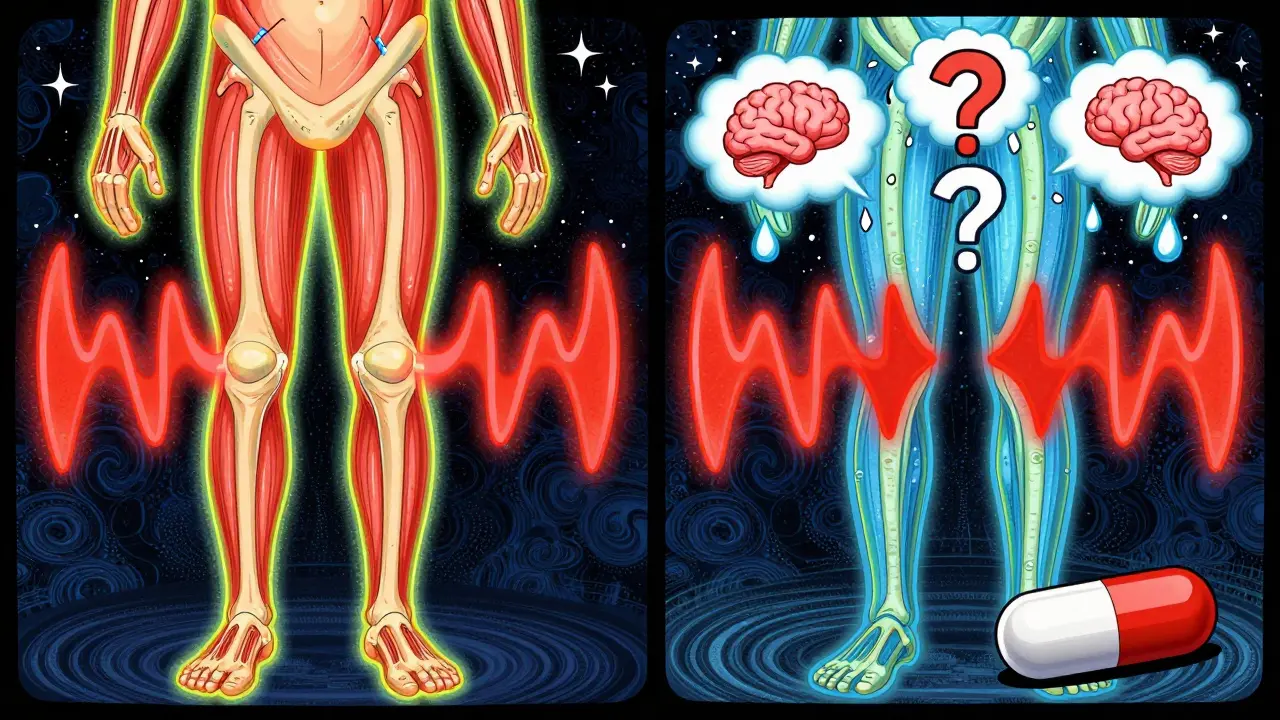
Months Later: The Hidden Delayed Reactions
Some side effects are so delayed, they’re almost invisible. And that’s where things get dangerous. Natalizumab (used for multiple sclerosis) can cause peripheral neuropathy. The median time? 141.5 days-almost 5 months. That’s longer than most people stick with a new medication before deciding if it’s working. If you start feeling numbness in your legs after 4 months, your doctor might not even think of the drug. But research confirms this pattern. The same goes for some immunosuppressants and biologics used for autoimmune diseases. Interferon beta-1a (for MS) has the longest median TTO ever recorded in large studies: 526.5 days-that’s over a year and a half. Imagine taking a drug for 18 months, feeling fine, then suddenly developing nerve pain. You’d never connect it to the medication. But the data says: it’s still possible. This is why some patients get misdiagnosed for years. One Drugs.com review said: "I had angioedema for 4 months. My doctor said it was allergies. I found the research myself." That’s not rare. It’s common.Why Some Drugs Take Longer Than Others
You might wonder: why does one drug cause side effects in days and another takes months? It comes down to how the drug works. Direct chemical reactions (like histamine release from ACE inhibitors) happen fast. Your body reacts immediately to the substance. Immune system reactions take longer. Your body has to recognize the drug as foreign, build antibodies, and then attack. That’s why drugs like natalizumab or interferon cause delayed side effects. Accumulation over time matters too. Some drugs build up in your tissues slowly. Others change your metabolism gradually. Gabapentin, for example, doesn’t just hit your nerves-it changes how your brain processes pain signals over weeks. That’s why side effects creep in. And then there’s the nocebo effect. In one study, 55% of people who stopped statins (even if they were on placebo) felt better within 3 days. Their brains had convinced them the drug was the problem. Timing alone can’t always tell you what’s real.
What Doctors Are Doing About It
Hospitals and drug companies aren’t ignoring this. Since 2020, the European Medicines Agency has required all new drug applications to include Weibull distribution analysis-a statistical model that predicts how side effects unfold over time. It’s not just a chart. It’s a tool that helps them warn doctors and patients. Electronic health records like Epic now have built-in TTO alerts. If you start a new drug and develop symptoms at the exact time a known side effect usually appears, the system flags it. Mayo Clinic reported a 22% increase in detecting real drug reactions after adding these alerts in 2022. The FDA’s Sentinel Initiative is analyzing over 47 million patient records to build national TTO baselines. They’re mapping out which drugs cause what, and when. That data will soon be used to update drug labels and patient guides.What You Can Do
You don’t need to be a scientist to use this knowledge. Here’s how to protect yourself:- Ask your doctor: "What side effects should I watch for, and when do they usually start?" Don’t just ask "what are the side effects?" Ask about timing.
- Keep a simple log: write down the date you started the drug, and note any new symptoms. Even if they seem minor.
- If you feel something strange after 2-4 days on an antibiotic, mention it. Don’t wait.
- If you’ve been on a statin for 3 weeks and feel tired or sore, talk to your doctor. It might not be the drug-but it might be.
- If you develop swelling, numbness, or liver symptoms months after starting a new medication, don’t dismiss it. Bring up the drug-even if your doctor says "it’s been too long."
Final Thought: Timing Is Everything
Side effects aren’t random. They follow a rhythm. And when you know the rhythm, you can tell the difference between a real problem and a coincidence. You can avoid stopping a drug that’s helping you. You can catch a dangerous reaction before it’s too late. You can speak up with confidence-not fear. The science is clear: if you’re on medication, knowing when side effects typically show up is just as important as knowing what they are. It’s not magic. It’s medicine. And it’s working.How soon after starting a drug do side effects usually appear?
It depends on the drug class. Some side effects start within hours-like angioedema from ACE inhibitors. Others appear in days, like nerve pain from ciprofloxacin (median: 2 days). Many take weeks: statin muscle pain often starts between 1-4 weeks, and pregabalin side effects around 19 days. Some, like nerve damage from interferon, can take over a year. There’s no single answer-timing varies by drug mechanism.
Can a side effect appear months after starting a medication?
Yes, and this is often missed. Drugs like natalizumab (for MS) can cause nerve damage after 141 days on average. Interferon beta-1a has been linked to side effects appearing after more than 500 days. ACE inhibitors can cause delayed angioedema up to 6 months after starting. These aren’t rare outliers-they’re documented patterns. If you develop a new symptom months into treatment, don’t rule out the medication.
Are side effects from statins really caused by the drug?
Not always. A major 2021 study found that people on placebo (sugar pills) reported muscle pain just as often as those on statins. In fact, 55% of people who thought they were statin-intolerant felt better within 3 days of stopping-whether they were on the real drug or not. This suggests a strong nocebo effect. But that doesn’t mean all muscle pain is psychological. If symptoms start after 2-4 weeks and are severe, it’s still worth checking with your doctor.
Why do women experience side effects faster than men with some drugs?
Research shows women often metabolize drugs differently due to body composition, hormone levels, and enzyme activity. For example, ciprofloxacin-induced nerve pain appears in women at a median of 2 days, but in men at 4 days. This isn’t just perception-it’s measurable. That’s why newer studies now analyze side effects by sex. If you’re a woman and feel unusual symptoms quickly after starting a new drug, it’s more likely to be related.
Can electronic health records help catch side effects early?
Yes. Systems like Epic now use time-to-onset algorithms to flag potential drug reactions. For example, if you start a new antibiotic and report tingling on day 3, the system may alert your doctor because that matches the known pattern for ciprofloxacin. Mayo Clinic reported a 22% increase in detecting real adverse reactions after adding these tools in 2022. These aren’t perfect, but they’re becoming an important safety net.
What should I do if I think a medication is causing a side effect?
Don’t stop the drug without talking to your doctor. Instead, note the date you started the medication and when the symptom began. Write down what you’re feeling and how bad it is. Bring this to your doctor and ask: "Could this be a known side effect of this drug? When does it usually show up?" Your timeline might help them make the connection faster. If it’s serious-like swelling, chest pain, or jaundice-seek care immediately.
John O'Brien
January 27, 2026 AT 00:17Bro this is the most useful thing I’ve read all year. I took lisinopril for 6 months and woke up one day with my face looking like a balloon. Doctor thought it was allergies. Turned out it was the drug. This exact timeline is why I’m now paranoid about every new pill I take.
Paul Taylor
January 28, 2026 AT 10:53Man I’ve been on statins for three years and I thought my muscle pain was just from lifting weights but reading this I realized it started right at the 3 week mark every time I restarted after a break and yeah I’ve had that same fatigue with gabapentin too it creeps up on you like a ghost and you just think you’re tired from work or stress but no it’s the drug slowly taking over your nervous system and honestly I wish more doctors talked about this like it’s common sense but it’s not it’s science and we need to start treating it like that
Desaundrea Morton-Pusey
January 28, 2026 AT 14:17So basically Big Pharma is hiding side effects so we keep taking their pills? I knew it. They don’t want you to know it takes 18 months for interferon to mess you up so you stay on it until you’re a zombie. This is why I stopped trusting doctors.
Murphy Game
January 29, 2026 AT 14:48They’re using Weibull distributions to manipulate us. It’s not medicine-it’s predictive behavioral control. The FDA’s Sentinel Initiative? That’s just a surveillance tool to track how many people get damaged before they admit the drug is toxic. They’re not fixing the system. They’re optimizing it.
Kegan Powell
January 30, 2026 AT 15:57Yo this is life-changing 🙌 I used to panic every time I felt weird after a pill now I just check the timeline like a boss. Took cipro last month and when my toes tingled on day 2 I was like oh cool that’s normal not a ghost. My doctor was impressed I knew what to say. Knowledge is power and this post is the cheat code 🧠💊
Harry Henderson
February 1, 2026 AT 12:17STOP WASTING TIME. If you’re on a new drug and feel something weird after day 1 you don’t need a PhD to know it’s probably the pill. Stop Googling stress. Stop blaming your sleep. Take the damn log. Talk to your doctor. This isn’t rocket science it’s survival.
suhail ahmed
February 3, 2026 AT 04:34Bro in India we call this ‘dawa ka dard’-the medicine pain. My uncle took antifungal for a rash and got liver issues after 45 days. Doctor laughed said it’s just jaundice. We found out from a Reddit thread like this. This data is gold. Every pharmacy should print a timeline card with every prescription. Simple. Life-saving.
Candice Hartley
February 3, 2026 AT 13:06This is so helpful 😊 I just started pregabalin and my brain fog hit on day 20. I was about to quit but now I know it’s probably normal. I’m keeping a log. Thank you for writing this.
Andrew Clausen
February 3, 2026 AT 22:08There is no such thing as a 'median onset time' for side effects in a population of 12,000 without controlling for comorbidities, concomitant medications, genetic polymorphisms, and adherence rates. The entire premise is statistically naive. You're conflating correlation with causation. This article is dangerously oversimplified.
Anjula Jyala
February 5, 2026 AT 15:37Time-to-onset is meaningless without pharmacokinetic modeling and CYP450 genotyping. You’re giving laypeople false confidence. Interferon’s 526-day TTO? That’s a mean outlier. The mode is 14 days for neurotoxicity in homozygous CYP2D6 poor metabolizers. If you don’t test for metabolizer status you’re playing Russian roulette with your liver. This post is dangerously incomplete.
Kathy McDaniel
February 6, 2026 AT 08:06i just started lisinopril and my lip kinda swelled yesterday… i thought it was just dry weather 😅 but now im scared… gonna call my doc tomorrow