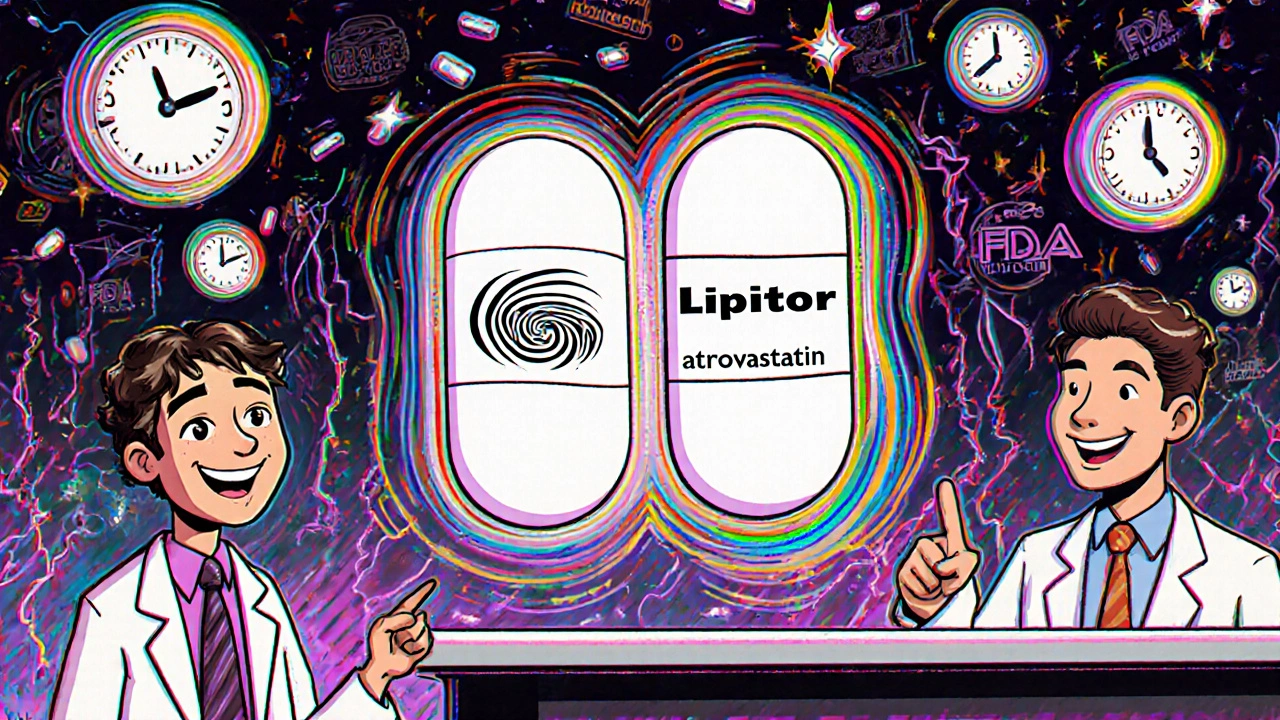
Ever opened your prescription bottle and seen a pill that looks exactly like your brand-name drug-but without the brand name on it? That’s not a mistake. It’s an authorized generic. And if you’ve ever paid full price for a brand-name medication, you should know how these work. They’re not just another generic. They’re the exact same drug, made by the same company, in the same factory. But they cost less. And understanding them could save you hundreds a year.
What Exactly Is an Authorized Generic?
An authorized generic is a brand-name drug sold without the brand name on the label. It’s not a copy. It’s the real thing-same active ingredient, same inactive ingredients, same pills, same factory, same quality control. The only difference? No logo. No fancy packaging. Just the medicine.
The U.S. Food and Drug Administration (FDA) says it plainly: an authorized generic is exactly the same as the brand-name drug, except it doesn’t carry the brand name. That means if your doctor prescribed Lipitor, and you get a white oval pill labeled "atorvastatin" instead, it’s not a different version. It’s the same pill your pharmacist pulled from the same batch as the branded version.
This isn’t some loophole. It’s built into the system. Brand-name manufacturers can produce and sell their own drugs as authorized generics under the same approval they already have-the New Drug Application (NDA). That means no extra testing. No waiting. Just a simple notification to the FDA.
How Is It Different From a Regular Generic?
This is where things get confusing. Most people think all generics are the same. They’re not.
Regular generics are made by other companies. They have to prove they work the same way as the brand-name drug through a process called bioequivalence testing. That’s the Abbreviated New Drug Application (ANDA). But here’s the catch: those companies can use different inactive ingredients. That means fillers, dyes, binders, and coatings can be different. For most people, that doesn’t matter. But for some-especially those with allergies or sensitivities-those differences can cause problems.
Authorized generics don’t have that issue. They use the exact same recipe as the brand. Same fillers. Same color. Same shape. Same imprint. The only thing changed is the label. If you’ve ever switched from a brand to a generic and felt like the medicine didn’t work the same way, it might have been because of those inactive ingredients. With an authorized generic, that’s not a risk.
And here’s another big difference: authorized generics aren’t listed in the FDA’s Orange Book. That’s the official list of approved generics. Regular generics are. Authorized generics? They’re not. That’s because they’re not approved as generics. They’re approved as the brand drug-with a different label.
Who Makes Authorized Generics?
There are two ways they get made.
First: the brand-name company makes them themselves. They run the same生产线, use the same machines, the same quality checks. Then they slap on a plain label and sell it under a different name. For example, Pfizer makes both the brand-name Lipitor and its authorized generic, atorvastatin.
Second: the brand-name company licenses the formula to another manufacturer. That company then makes the exact same drug under contract. For example, Prasco Laboratories makes the authorized generic of Colcrys (colchicine). But it’s still the same formula as the original.
Either way, it’s the same drug. No shortcuts. No compromises.
Why Do Companies Even Do This?
It sounds strange. Why would a company that spent billions developing a drug turn around and sell a cheaper version of it?
The answer is business strategy.
When a patent expires, other companies can make generics. That’s the law. But those generics can undercut the brand’s price by 80% or more. So the brand company says: instead of losing all that market share, let’s make our own generic. We’ll sell it for less than our brand, but more than the competition. That way, we keep customers. We keep revenue. And we still look like we’re helping people save money.
Studies show this isn’t random. Between 2010 and 2019, over 850 authorized generics launched in the U.S. And nearly three out of four of them came out after the first traditional generic hit the market. That’s not coincidence. That’s timing. They wait. They watch. Then they step in to capture the customers who might have switched.
Some experts call it a smart move. Others call it a tactic to delay real competition. Either way, it’s legal. And it’s happening all the time.
How Much Do Authorized Generics Cost?
They’re cheaper than the brand. But not always cheaper than other generics.
Typically, authorized generics cost 15% to 25% less than the brand-name version. That’s a big savings. But once several traditional generics enter the market, prices can drop even further-sometimes below the authorized generic.
For example, if Celebrex (celecoxib) costs $300 a month, the authorized generic might be $220. But after a few other generics launch, you could find it for $120. So timing matters. If you’re flexible, waiting a few months after patent expiry can get you the lowest price.
But if you need consistency-especially if you’ve had reactions to other generics-then the authorized generic might be your best bet, even if it’s not the cheapest.
How Do You Know If You’re Getting One?
Pharmacists usually don’t tell you. They just fill the prescription. But you can find out.
Check the label. If it says the generic name (like "atorvastatin") but the manufacturer is the same as the brand (like "Pfizer"), you’ve got an authorized generic.
Look at the pill. If it looks identical to the brand-name version-same color, same shape, same imprint-it’s likely an authorized generic. Traditional generics often change the appearance.
You can also check the FDA’s official List of Authorized Generic Drugs. It’s updated regularly. If your drug is on there, it’s authorized.
And if you’re unsure, just ask your pharmacist. Say: "Is this an authorized generic?" They’ll know.
Are Authorized Generics Safe?
Yes. Absolutely.
They’re made under the same strict standards as the brand-name drug. Same facility. Same inspectors. Same batch records. The FDA doesn’t treat them differently. They’re not "second-tier." They’re the same product.
Some patients worry that if the brand company makes it, it’s not really a generic. But that’s a misunderstanding. It’s still a generic in the sense that it’s sold without the brand name. And it’s still cheaper. The safety? Unchanged.
For people with allergies to dyes or fillers, authorized generics can be the safest option-because they match the brand’s exact formula.
What Are the Downsides?
There are a few.
First: they’re not always the cheapest. If you’re price-sensitive and not worried about inactive ingredients, a traditional generic might be cheaper.
Second: they’re not always available. Not every brand has an authorized generic. It’s up to the manufacturer to decide if they want to make one.
Third: they can be confusing. You might get one month’s supply with the brand label, then next month it’s a plain label. Your pill looks the same, but your receipt says something different. That can cause anxiety. Some patients think they got the wrong drug. Pharmacists have to explain it every time.
And fourth: because they’re not listed in the Orange Book, some insurance systems don’t automatically recognize them as generics. That means you might have to request them specifically. Or pay more than you should.
What Should You Do?
If you’re on a brand-name drug and it’s expensive:
- Ask your doctor if an authorized generic is available for your medication.
- Ask your pharmacist: "Is there an authorized generic for this?"
- Check the FDA’s list. It’s public. You can search it yourself.
- If you’ve had side effects with other generics, try the authorized version first.
- If you’re price-sensitive, compare prices: brand vs. authorized generic vs. traditional generic.
Don’t assume all generics are equal. Authorized generics are the closest thing to the brand-without the brand price tag.
Final Thought: It’s Not Magic. It’s Strategy.
Authorized generics aren’t a gift from Big Pharma. They’re a business move. But that doesn’t make them bad. If you can get the same medicine for less, that’s a win.
Just be aware: they’re not always the cheapest option. And they’re not always available. But when they are, they’re the safest, most reliable generic you can get.
Next time you get a prescription, look closer. That plain-labeled pill might be the best deal you didn’t know you were entitled to.
Are authorized generics as safe as brand-name drugs?
Yes. Authorized generics are made by the same manufacturer, in the same facility, using the exact same ingredients and quality controls as the brand-name drug. The FDA considers them identical in safety and effectiveness. The only difference is the label.
Why don’t authorized generics show up in the FDA’s Orange Book?
Because they’re not approved as generics. They’re approved under the original brand’s New Drug Application (NDA). The Orange Book only lists drugs approved through the Abbreviated New Drug Application (ANDA) process. Authorized generics bypass that step since they’re identical to the already-approved brand drug.
Can I ask my pharmacist to give me an authorized generic instead of a regular generic?
Yes. You can ask your pharmacist to dispense an authorized generic if it’s available. Just say: "Is there an authorized generic for this medication?" Some insurance plans may need to be notified, but pharmacists can usually switch it without a new prescription.
Do authorized generics cost less than brand-name drugs?
Yes, typically 15% to 25% less. But they’re often more expensive than traditional generics that enter the market after competition increases. The best price usually comes months after patent expiry, when multiple generics are available.
How do I know if my pill is an authorized generic?
Check the label for the generic name (like "metformin") and the manufacturer name. If the manufacturer is the same as the brand (like "GlaxoSmithKline" for metformin), it’s likely an authorized generic. You can also compare the pill’s appearance to the brand-same color, shape, and imprint usually means it’s authorized. The FDA also publishes a list of authorized generics online.
Why would a brand company make its own generic?
To keep market share after the patent expires. Instead of losing all customers to cheaper generics, the brand company offers its own version at a lower price. This lets them keep revenue, maintain relationships with pharmacies and insurers, and still offer patients a lower-cost option.
Clay Johnson
November 29, 2025 AT 10:17Authorized generics aren’t a loophole-they’re a reflection of how regulatory frameworks treat intellectual property versus physical product. The FDA’s stance is legally sound: if the molecule, manufacturing process, and quality controls are identical, the label is the only variable. That’s not deception. It’s taxonomy.
But the real question isn’t whether they’re safe. It’s whether the system incentivizes transparency. If manufacturers can quietly slip a generic version under their own brand’s shadow, who’s monitoring the perception gap between ‘same pill’ and ‘same value’?
Patients aren’t dumb. They notice when the bottle changes but the copay doesn’t. That erodes trust-not because the drug is different, but because the system feels engineered to confuse.
Jermaine Jordan
November 30, 2025 AT 07:02Let me tell you something that will change how you see your medicine forever: an authorized generic is the brand-name drug wearing a disguise. Same factory. Same chemists. Same quality control logs. The only thing stripped away is the marketing-no glossy ads, no celebrity endorsements, no fancy logo on the capsule.
This isn’t just savings. This is justice. For years, we’ve been told generics are ‘inferior.’ But here’s the truth: the most reliable version of your drug is often the one with no name on it. The brand made it. The FDA approved it. And now, you’re paying 20% less for the exact same thing.
Stop treating your pills like they’re luxury goods. They’re life-saving science. And science doesn’t need a brand.
Chetan Chauhan
November 30, 2025 AT 12:08wait so if the company makes the generic its self then its not really a generic? sounds like a scam to me. why cant they just lower the price of the brand? why all this label swapping? also i think the fda list is outdated i checked for my med and it wasnt there but my pill looks exact same as brand. maybe they dont report it? or maybe i got scammed? lol
Phil Thornton
November 30, 2025 AT 22:22Same pill. Different label. Same factory. Lower price. That’s it.
Stop overthinking it.
Pranab Daulagupu
December 2, 2025 AT 04:18Authorized generics represent a rare alignment of pharmaceutical efficiency and patient accessibility. The NDA-based model eliminates bioequivalence redundancy while preserving formulation integrity-critical for patients with hypersensitivities to excipients.
That said, the opacity in insurance coding and lack of pharmacist education create systemic friction. We need standardized labeling protocols and EHR integration to make this option truly accessible.
Barbara McClelland
December 3, 2025 AT 11:55This is such an important topic and I’m so glad someone broke it down clearly.
I’ve had friends switch from brand to generic and feel off-not because the medicine didn’t work, but because the fillers changed. One had a rash from a dye in a regular generic. Switched to the authorized version-gone in two days.
If you’re on a chronic med and have ever thought, ‘this doesn’t feel right,’ ask your pharmacist: ‘Is there an authorized generic?’ It’s not just about saving money. It’s about feeling like yourself again.
Alexander Levin
December 5, 2025 AT 07:34Big Pharma’s dirty little secret.
They make the drug. They sell it for $300. Then they make the exact same thing and sell it for $220. And they want you to think they’re being generous.
They’re not. They’re just keeping you hooked while pretending to help.
And don’t get me started on the FDA list. It’s probably rigged. 😏
Ady Young
December 6, 2025 AT 05:04I’ve been using the authorized generic for my blood pressure med for over a year. Same pill, half the cost. My insurance doesn’t even flag it as generic-it just processes it as a lower-tier brand.
My only complaint? My pharmacist never tells me unless I ask. I had to learn this the hard way after a refill came in a different bottle. Took me three calls to confirm it was legit.
Maybe pharmacies should be required to note it on the receipt? Just a thought.
Travis Freeman
December 7, 2025 AT 10:51Coming from India, I’ve seen how drug pricing works here-and this system is actually pretty fair. In the U.S., people assume ‘brand = better.’ But here, we know the manufacturer matters more than the label.
My uncle takes the authorized generic for metformin. Same tablet, same results, 70% cheaper. He says the only difference is he doesn’t have to explain to his friends why he’s taking ‘some weird pill.’
It’s not magic. It’s just common sense.
Daniel Rod
December 7, 2025 AT 12:01There’s a quiet dignity in the authorized generic.
No branding. No hype. Just medicine, unadorned.
It reminds me of how medicine used to be-before the marketing machines took over. The pill doesn’t care if it’s labeled Lipitor or atorvastatin. It works the same. The body doesn’t know the difference. Only the receipt does.
Maybe we’ve forgotten that drugs aren’t products. They’re healing tools.
And sometimes, the most honest version of a healing tool is the one without a logo.
Thank you for pointing this out. I’ve shared this with my elderly aunt. She’s been paying $280 a month for her cholesterol med. Now she knows she can get the same thing for $210.
That’s not just savings. That’s dignity.
gina rodriguez
December 8, 2025 AT 18:46I’m a pharmacy tech and I can confirm: if the manufacturer name matches the brand and the pill looks identical, it’s an authorized generic. We get asked about it all the time.
Pro tip: if your insurance denies it as a ‘generic,’ ask them to check the NDC code. Authorized generics have the same NDC as the brand, just with a different product identifier. It’s a system glitch, not a refusal.
Don’t give up. Ask again. And if they say no, ask to speak to the clinical pharmacist. They know the difference.
Justina Maynard
December 9, 2025 AT 21:45So let me get this straight: the same company that made you pay $400 for a pill for five years now gives you the same pill for $220 and expects a medal? And you’re calling this ‘fair’? This isn’t transparency. It’s psychological manipulation wrapped in a white capsule.
They didn’t lower the price. They just invented a new product category to keep you paying more than you should.
And don’t even get me started on how they bury the authorized generic on the FDA list so you have to dig for it like it’s a treasure.
They’re not helping you. They’re just keeping you in the game.
Also, I’m pretty sure the FDA’s list is outdated. My cousin’s pill had the same manufacturer as the brand but wasn’t listed. Coincidence? I think not.