
It’s easy to assume that if you feel sick after taking a pill, it’s just a side effect. But what if it’s something more serious? A drug allergy isn’t just nausea or a headache. It’s your immune system overreacting to a medicine, treating it like an invader. And while most bad reactions to drugs aren’t allergic, the ones that are can be life-threatening - especially if you don’t recognize the warning signs.
What Does a Drug Allergy Actually Look Like?
Drug allergies don’t always show up the same way. Some people get a rash. Others struggle to breathe. A few develop swelling so severe it blocks their airway. The key is knowing which symptoms mean trouble - and which ones can wait.
The most common sign? A skin reaction. That could mean hives - raised, red, itchy welts that come and go. Or a flat, red rash that spreads slowly over days. These often appear after you’ve taken the medicine for a few days. But here’s the catch: a rash doesn’t automatically mean allergy. Many drugs cause harmless rashes just by irritating the skin. So how do you tell the difference?
If the rash comes with other symptoms - like swelling of the lips, tongue, or throat; trouble breathing; vomiting; dizziness; or a rapid heartbeat - that’s a red flag. These aren’t side effects. They’re signs your body is having a full-blown allergic reaction.
Immediate vs. Delayed Reactions: Timing Matters
Not all drug allergies act the same way. Some hit fast. Others creep up slowly.
Immediate reactions happen within an hour - sometimes just minutes - after taking the drug. These are usually IgE-mediated, meaning your immune system releases histamine and other chemicals all at once. This is what causes anaphylaxis: a dangerous mix of hives, swelling, wheezing, low blood pressure, and even loss of consciousness. If you’ve ever seen someone go from fine to struggling to breathe in under five minutes, that’s what this looks like. Call 911 immediately.
Delayed reactions can take days or even weeks to show up. A common one is a fine, itchy rash that spreads across the torso and limbs. This often happens with antibiotics like penicillin or sulfa drugs. Another delayed reaction is serum sickness-like illness - fever, joint pain, swollen lymph nodes, and a rash that appears one to three weeks after starting the drug. Then there’s DRESS syndrome: a rare but severe reaction with rash, high white blood cell count, liver inflammation, and swollen glands. These reactions need medical attention, but they’re not usually emergencies unless breathing or organ function is affected.
Penicillin: The Most Misunderstood Allergy
Penicillin is the most commonly reported drug allergy in the U.S. But here’s the surprising truth: more than 90% of people who think they’re allergic to penicillin aren’t. They had a rash as a child, were told to avoid it, and never got tested.
That’s dangerous. Avoiding penicillin means doctors have to use broader-spectrum antibiotics - ones that are more expensive, less effective, and more likely to cause serious infections like C. diff. In fact, mislabeling penicillin allergy contributes to longer hospital stays and higher healthcare costs.
The good news? Penicillin allergy can be tested. An allergist will do a skin prick test using tiny amounts of penicillin. If that’s negative, they might give you a small oral dose under supervision. If you don’t react, you’re not allergic. And you can safely take penicillin again - which could save your life next time you have an infection.
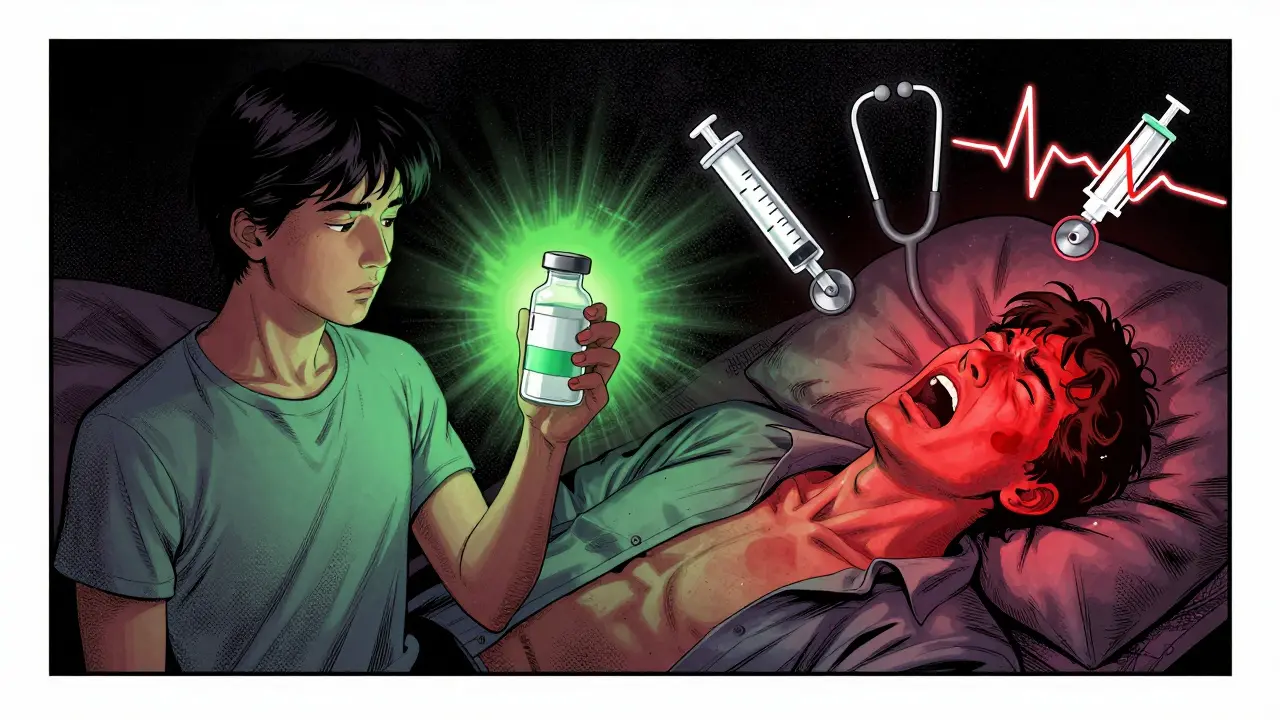
When to Call 911 - Not Your Doctor
Not every bad reaction needs an ER visit. But some do - and waiting could cost you your life.
Call emergency services right away if you have:
- Difficulty breathing or wheezing
- Swelling of the face, lips, tongue, or throat
- Feeling faint, dizzy, or passing out
- Rapid heartbeat or low blood pressure
- A rash combined with vomiting, diarrhea, or confusion
This is anaphylaxis. It doesn’t wait. It doesn’t get better on its own. And it doesn’t care if you’re “just being dramatic.” If you’re unsure, err on the side of caution. Better to be checked out than to risk cardiac arrest or airway blockage.
What to Do If It’s Not an Emergency
If you get a rash, mild itching, or stomach upset without other symptoms, don’t panic - but don’t ignore it either.
Stop taking the drug. Take a photo of the rash. Write down when you took the medicine, what dose, and when the reaction started. Then contact your doctor. Don’t just assume it’s “just a rash.” Some reactions that start mild can get worse.
Your doctor might refer you to an allergist, especially if you’ve had more than one bad reaction. Allergists are trained to sort out true allergies from side effects. They’ll ask detailed questions, review your medical history, and if needed, perform tests. For some drugs, like penicillin, testing is straightforward. For others - like NSAIDs or chemotherapy drugs - it’s harder. But even then, a specialist can help you understand your risk.
Why Mislabeling Is a Big Problem
One in ten Americans has a drug allergy listed in their medical record. But studies show most of those labels are wrong. People get labeled after a mild rash, a stomach upset, or even a headache - none of which are true allergies.
That label sticks. Even if you outgrow it, your record stays. Emergency rooms won’t give you penicillin. Your dentist won’t use the antibiotic you need. Your doctor might prescribe something less effective - and more likely to cause other problems.
It’s not just inconvenient. It’s dangerous. And it’s fixable. If you were told you’re allergic to a drug years ago - especially penicillin - ask your doctor if you should get tested. You might be surprised.
How to Protect Yourself Going Forward
Once you know what you’re allergic to, take steps to avoid it:
- Keep a written list of all drug allergies and reactions - include the symptom and when it happened.
- Wear a medical alert bracelet if you’ve had a severe reaction.
- Always tell every doctor, dentist, and pharmacist about your allergies - even if you think they already know.
- Ask if a new prescription is in the same drug family as something you reacted to. For example, if you’re allergic to amoxicillin, you might also react to other penicillins.
- Don’t assume a drug is safe just because someone else took it without issue. Reactions are personal.
And if you’ve ever been told you’re allergic to a drug - but you’re not sure - talk to an allergist. You might be carrying around a label that’s holding you back - or worse, putting you at risk.
Final Thought: Don’t Guess. Get Tested.
Drug allergies are rare. But when they happen, they can be deadly. The problem isn’t the allergy itself - it’s the confusion around it. Many people don’t know the difference between a side effect and a true allergic reaction. And too many doctors don’t have the time or tools to sort it out.
If you’ve had a reaction to a medication, don’t just assume it’s an allergy. Don’t just avoid the drug and move on. Get the facts. See an allergist. Get tested. You might be surprised at what you learn - and how much safer your future treatments can be.
Sharon Biggins
January 23, 2026 AT 18:33i took amoxicillin once and broke out in hives but thought it was just a weird rash until my face swelled up and i panicked
thank you for explaining the difference between side effects and real allergies
i never knew i should’ve gone to the er
Michael Camilleri
January 25, 2026 AT 09:47people are so lazy these days they take one pill and blame the medicine instead of their own weak immune systems
if you can’t handle a little nausea you shouldn’t be taking medicine at all
back in my day we just suffered through it and got stronger
now everyone wants a diagnosis like it’s some kind of trophy
lorraine england
January 25, 2026 AT 20:57my cousin had a DRESS reaction to an antibiotic and it took months to recover
she was in the hospital for weeks and her liver got damaged
if you think a rash is no big deal just wait until your organs start acting up
trust me you don’t want to find out the hard way
Himanshu Singh
January 27, 2026 AT 09:40life is full of surprises but your body usually tells you what’s wrong if you listen
too many of us ignore the whispers until they scream
getting tested for drug allergies isn’t weakness
it’s wisdom 😊
Husain Atther
January 27, 2026 AT 13:42the statistic about 90% of penicillin allergy labels being incorrect is staggering
it speaks to a systemic gap in medical education and patient follow-up
we need better protocols for re-evaluation
not just assumptions carried forward for decades
Marlon Mentolaroc
January 28, 2026 AT 20:10so you’re telling me i’ve been avoiding penicillin for 15 years because i got a rash at 8
and now i’m paying for it with stronger antibiotics that gave me c diff twice
oh wow thanks medicine industry for that gem
Luke Davidson
January 30, 2026 AT 12:17my grandma had a penicillin allergy label on her chart for 50 years
she never got tested because no one ever asked
last year she got pneumonia and they gave her azithromycin instead
she ended up in the icu for a month because the drug didn’t work right
if they’d just given her penicillin she’d have been home in 3 days
we’re killing people with assumptions
and it’s not even close to being talked about enough
Karen Conlin
January 30, 2026 AT 20:03if you’ve ever had a reaction to a drug don’t just shrug it off
document it take a photo write down the date and the dose
then go see an allergist
you’re not being dramatic you’re being smart
and you might save your own life next time you’re sick
seriously do it
Chloe Hadland
January 31, 2026 AT 07:02i thought i was allergic to ibuprofen because my stomach hurt once
turns out i just drank it on an empty stomach
now i know better
thanks for the reminder to check before you assume
Amelia Williams
January 31, 2026 AT 19:06my brother got labeled allergic to sulfa after a rash during a fever
he’s 32 now and still avoids all sulfa drugs
he needed it for a UTI last year and they gave him something way worse
he ended up in the hospital again
why isn’t this routine testing like a blood type
it should be
Viola Li
January 31, 2026 AT 21:48so now we’re supposed to trust allergists more than our own memories
what if the test is wrong
what if they miss something
why should i risk my life on some fancy skin prick
maybe i should just keep avoiding the drug