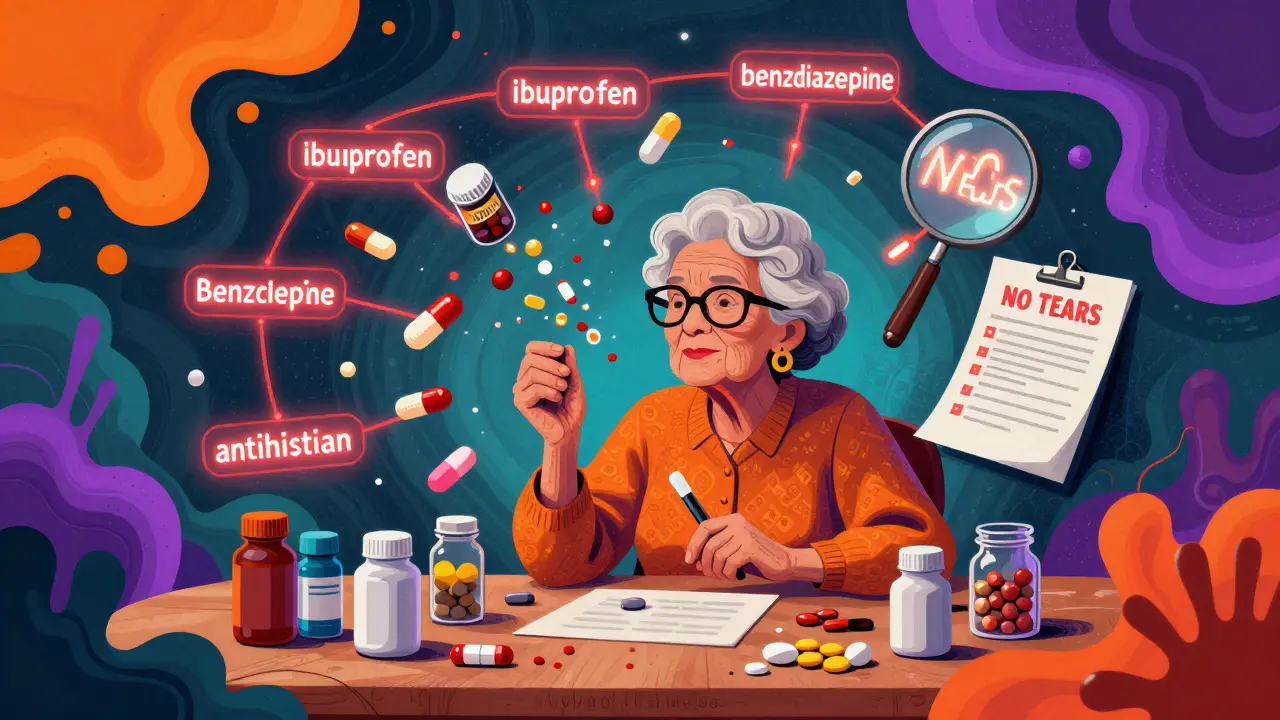
Every year, thousands of older adults end up in the hospital because of a simple mistake: two medicines they’re taking don’t play well together. It’s not because they’re careless. It’s because the system isn’t built for them. As people age, their bodies change in ways that make even common medications risky when mixed. And with many seniors taking five, ten, or even more prescriptions, the chances of a dangerous interaction go up fast. The good news? These problems are mostly preventable. With better habits, clearer communication, and the right tools, we can keep older adults safe while still treating their conditions.
Why Older Adults Are at Higher Risk
It’s not just about taking more pills. The body itself changes after 65. The liver doesn’t break down drugs as quickly. The kidneys don’t flush them out the same way. Fat and water distribution shifts, so drugs can build up in the system longer than they should. These changes mean a dose that’s perfect for a 40-year-old might be too strong for a 75-year-old.
Studies show seniors are up to 50% more likely to have a bad reaction to a drug than younger adults. And it’s not just prescription meds. Over-the-counter painkillers, sleep aids, herbal supplements like St. John’s wort or ginkgo biloba - these all interact too. One survey found that 68% of older adults don’t tell their doctor about these extra products. Why? They think they’re harmless. Or they forget. Or they don’t think it matters.
Another big issue? Fragmented care. More than two-thirds of seniors see three or more doctors a year. One doctor prescribes a blood pressure pill. Another adds a sleep aid. A third writes a new antibiotic. No one talks to the others. Pharmacies don’t always share data. And if a patient switches pharmacies, the history gets lost. That’s how someone ends up on two drugs that both slow the heart rate - and ends up in the ER with dangerously low blood pressure.
The Most Dangerous Interactions
Not all drug combinations are equal. Some are far more dangerous than others. According to research, the two biggest trouble zones are the cardiovascular system and the central nervous system.
For the heart: Combining beta-blockers with calcium channel blockers can cause the heart to beat too slowly. Mixing warfarin with certain antibiotics or even some herbal supplements can lead to uncontrolled bleeding. Even something as simple as taking NSAIDs (like ibuprofen) with diuretics can spike kidney damage in older adults.
For the brain: Benzodiazepines (like diazepam or lorazepam) used for anxiety or sleep can cause falls, confusion, or memory loss when mixed with opioids, antihistamines, or even some antidepressants. Anticholinergic drugs - found in many cold medicines, bladder treatments, and sleep aids - are especially risky. They can make dementia symptoms worse, trigger delirium, or cause urinary retention. The Beers Criteria, updated in 2023, lists 30 drug classes that should be avoided outright in seniors, and 40 others that need dose adjustments based on kidney function.
Tools That Actually Work
There are two proven, widely used screening tools that help doctors spot risky prescriptions before they’re written: the Beers Criteria and the STOPP criteria.
The Beers Criteria is published every two years by the American Geriatrics Society. It’s not a list of banned drugs - it’s a guide. It tells clinicians which medications are too risky for seniors, which need lower doses, and which should be avoided if certain conditions are present (like kidney disease or dementia). A 2022 study in JAMA Internal Medicine found that hospitals using Beers Criteria saw 17.3% fewer hospitalizations from drug-related problems.
The STOPP criteria (Screening Tool of Older Persons’ Potentially Inappropriate Prescriptions) is even more detailed. It includes 114 specific red flags across 22 body systems. For example: prescribing a proton pump inhibitor (PPI) for more than 8 weeks without a clear reason. Or using a long-acting sulfonylurea (like glyburide) in someone with diabetes - it can cause dangerous low blood sugar. A 2021 study in the Journal of the American Geriatrics Society found that using STOPP during hospital discharge cut inappropriate prescribing by 34.7% and reduced readmissions by 22.1%.
Both tools are free, easy to use, and built into many electronic health records. But they’re only useful if someone checks them.
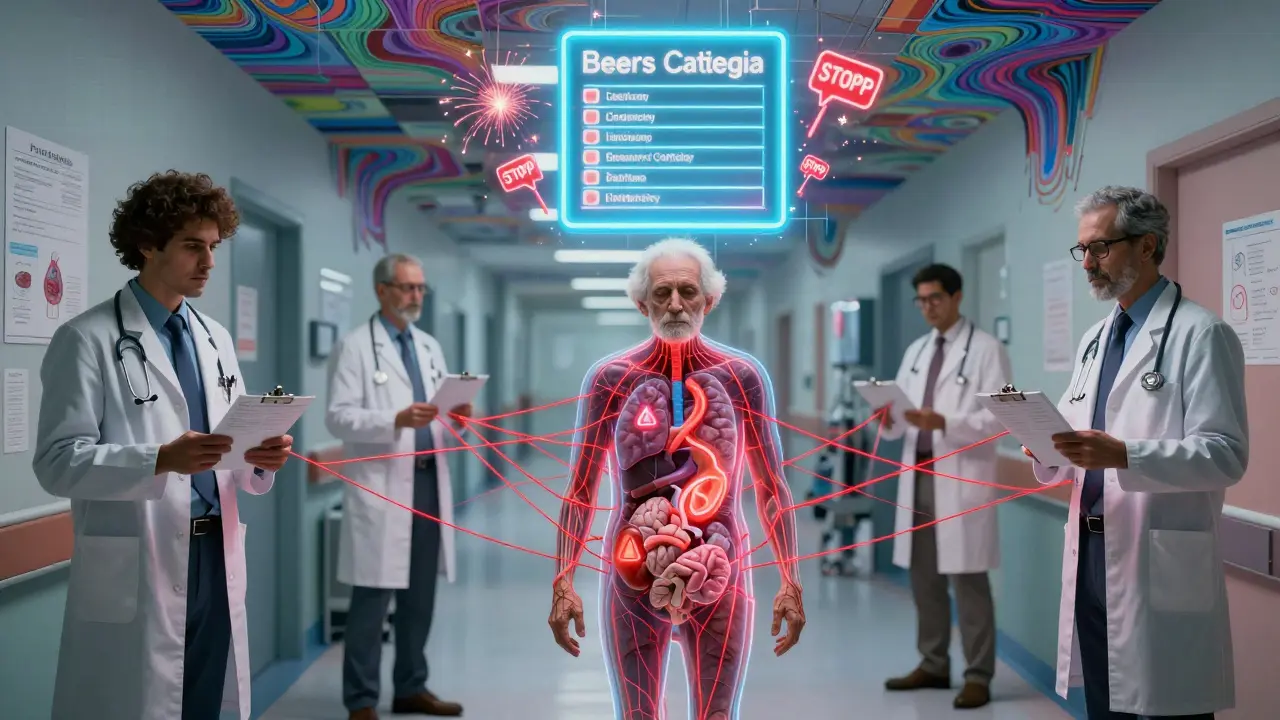
The NO TEARS Framework for Medication Review
Instead of just looking at a list of drugs, a better approach is to ask seven key questions - one for each letter in NO TEARS.
- Need: Is this medication still necessary? Has the condition improved? Can it be stopped?
- Optimization: Is the dose right? Is it the best choice for their kidney function or liver health?
- Trade-offs: Do the benefits outweigh the risks? For example, is a statin worth the muscle pain if the patient has no history of heart disease?
- Economics: Can they afford it? Many seniors skip doses because of cost - and that’s just as dangerous as taking too much.
- Administration: Are they taking it correctly? Can they open the bottle? Do they understand when to take it?
- Reduction: Can we cut one or more? Often, the safest move is to stop something entirely.
- Self-management: Do they understand their whole regimen? Can they explain it back?
This isn’t just a checklist. It’s a conversation. And it should happen at every visit - not just once a year.
What Doctors and Pharmacies Can Do Better
Most clinicians aren’t trained to handle complex medication regimens in older adults. Only 38% of U.S. medical schools have a dedicated geriatric pharmacology course. That’s changing - the LCME accreditation standards updated in 2022 require more training, and by 2026, that number is expected to hit 65%.
But even with better training, time is the biggest barrier. A 2013 study from the American Academy of Family Physicians recommends spending at least 15 minutes per visit just reviewing medications for patients on five or more drugs. For those on seven or more, that time should be 25% longer. That’s not happening in most clinics.
Pharmacies can help too. Medication Therapy Management (MTM) programs, offered by Medicare, give pharmacists time to sit down with patients, review all their meds, and flag interactions. In 2022, over 11 million seniors used MTM - and those who did had 15.3% fewer hospitalizations.
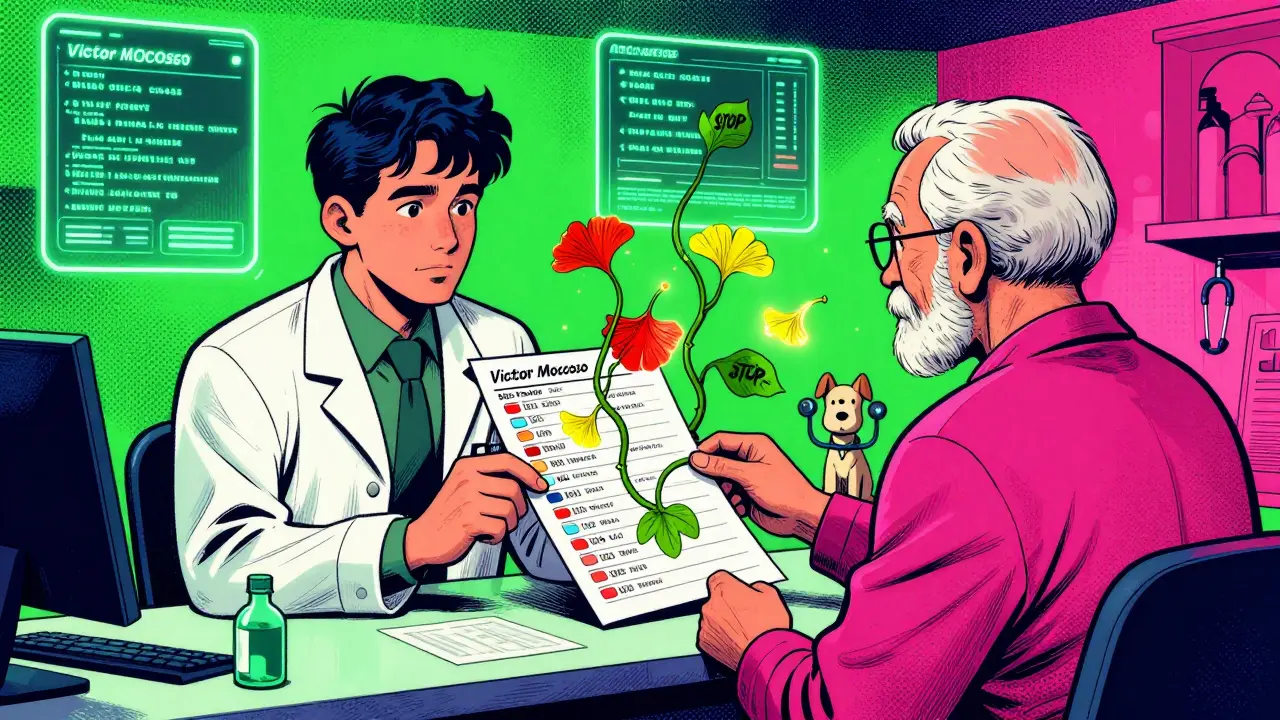
What Families and Caregivers Can Do
You don’t need to be a doctor to make a difference. Here’s what you can do:
- Keep a written list of every medication - including vitamins, supplements, and OTC drugs. Update it every time something changes.
- Bring the list to every appointment. Don’t assume the doctor has it.
- Ask: “Is this still needed?” “Can we try stopping one?” “Are there cheaper options?”
- Use one pharmacy if possible. It helps them track interactions.
- Watch for signs of trouble: confusion, dizziness, falls, nausea, or sudden changes in behavior.
One caregiver in Sydney noticed her 82-year-old mother was sleeping all day. She brought the medication list to the pharmacist. Turned out: the new sleep aid was interacting with her blood pressure med. Within days of switching one drug, the mother was alert again.
The Bigger Picture: What’s Changing
The system is slowly catching up. The FDA now recommends collecting pharmacokinetic data from older adults during clinical trials - but only 18% of new drug applications between 2018 and 2022 actually did. That’s changing. By 2027, the FDA expects to see a 300% increase in geriatric data from trials.
Artificial intelligence is helping too. Hospitals using AI-powered clinical decision support tools saw DDI alerts rise from 22% in 2020 to 47% in 2023. These tools flag interactions in real time when a doctor writes a prescription.
And the Beers Criteria 2025 update is in the works. It’ll add more drug-disease interactions and adjust dosing for 15 more medications based on kidney function. The goal? Make guidelines even more precise.
But technology alone won’t fix this. The real solution is better communication - between doctors, pharmacists, patients, and families. It’s about asking the right questions, listening, and being willing to stop something that’s no longer helping.
Bottom Line
Drug interactions in older adults aren’t inevitable. They’re predictable. And they’re preventable. You don’t need to be an expert to help. Just be informed. Be involved. And never assume a medication is safe just because it was prescribed.
The goal isn’t to take fewer pills - it’s to take the right ones. And sometimes, the best medicine is the one you don’t take at all.
What are the most common drug interactions in elderly patients?
The most dangerous interactions involve medications that affect the heart and brain. Common examples include combining blood thinners like warfarin with NSAIDs (ibuprofen, naproxen), which increases bleeding risk. Mixing benzodiazepines (for anxiety or sleep) with opioids or antihistamines can cause excessive drowsiness, falls, or confusion. Anticholinergic drugs - found in many cold and bladder medications - can worsen dementia or cause urinary retention. The Beers Criteria and STOPP tools specifically flag these combinations as high-risk.
How can I reduce the number of medications my elderly parent takes?
Start by asking the doctor: "Is this medication still necessary?" Many seniors take drugs for conditions that have improved or resolved. Use the NO TEARS framework: check if each drug is needed, at the right dose, affordable, and being taken correctly. Sometimes, stopping one drug allows others to work better. A pharmacist-led medication review or Medication Therapy Management (MTM) program can help identify redundant or risky prescriptions. Never stop a drug without medical advice - but do ask if a trial discontinuation is safe.
Are over-the-counter medications and supplements safe for seniors?
No - and that’s a major blind spot. Over-the-counter pain relievers like ibuprofen can damage kidneys or raise blood pressure. Sleep aids often contain anticholinergics that cause confusion. Herbal supplements like St. John’s wort, ginkgo biloba, or garlic can interfere with blood thinners, diabetes meds, or blood pressure drugs. A 2023 study found 68% of seniors don’t tell their doctor about these products. Always list every OTC and supplement on the medication list - even if you think it’s "natural" or "harmless."
What should I do if my elderly relative has a bad reaction to a medication?
If you notice sudden confusion, dizziness, falls, nausea, unusual bruising, or changes in urination or mood, treat it as a medical emergency. Stop the new medication (if safe to do so) and call the doctor immediately. Bring the full medication list - including supplements and OTCs. Many adverse reactions are mistaken for aging or dementia. But they’re often drug-related and reversible. Document the timing: when did symptoms start after the new drug was added? This helps doctors link the reaction to the cause.
Can AI really help prevent drug interactions in older adults?
Yes - and adoption is growing fast. AI-powered clinical decision support tools now alert doctors in real time when a new prescription might interact with an existing one. Hospitals using these tools saw a 47% increase in DDI alerts between 2020 and 2023. These systems can flag interactions based on age, kidney function, and specific drug combinations that human prescribers might miss. However, AI is only as good as the data it’s trained on. Since older adults are underrepresented in clinical trials, some predictions still lack accuracy. Used alongside human judgment and tools like Beers Criteria, AI is a powerful ally.
Jonathan Ruth
February 17, 2026 AT 06:14Also, 'NO TEARS'? Sounds like a corporate buzzword bingo card. Who came up with this? A consultant paid by Big Pharma to make us feel better about overmedicating?
Philip Blankenship
February 18, 2026 AT 19:35Also, I had no idea ginkgo biloba could mess with blood thinners. My bad. I'll be keeping a list now. Thanks for the wake-up call.
PRITAM BIJAPUR
February 19, 2026 AT 04:58When we treat every symptom as a defect needing correction, we forget that the body is a system, not a machine. A 75-year-old isn't a 'high-risk patient'-they're a person who's lived. Their metabolism isn't 'broken.' It's adapted. And yet, we keep layering drugs on top like we're building a Jenga tower of pharmaceuticals.
NO TEARS isn't just a framework-it's a philosophy. It asks: Are we helping, or just managing? Are we extending life, or prolonging dependency? I wish every medical student had to sit with 10 elderly patients before they touched a prescription pad. Not to learn drugs-but to learn silence. To listen. To see what's missing when we only look at the list.
Tony Shuman
February 20, 2026 AT 07:24And 'STOPP Criteria'? Sounds like a government program that costs $200 million and saves zero lives. Meanwhile, my neighbor took himself off all his meds after reading a blog. He's hiking, gardening, and sleeping like a baby. No doctor. No 'tool.' Just common sense.
John Haberstroh
February 21, 2026 AT 23:19AI alerts? They’re helpful. But they don’t replace a human who asks, 'So… why are you taking this?' The magic isn’t in the algorithm. It’s in the conversation. And that’s what’s disappearing from medicine.
Logan Hawker
February 23, 2026 AT 12:56And the 'caregiver in Sydney' anecdote? Cute. But it’s a unicorn. In the real world, most seniors are on Medicaid, have no primary care, and get their meds from a Walmart pharmacist who’s scanning 40 prescriptions an hour. This isn’t a 'system failure.' It’s a systemic collapse. And your 15-minute review? That’s a fantasy in a 10-minute visit.
Also, 'natural' supplements? Please. I’ve seen ginkgo cause strokes. But the real issue? We’ve outsourced cognitive responsibility to algorithms and checklists. And that’s the true danger.
James Lloyd
February 24, 2026 AT 19:00Also-yes, OTCs matter. I had a guy on warfarin who took turmeric capsules 'for arthritis.' His INR spiked to 8. He almost bled out. He didn’t think it counted as a 'med.' That’s the gap we need to bridge.
Carrie Schluckbier
February 24, 2026 AT 22:25