Medication-Induced Diarrhea Severity Checker
Assess Your Diarrhea
Severity Results
Your Diarrhea Severity:
Diarrhea from medication isn’t just an inconvenience-it can derail your treatment, land you in the hospital, or even become life-threatening. If you’re on chemotherapy, antibiotics, or immunotherapy, you’re at risk. About half of people on certain chemo drugs and up to 30% on antibiotics develop diarrhea. But here’s the good news: medication-induced diarrhea is often preventable and treatable-if you act fast and know what to do.
What Exactly Is Medication-Induced Diarrhea?
Medication-induced diarrhea happens when a drug messes with your digestive system. It’s not just a loose stool or two. It’s frequent, watery bowel movements that last longer than expected and don’t go away on their own. The most common culprits are chemotherapy drugs like irinotecan and 5-fluorouracil, antibiotics (especially broad-spectrum ones), and newer cancer immunotherapies. Even some blood pressure meds, diabetes drugs, and supplements can trigger it.
The problem isn’t just discomfort. Severe diarrhea can lead to dehydration, electrolyte imbalances, kidney stress, and in cancer patients, it can force doctors to delay or stop life-saving treatment. In fact, about 1 in 4 people on high-risk chemo end up hospitalized because of it.
How Doctors Grade the Severity
Not all diarrhea is the same. Doctors use a clear system to measure how bad it is:
- Grade 1: You have 1-3 more bowel movements than normal per day. Manageable at home.
- Grade 2: 4-6 bowel movements a day. You might feel weak or need to cut back on activity.
- Grade 3: 7 or more a day, or you’re incontinent. You likely need medical help.
- Grade 4: Life-threatening. Requires emergency care.
Waiting too long to act can push you from grade 1 to grade 3 in under 24 hours. That’s why timing matters more than you think.
First-Line Treatment: Loperamide (Imodium)
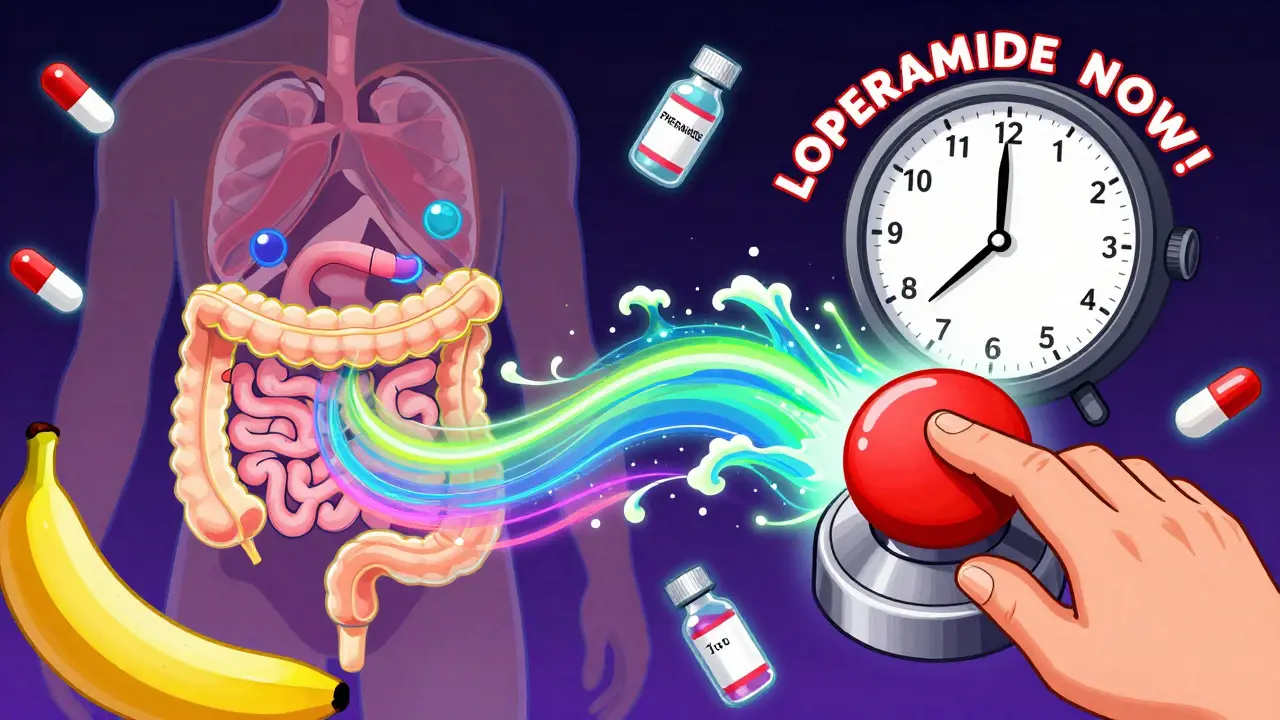
If you notice your first loose stool, don’t wait. Start loperamide right away. The standard dose is 4 mg immediately, then 2 mg after every loose stool. But here’s the catch-you can’t go over 16 mg in a day for most cases. For irinotecan-induced diarrhea, doctors may allow up to 24 mg daily under close supervision.
Why loperamide? It slows down your gut, letting fluids get reabsorbed. Studies show it works in 60-75% of grade 2 cases. It’s cheaper, easier to take, and works faster than other options like diphenoxylate. But it’s not magic. If diarrhea doesn’t improve after 24 hours, loperamide alone won’t cut it.
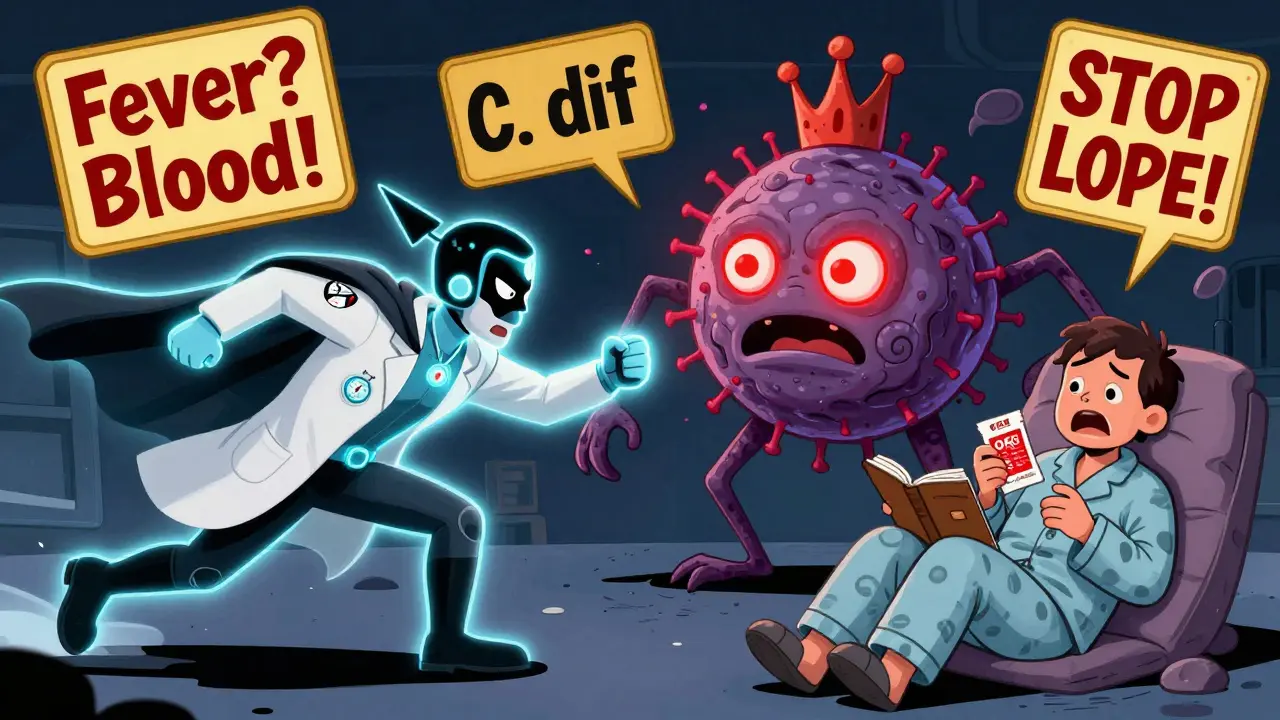
And here’s a critical warning: never use loperamide if you have a fever, bloody stools, or suspect C. difficile infection. Using it in those cases can trap toxins in your colon and cause toxic megacolon-a rare but deadly condition. Always check with your provider before starting it if you’re on antibiotics.
When Loperamide Fails: Octreotide
If you’re still having 7 or more watery stools a day after 24 hours of high-dose loperamide, it’s time for the next step: octreotide. This isn’t an over-the-counter drug. It’s a shot you give under your skin.
Doctors recommend starting octreotide within 4 hours of severe diarrhea to cut hospitalization risk by 35%. The usual dose is 100-150 micrograms every 8 hours. Some patients need continuous infusion if the shots aren’t enough.
Octreotide works differently-it reduces the amount of fluid your intestines secrete. Studies show it works in 60-95% of severe cases. That’s way better than loperamide alone, which only helps about 40% of the time in grade 3-4 diarrhea.
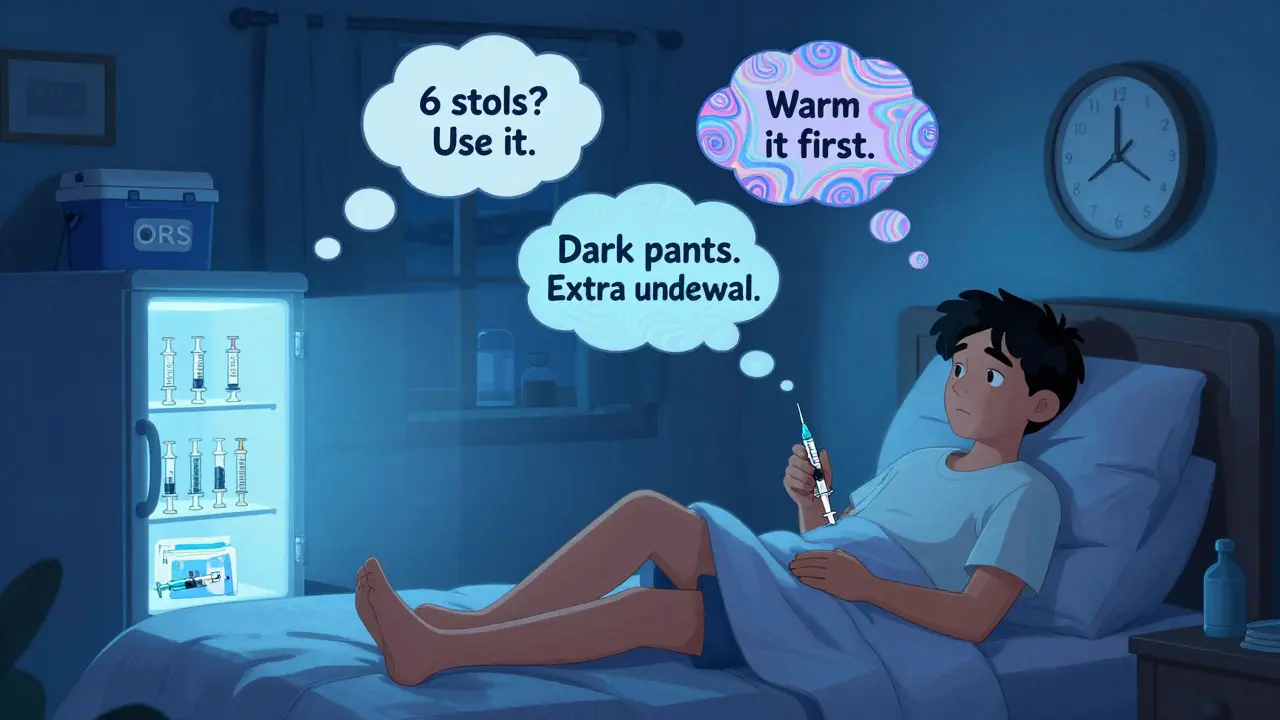
Patients report the injections hurt. Some say the pain lasts a few minutes. Others say it’s worse if they don’t let the medicine warm up to room temperature first. Pro tip: Pre-fill the syringe and store it in the fridge so you’re ready when it’s needed. Many patients keep a spare dose at home.
What to Eat (and What to Avoid)
Food can make diarrhea worse-or help you recover faster.
- Avoid: Dairy (milk, cheese, ice cream), greasy or fried foods, spicy meals, caffeine, and alcohol. These irritate your gut and pull more water into your bowels.
- Try: Bananas, white rice, applesauce, toast (the BRAT diet), boiled potatoes, and lean chicken. These are easy to digest.
- Hydrate smart: Use oral rehydration solutions (ORS) with 75 mmol/L sodium, 75 mmol/L glucose, and 20 mmol/L potassium. You can buy them at pharmacies or make your own: 1 packet mixed into 200 mL of clean water. Drink one after each loose stool.
Don’t rely on sports drinks. They don’t have the right balance of salts and sugars to fix dehydration from diarrhea. And skip fiber supplements like psyllium until the diarrhea is under control-they can make it worse.
Antibiotic-Associated Diarrhea and C. diff
If you’re on antibiotics and develop diarrhea, it’s not always just a side effect. It could be Clostridioides difficile (C. diff), a dangerous infection that thrives when antibiotics kill off good gut bacteria.
Signs of C. diff: watery diarrhea lasting more than 48 hours, fever, abdominal cramps, and sometimes blood in stool. If you have these, stop taking loperamide immediately. You need a stool test and specific antibiotics like vancomycin (125 mg four times a day for 10 days).
Vancomycin cures 97% of cases. Metronidazole used to be first-choice, but it’s less effective now. The downside? Vancomycin costs about $1,200 for a full course. Metronidazole is $40. But when it comes to C. diff, you don’t save money by choosing the cheaper option-you risk complications.
Probiotics: Do They Help?
Some people swear by probiotics. The science says: maybe, but only specific strains.
- Proven to help: Lactobacillus rhamnosus GG and Saccharomyces boulardii. These reduce antibiotic diarrhea risk by about half.
- Not proven: Most other probiotics, including generic store brands. They might not even contain the live cultures they claim.
Take them daily during your antibiotic course and for a week after. Don’t start them if you’re immunocompromised-unless your doctor says it’s safe.
What to Do When You’re on Chemotherapy
If you’re getting chemo, especially irinotecan, your risk of severe diarrhea is high. New guidelines now recommend starting neomycin (660 mg three times a day) two days before your chemo session. In trials, this cut diarrhea rates from 65% down to 32%.
Also, some patients benefit from genetic testing. A blood test for UGT1A1 gene variants can show if you’re at higher risk for irinotecan toxicity. If you have the high-risk variant, your doctor might lower your dose or start preventive measures earlier.
Keep a daily log: number of stools, consistency, time of day, and any other symptoms. Bring this to your appointments. It helps your team spot patterns before things get serious.
When to Call Your Doctor
You don’t need to wait for disaster. Call your oncologist or provider if:
- You have 4 or more loose stools in 24 hours
- Diarrhea lasts more than 24 hours despite loperamide
- You have fever over 38.5°C
- You see blood in your stool
- You feel dizzy, confused, or can’t keep fluids down
Waiting longer than 24 hours to start treatment increases your risk of severe diarrhea by more than three times. That’s not a risk worth taking.
New Treatments on the Horizon
There’s real progress being made. In 2023, the FDA approved a new drug called onercept for severe chemotherapy-induced diarrhea. It reduced grade 3-4 episodes by 63% in trials.
Also, microbiome therapies like SER-109 (a pill made from purified gut bacteria) are now approved for recurrent C. diff. It cuts recurrence from 40% down to 12%. More are coming.
The future is personalized: genetic tests, targeted probiotics, and smarter prevention. But right now, the best tool you have is knowledge-and acting fast.
Real Patient Tips That Actually Work
From hundreds of patient stories and support forums:
- “I keep a pre-filled octreotide syringe in the fridge with a note: ‘Use if >6 stools in 24 hours.’ No more guessing.”
- “I mix my ORS the night before and keep it in a small cooler by my bed. No more stumbling to the kitchen at 3 a.m.”
- “I wear dark pants and carry extra underwear in my chemo bag. It sounds silly, but it reduces panic.”
- “I stopped taking my daily multivitamin during chemo. Iron and magnesium made my diarrhea worse.”
These aren’t anecdotes-they’re strategies used by people who’ve been through it and survived.
Final Thoughts: Act Early, Stay Informed
Medication-induced diarrhea is common, but it’s not inevitable. With the right steps, most cases can be managed at home. The key is recognizing it early, using the right tools in the right order, and knowing when to ask for help.
Don’t treat it like a minor annoyance. Treat it like a warning sign. Your body is telling you something’s off. Listen. Start loperamide. Hydrate. Log your symptoms. Call your doctor if it doesn’t improve. You’re not alone-and you don’t have to suffer through it alone.
Can I take loperamide with antibiotics?
Only if your doctor confirms you don’t have C. difficile. Taking loperamide with C. diff can trap toxins in your colon and cause toxic megacolon, a life-threatening condition. Always get a stool test if you have fever, bloody stools, or diarrhea lasting more than 48 hours while on antibiotics.
How long can I safely take loperamide?
For medication-induced diarrhea, use loperamide only as long as needed-usually no more than 48 hours. Prolonged use (over 2-3 days) increases the risk of ileus (intestinal blockage), especially in cancer patients. If diarrhea lasts longer, switch to octreotide or contact your provider.
Is octreotide painful to inject?
The injection can sting, especially if the medicine is cold. Let the vial warm to room temperature for 30 minutes before use. Inject slowly into the fatty tissue of your abdomen or thigh. Many patients find rotating injection sites helps reduce soreness. Pain usually lasts less than a minute.
Can probiotics prevent diarrhea from chemo?
There’s no strong evidence that probiotics prevent chemotherapy-induced diarrhea. They’re more effective for antibiotic-associated diarrhea. If you want to try them, only use Lactobacillus rhamnosus GG or Saccharomyces boulardii, and only after checking with your oncologist.
Should I stop my medication if I get diarrhea?
Never stop chemotherapy, antibiotics, or immunotherapy on your own. Diarrhea is often manageable without stopping treatment. Call your care team immediately. They may adjust your dose, add supportive meds, or delay the next cycle-but only they can decide what’s safe.
What’s the best way to stay hydrated during diarrhea?
Use oral rehydration solutions (ORS) with the right balance of salt, sugar, and potassium. Mix one packet in 200 mL of clean water. Drink one after each loose stool. Avoid sports drinks, soda, and juice-they have too much sugar and not enough electrolytes. Water alone won’t replace lost salts.
Can I use bismuth subsalicylate (Pepto-Bismol) instead of loperamide?
Bismuth subsalicylate can help with mild, inflammatory diarrhea, but it’s not first-line for medication-induced cases. It’s also risky if you have kidney problems, are on blood thinners, or are allergic to aspirin. Loperamide is more effective and safer for most people with chemo or antibiotic diarrhea.
rasna saha
January 24, 2026 AT 22:04I’ve been on chemo for 8 months now, and this post literally saved my sanity. I started using the pre-filled octreotide syringe trick last week-no more panic at 3 a.m. when my stomach decides to revolt. Also, keeping dark pants in my chemo bag? Genius. I wish I’d known this sooner.
James Nicoll
January 25, 2026 AT 00:38So let me get this straight-we’re now treating diarrhea like it’s a war zone where loperamide is our first line of defense and octreotide is the F-35? Meanwhile, my grandma in ’78 just drank ginger tea and called it a day. Progress, I guess. Or maybe we just got really good at monetizing bowel movements.
Uche Okoro
January 26, 2026 AT 06:06While the clinical protocols outlined here are methodologically sound, one must interrogate the underlying pathophysiological cascade: the dysbiosis-induced hypersecretory state mediated by enteric neurohormonal disruption, particularly via serotonin (5-HT3) receptor upregulation in the colonic mucosa. Loperamide’s mu-opioid agonism mitigates motility, but fails to address the root cytokine-mediated epithelial barrier dysfunction. Octreotide’s somatostatin receptor affinity reduces cAMP-driven chloride efflux-critical for grade 3+ cases. However, the omission of fecal calprotectin as a biomarker for inflammatory etiology represents a significant diagnostic blind spot.
shivam utkresth
January 27, 2026 AT 03:17Man, I love how this post doesn’t just throw meds at you-it gives you the whole toolkit. I’m from Mumbai, and we’ve got chai and kadha for everything, but this? This is next-level. I started using ORS like it’s my new religion. My cousin’s on antibiotics right now and I made her a little chart: ‘Stool count + ORS after each one.’ She says she feels like a scientist now. Also, skip the multivitamin? I’m stealing that. My gut’s been throwing tantrums since I started my pills.
Joanna Domżalska
January 27, 2026 AT 07:22Everyone’s acting like diarrhea is some secret enemy you need to crush with science. Newsflash: your body’s just trying to get rid of something toxic. Stop trying to control it with pills and just… let it go. Maybe the real treatment is accepting that your gut knows better than your doctor’s algorithm.
eric fert
January 29, 2026 AT 01:28Okay, so let me get this straight-you’re telling me if I have diarrhea while on chemo, I should immediately start shoving loperamide down my throat like it’s candy? And if that doesn’t work, I need to inject myself with something that costs more than my rent? And if I’m poor, I’m supposed to just… die? Because vancomycin is $1200 and I can’t afford it, so I’ll just wait for the toxic megacolon to do its thing? And you call this healthcare? This isn’t medicine-it’s a rigged game where the house always wins unless you have insurance, a trust fund, or a miracle. I’m not mad. I’m just… disappointed.
Curtis Younker
January 30, 2026 AT 21:17Y’all, this is the kind of post that changes lives. Seriously. I’ve got a friend going through immunotherapy right now, and I printed this out and gave it to her like it was a survival guide from the future. The BRAT diet? The ORS trick? The fridge-ready octreotide? That’s next-level self-care. I even started keeping a little journal like they said-stool count, time, mood. It’s weirdly empowering. You’re not just a patient-you’re the CEO of your own gut. And if you’re reading this? You’re not alone. We’ve all been there. Keep going. You got this.
Shawn Raja
February 1, 2026 AT 19:57Let’s be real-this whole post reads like a pharmaceutical company’s dream. Loperamide? Octreotide? Vancomycin? All expensive, all patented. Meanwhile, the one thing that actually works for 90% of people? Fasting. Just stop eating for 12 hours. Let your gut reset. No drugs. No injections. Just silence. But hey, why sell a $1200 pill when you can sell a $1200 pill and a $200 syringe and a $15 ORS packet? Capitalism doesn’t care if you poop your pants-it just wants you to buy better pants.