Why Lithium Can Turn Dangerous With Common Medications
Lithium is one of the oldest and most effective mood stabilizers for bipolar disorder. But it’s also one of the most dangerous if not managed carefully. The difference between working perfectly and causing serious harm is tiny - just 0.6 to 1.2 mmol/L in your blood. Go over that, and you risk lithium toxicity: nausea, tremors, confusion, even seizures or kidney damage. And it doesn’t take much to push you over the edge.
Many everyday medications - especially NSAIDs and diuretics - can quietly raise lithium levels without you noticing. Even something as simple as skipping water on a hot day or eating less salt can tip the balance. This isn’t theoretical. People have died from this combination.
How NSAIDs Push Lithium Levels Up
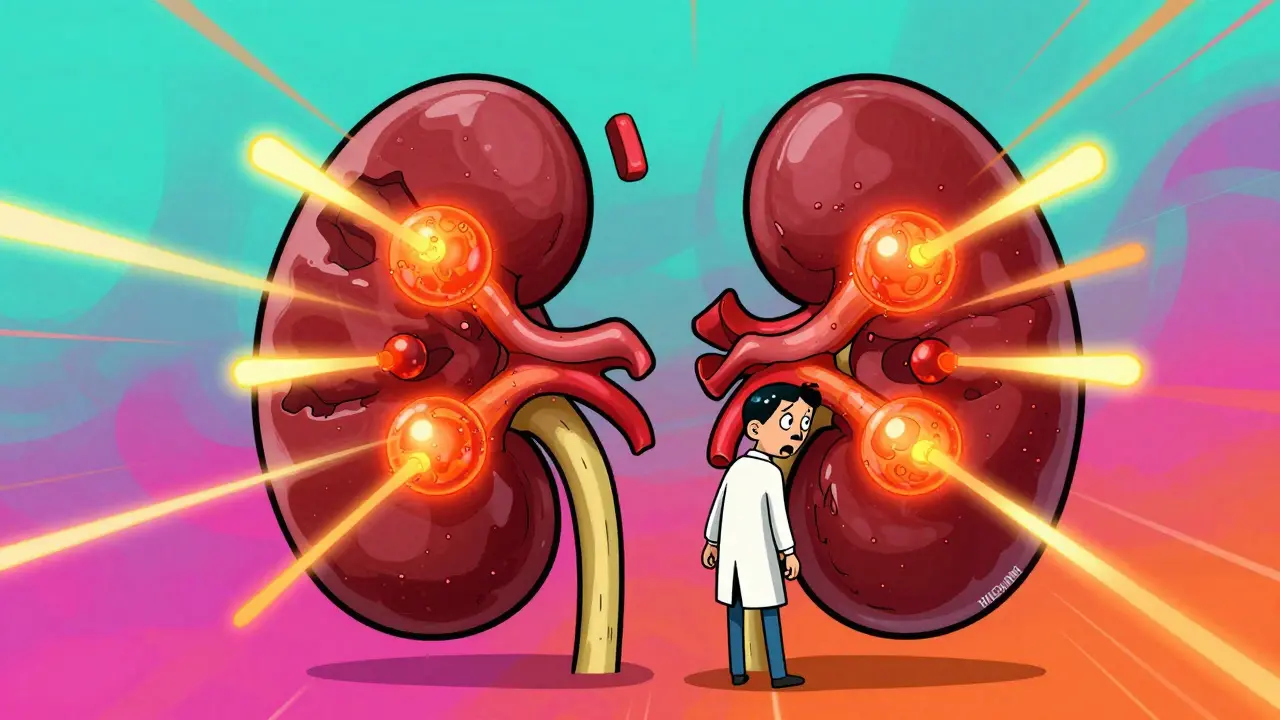
NSAIDs like ibuprofen, naproxen, and even celecoxib don’t just reduce pain and inflammation. They also mess with how your kidneys handle lithium. Normally, your kidneys filter lithium out of your blood and send it into urine. NSAIDs block the production of prostaglandins - chemicals that help keep blood flowing through the kidneys. When that flow slows, lithium doesn’t get cleared as fast. It builds up.
The effect isn’t slow. Levels can rise within days of starting an NSAID. Indomethacin causes the biggest jump - up to 60%. Ibuprofen? Around 40%. Celecoxib is a bit gentler, but still raises levels by 15-30%. And it’s worse if you’re older, have kidney issues, or are already dehydrated. A 72-year-old woman in New Zealand died after taking an NSAID with her lithium and blood pressure medicine. Her lithium levels weren’t checked regularly. She didn’t know she was in danger.
Even short-term use - like taking ibuprofen for a headache or sore back - can be risky. Many patients don’t realize they’re adding a hidden danger to their daily routine. If you’re on lithium, avoid NSAIDs unless your doctor says it’s safe. And if you must take them, get your lithium levels tested within a week.
Diuretics: The Silent Lithium Boosters
Diuretics - water pills - are often prescribed for high blood pressure or swelling. But they’re not all the same when it comes to lithium. Thiazide diuretics like hydrochlorothiazide are the worst offenders. They cause lithium levels to spike by 25-50% in just 7-10 days. Why? They make your kidneys reabsorb more sodium - and lithium rides along with it.
Loop diuretics like furosemide (frusemide) are less dangerous, but still risky. They can raise lithium by 10-25%. Potassium-sparing diuretics like spironolactone? The data is mixed. Some studies show little effect, others show danger. But here’s the kicker: some diuretics actually lower lithium levels. Osmotic diuretics like mannitol and carbonic anhydrase inhibitors like acetazolamide increase urine output and flush lithium out faster. That’s not helpful - it can make your mood unstable.
And it’s not just prescription diuretics. Herbal weight-loss supplements often contain natural diuretics like dandelion or parsley. People think “natural” means safe. It doesn’t. These can cause dangerous lithium spikes through dehydration. One case report showed a patient on lithium developed toxicity after taking a “natural” detox tea.
Dehydration: The Hidden Trigger
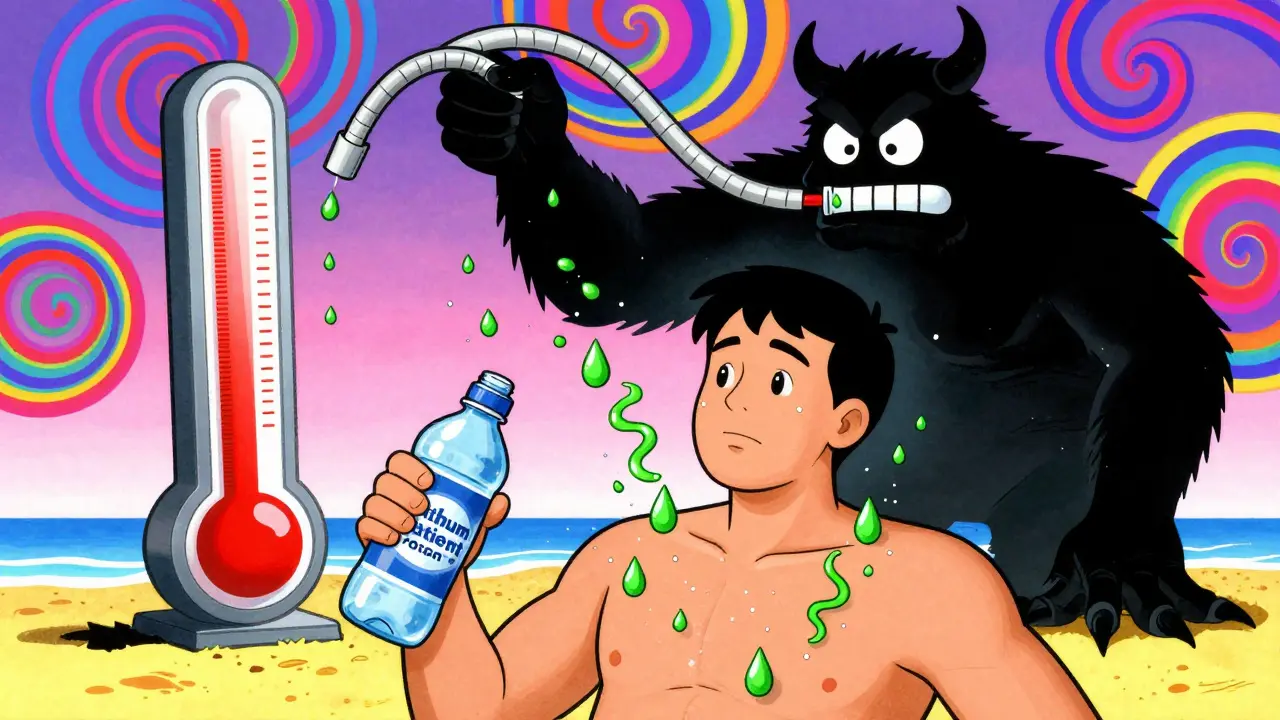
Dehydration is one of the most overlooked risks. Lithium is cleared by your kidneys, and your kidneys need water to work properly. If you’re not drinking enough - whether from heat, illness, exercise, or just forgetting - your blood volume drops. Your kidneys hold onto sodium to conserve fluid. And lithium gets trapped with it.
Even mild dehydration - losing just 2-3% of your body weight in water - can raise lithium levels by 15-25%. That’s enough to push someone from safe to toxic. Think about it: a week of travel, a bout of stomach flu, a long flight, sweating during a workout in Sydney’s summer heat. All of these can be dangerous if you’re on lithium.
And salt intake matters too. Eating less salt - maybe trying to eat “healthier” - can increase lithium levels by 10-20%. Eating more salt lowers them. It’s not about going back to junk food. It’s about consistency. If your sodium intake swings wildly, so does your lithium. That’s why doctors tell patients to keep their salt and fluid intake steady.
Who’s at Highest Risk?
This isn’t a risk for everyone. Some people handle these interactions fine. But others are far more vulnerable:
- People over 65 - their kidneys don’t clear lithium as well. They’re 3.2 times more likely to have toxicity.
- Those with kidney disease - even mild impairment makes lithium buildup faster and harder to reverse.
- People with heart failure - fluid retention and medications for heart issues often overlap with lithium use.
- Anyone taking multiple drugs - combining NSAIDs, diuretics, and ACE inhibitors (like cilazapril) creates a perfect storm.
And here’s the scary part: many of these people aren’t monitored closely enough. A case report from New Zealand showed a patient’s lithium levels were only checked “sporadically” after starting an NSAID. That’s not good enough. Regular blood tests aren’t optional - they’re life-saving.
What to Do If You’re on Lithium
If you take lithium, here’s what you need to do - no exceptions:
- Avoid NSAIDs unless your doctor approves them. Use acetaminophen (paracetamol) for pain instead.
- Never start a diuretic without telling your prescriber. If you’re on one already, ask if it’s safe with lithium.
- Drink water daily - even when you’re not thirsty. Aim for 1.5-2 liters unless your doctor says otherwise.
- Keep salt intake steady. Don’t go low-salt diets unless directed. Avoid extreme changes.
- Get blood tests - lithium levels should be checked weekly for the first month after starting any new drug, then every 3-6 months if stable.
- Know the warning signs: diarrhea, dizziness, shaky hands, confusion, blurred vision, ringing in the ears. If you feel off, get tested immediately.
And if you’re traveling - especially to hot places or on long flights - plan ahead. Bring extra water. Avoid alcohol. Tell your doctor you’re going. Lithium doesn’t care if you’re on vacation. It still builds up.
What Your Doctor Should Be Doing
Doctors aren’t always aware of how quickly these interactions happen. But guidelines from Australia, New Zealand, and the UK are clear:
- Check lithium levels within 5-7 days of starting an NSAID or diuretic.
- Monitor for at least two weeks after changing any medication.
- Consider switching to safer alternatives - like ACE inhibitors instead of NSAIDs for pain, or non-thiazide diuretics if possible.
- Refer to a renal specialist if you’re over 65, have kidney issues, or are on multiple interacting drugs.
Electronic health systems now flag these interactions - but they’re not foolproof. If your doctor doesn’t mention lithium risks when prescribing a new pill, ask. Don’t assume they know.
What Happens If You Ignore This?
Lithium toxicity doesn’t always come with a warning siren. It creeps in. First, you feel a little off - maybe nauseous, dizzy, or tired. Then your hands shake. Your vision blurs. You feel confused. At this point, you might think it’s the flu. But it’s not. It’s lithium poisoning.
Severe cases lead to seizures, coma, or permanent kidney damage. In older adults, the damage can be irreversible. One study found that after a major lithium toxicity episode, up to 30% of elderly patients never fully recover kidney function.
This isn’t about being careful. It’s about survival. Lithium saves lives - but only if you treat it like the powerful drug it is.
Frequently Asked Questions
Can I take ibuprofen if I’m on lithium?
It’s not recommended. Ibuprofen can raise lithium levels by 25-40%, increasing your risk of toxicity. If you need pain relief, use acetaminophen (paracetamol) instead. If you must take ibuprofen, get your lithium levels checked within a week and only use it for the shortest time possible.
Do all diuretics affect lithium the same way?
No. Thiazide diuretics like hydrochlorothiazide are the most dangerous - they can spike lithium levels by up to 50%. Loop diuretics like furosemide are less risky but still dangerous. Some diuretics, like acetazolamide and mannitol, actually lower lithium levels. Never assume a diuretic is safe - always check with your doctor.
How much water should I drink daily if I’m on lithium?
Aim for 1.5 to 2 liters per day unless your doctor advises otherwise. Don’t wait until you’re thirsty. Drink consistently, especially in hot weather, during illness, or after exercise. Even mild dehydration - losing 2-3% of your body weight - can raise lithium levels by 15-25%.
Can changing my salt intake affect lithium levels?
Yes. Eating less salt can raise lithium levels by 10-20%, while eating more salt can lower them. Don’t go on low-sodium diets unless your doctor says so. The key is consistency - don’t swing between high and low salt intake. Your body needs stable sodium levels to keep lithium stable.
How often should lithium levels be checked?
When you start lithium, levels are checked weekly until stable. After that, every 3-6 months is typical. But if you start a new medication - especially NSAIDs or diuretics - get tested within 5-7 days. Also check after any illness, dehydration, or major change in diet or activity.
Are herbal diuretics safe with lithium?
No. Herbal products labeled as “natural diuretics” - like dandelion, parsley, or green tea extracts - can cause dangerous lithium spikes through dehydration. These are not regulated like prescription drugs, and their effects are unpredictable. Avoid them completely if you’re on lithium.
What are the early signs of lithium toxicity?
Early signs include diarrhea (68% of cases), dizziness or lightheadedness (52%), tremors, and increased thirst. As it worsens, you may notice blurred vision, ringing in the ears, confusion, or muscle weakness. If you experience any of these, stop taking NSAIDs or diuretics, drink water, and get your lithium level checked immediately.
Can lithium toxicity cause permanent kidney damage?
Yes. Severe or repeated episodes of lithium toxicity can cause permanent kidney damage, especially in older adults or those with pre-existing kidney issues. Some patients never fully recover kidney function after a major toxicity event. That’s why prevention - through monitoring and avoiding interactions - is critical.
What’s Next?
If you’re on lithium, don’t wait for a crisis. Talk to your doctor today. Review every medication you take - even over-the-counter painkillers and supplements. Ask: “Could this raise my lithium level?” Make a plan for hydration and salt intake. Schedule your next blood test. Lithium works - but only if you treat it with the respect it deserves.
Andrew Freeman
January 14, 2026 AT 23:54Vicky Zhang
January 15, 2026 AT 08:52Susie Deer
January 15, 2026 AT 13:50TooAfraid ToSay
January 15, 2026 AT 20:21Robert Way
January 15, 2026 AT 22:52Sarah Triphahn
January 15, 2026 AT 23:37Allison Deming
January 16, 2026 AT 16:57Jason Yan
January 17, 2026 AT 00:34Dylan Livingston
January 17, 2026 AT 18:31says haze
January 18, 2026 AT 02:00Sarah -Jane Vincent
January 19, 2026 AT 09:15Henry Sy
January 21, 2026 AT 07:28