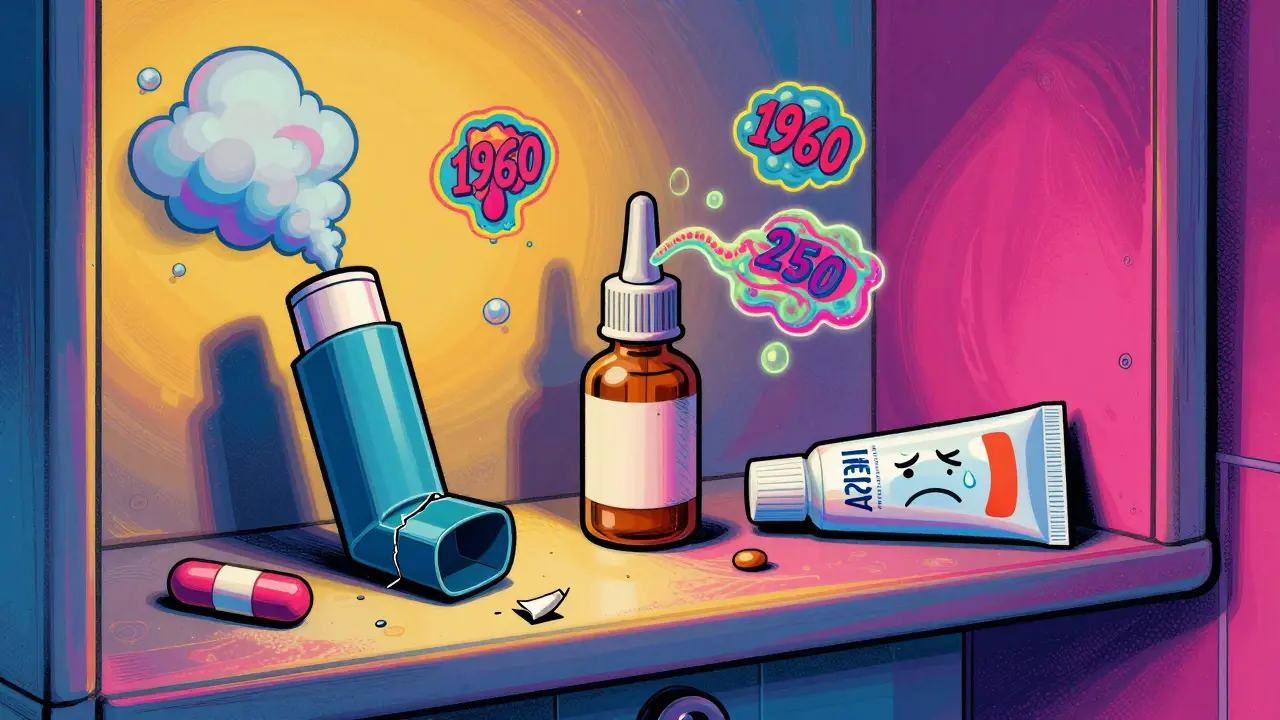
Most people don’t think twice about keeping an old inhaler, eye drop bottle, or cream in the medicine cabinet-until they need it. And that’s when the real danger shows up. An expired albuterol inhaler might not deliver enough medicine during an asthma attack. Expired eye drops could be filled with bacteria. Old hydrocortisone cream might do nothing at all. The problem isn’t just inefficiency-it’s risk. And it’s more common than you think.
Why Expired Medications Are Risky
Expiration dates aren’t arbitrary. They’re based on strict testing by manufacturers to ensure the medicine stays safe and effective. The FDA requires these dates for all prescription and over-the-counter drugs since 1979. But many assume that if a pill or spray still looks fine, it’s still good. That’s a dangerous myth.For inhalers, the issue isn’t just potency-it’s consistency. A 2021 study in the Chest Journal found that inhalers used 12 months past expiration delivered only 60-70% of the labeled dose. In an emergency, that’s not enough. Imagine needing a full puff to open your airways, but getting half. That’s what happens when you rely on an old inhaler.
Eye drops are even more concerning. A 2022 study in Clinical Ophthalmology showed that 38% of artificial tears tested 30 days past expiration had bacterial growth. That’s not just ineffective-it’s a direct path to eye infections, corneal ulcers, or even vision loss. And once you open a bottle, the clock starts ticking faster. Most eye drops are only good for 28 days after opening, regardless of the printed expiration date.
Topical medications like hydrocortisone cream behave differently. They don’t turn toxic, but they lose strength. A 2019 analysis found that hydrocortisone stored at room temperature (25°C) kept 90% of its potency for six months past expiration. But at 30°C-common in a hot bathroom-it dropped to 65%. That means a rash you used to treat in two days might now take a week, or not go away at all.
What Happens When You Use Expired Inhalers
Inhalers are pressurized. That’s why they’re so effective-but also why they’re dangerous when expired. The propellant that pushes the medicine out degrades over time. A 2020 FDA stability report showed that Combivent Respimat lost 25% of its pressure 18 months after expiration. That means you might think you’re getting a full dose, but you’re not.ProAir RespiClick, a dry powder inhaler, is labeled for only 13 months after removing it from the foil pouch. After that, moisture gets in. The powder clumps. The dose becomes uneven. One puff might deliver nothing. The next, too much. That’s why the American College of Allergy, Asthma, and Immunology says expired inhalers contribute to 12% of avoidable asthma ER visits each year.
And it’s not just about asthma. People with COPD, allergies, or other respiratory conditions rely on these devices daily. If your inhaler fails, you could end up in the hospital. A 2023 case report in the Journal of Emergency Medicine described a 24-year-old who needed intensive care after his expired albuterol inhaler didn’t stop his attack. He’d been using it for six months past expiration because he couldn’t afford a new one.
Eye Drops and Topical Creams: The Hidden Dangers
Eye drops are sterile. Once you open them, you’re introducing germs from your fingers, the air, or your eyelashes. That’s why most manufacturers say to throw them away 28 days after opening-even if the bottle says it’s good for another year. The FDA doesn’t require manufacturers to test for contamination after opening, so you’re on your own.And it’s not just artificial tears. Antibiotic eye drops like tobramycin or steroid drops like prednisolone can become breeding grounds for resistant bacteria if used past expiration. One 2023 study found that 42% of expired eye drop samples tested positive for microbial contamination. That’s more than four in ten bottles you might be using unknowingly.
Topical medications are less dangerous but still unreliable. Hydrocortisone cream, antifungal ointments, or even acne treatments lose effectiveness over time. You might think you’re treating a rash, but if the active ingredient has broken down, you’re just slathering on lotion. Worse, some creams separate or change texture. That’s a sign the chemical structure has shifted. Don’t use it.
How to Dispose of Expired Medications Safely
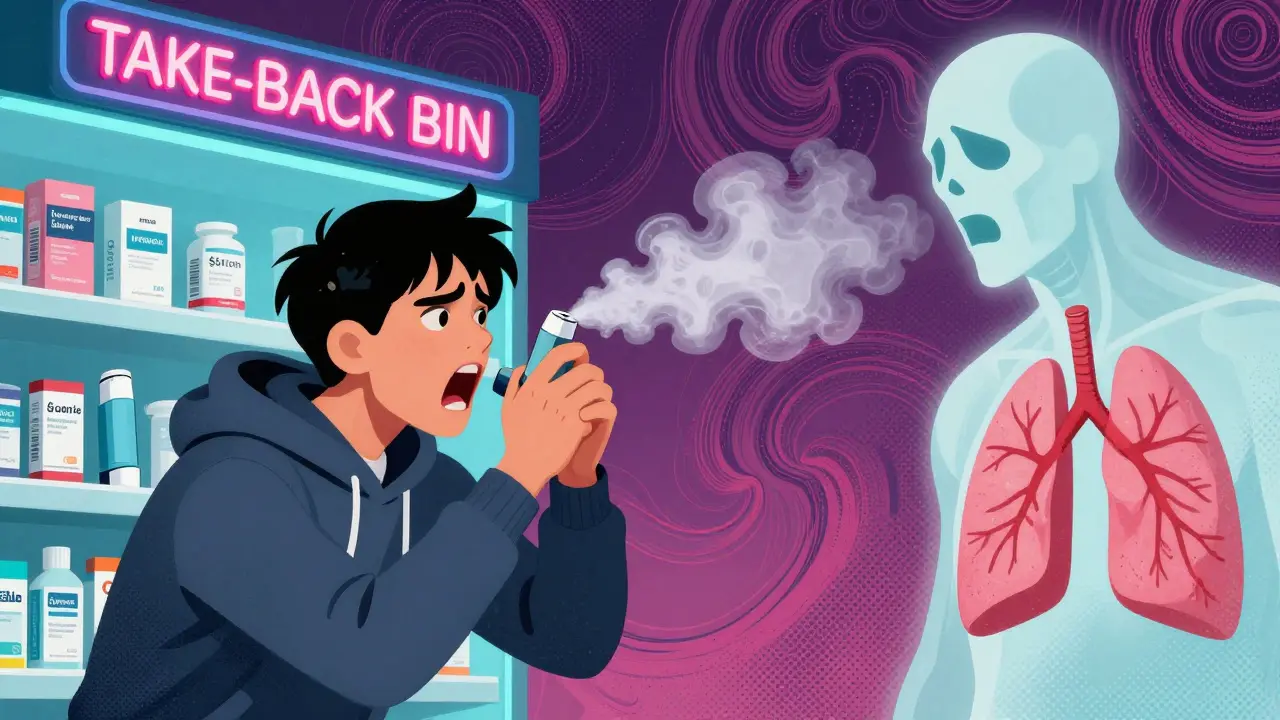
You can’t just toss expired inhalers in the trash. They’re pressurized. They contain toxic propellants like HFA. When crushed in a landfill or incinerated, they can explode or release harmful chemicals. The EPA classifies many inhalers as hazardous waste under the Resource Conservation and Recovery Act.The safest way? Use a drug take-back program. There are over 11,000 authorized collection sites across the U.S., including pharmacies like CVS and Walgreens. These locations accept inhalers, eye drops, creams, and pills. No questions asked. No prescription needed. Just drop them in the bin.
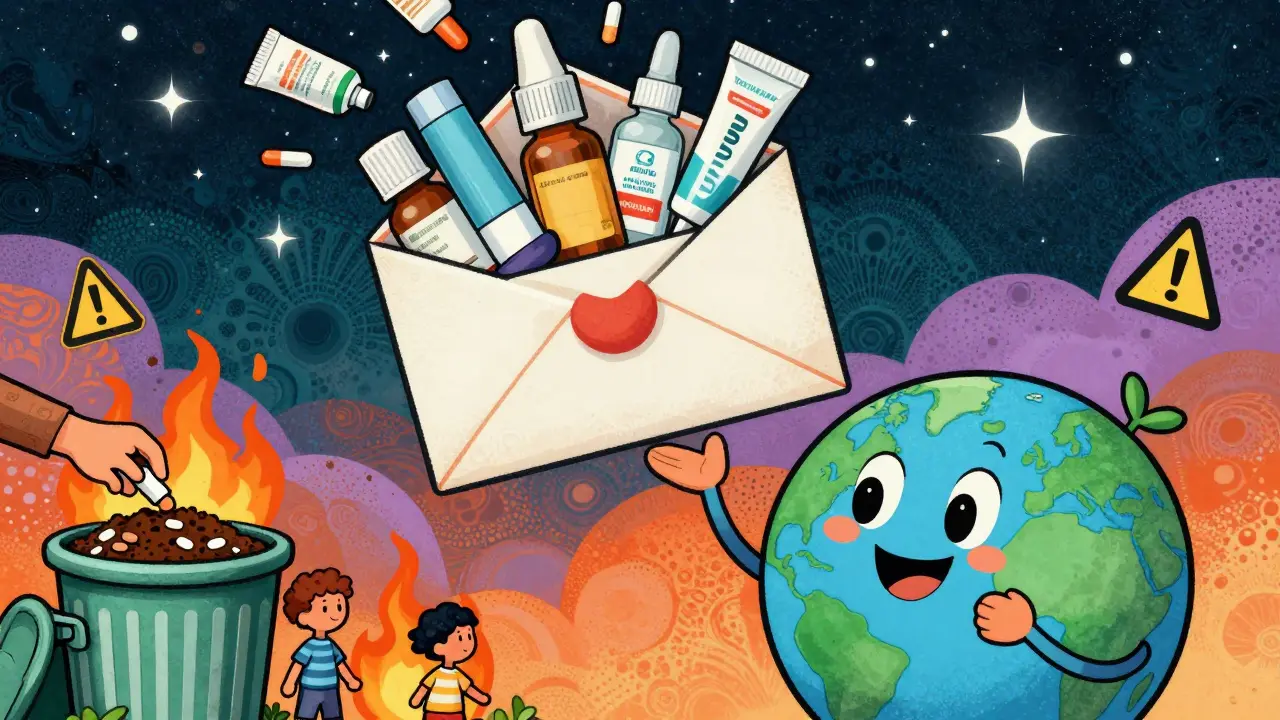
If there’s no nearby drop-off, mail-back programs are a solid alternative. Amazon Pharmacy offers free mailers for expired inhalers. Washington State and 78% of U.S. states now have similar programs. You get a prepaid envelope, put your inhaler in, seal it, and drop it in the mailbox. Done.
For eye drops and creams, remove the contents from the container. Mix them with something unappealing-used coffee grounds, kitty litter, or dirt. Put the mixture in a sealed plastic bag, then throw it in the trash. Never flush them. The FDA warns that flushing medications contaminates waterways. The U.S. Geological Survey found pharmaceutical residues in 80% of U.S. streams.
For inhalers, never puncture or burn them. Don’t put them in recycling. Don’t leave them in the car where heat speeds up degradation. Treat them like hazardous waste-because they are.
What to Do If You Can’t Afford a New One
Cost is the #1 reason people use expired medications. A 2022 survey by the Asthma and Allergy Foundation of America found that 41% of low-income patients used expired inhalers because they couldn’t afford replacements. That’s not negligence-it’s desperation.But there are options. Many pharmacies offer $5 generic albuterol inhalers. Some manufacturers have patient assistance programs. GlaxoSmithKline and Teva offer free or discounted inhalers to qualifying patients. Call their customer service lines. Ask your doctor for samples. Community health centers often have free medication programs.
If you’re on Medicaid or Medicare, ask about formulary changes. ProAir HFA was discontinued in 2022, but generic alternatives are now available at lower prices. Don’t assume you’re stuck with an expensive brand. Ask your pharmacist: “Is there a cheaper, equally effective generic?”
How to Prevent This From Happening Again
Set a reminder. Every six months, check your medicine cabinet. Take everything out. Look at the expiration dates. Write them on a sticky note if they’re hard to read.Buy smaller quantities. Don’t stockpile. If you only use an inhaler once a month, you don’t need a 12-month supply. Get a 3-month supply instead. That reduces waste and the chance of using something old.
Use smart packaging. Propeller Health’s inhaler cap, released in 2023, tracks usage and sends a text alert 30 days before expiration. It even tells you where to dispose of it. These tools are becoming more common-and affordable.
Teach your family. Kids with asthma, seniors on multiple medications, caregivers for elderly parents-they all need to know this. A simple conversation could prevent a hospital visit.
When to Replace, Not Risk
Here’s a quick rule: If it’s expired, and it’s life-saving-replace it. No exceptions.- Inhalers: Replace immediately after expiration. Don’t wait for the canister to feel weak. That’s too late.
- Eye drops: Toss them 28 days after opening, or by the printed date-whichever comes first.
- Topical creams: If the texture changed, smell is off, or it’s past the date-throw it out. No second chances.
For non-critical items like pain relievers or antacids, you might get away with using them slightly past expiration-but only if they look and smell normal. But for anything that could stop a seizure, an asthma attack, or an allergic reaction-don’t gamble.
Medications aren’t like milk. They don’t just spoil. They weaken. And when they do, they can kill.
Can I still use an expired inhaler in an emergency?
No. Expired inhalers may deliver inconsistent or reduced doses, which can be life-threatening during an asthma attack. Studies show that inhalers past their expiration date can lose up to 40% of their potency. Relying on one in an emergency could mean the difference between relief and hospitalization. Always replace expired inhalers before they’re needed.
Are expired eye drops dangerous to use?
Yes. Expired eye drops can become contaminated with bacteria, fungi, or mold, especially after being opened. A 2022 study found 38% of expired artificial tears had microbial growth. Using contaminated drops can lead to serious eye infections, corneal ulcers, or even permanent vision damage. Never use eye drops past their expiration date-or more than 28 days after opening.
Can I throw expired inhalers in the trash?
No. Inhalers contain pressurized gas and toxic propellants like HFA, which can explode if crushed or incinerated. The EPA classifies them as hazardous waste. Instead, use a drug take-back program at a pharmacy or a free mail-back service like those offered by Amazon Pharmacy or state health departments.
How long after expiration are medications still effective?
It varies. Most pills and liquids lose potency slowly-some retain 90% of effectiveness for a year past expiration if stored properly. But inhalers, eye drops, and injectables degrade faster and unpredictably. The FDA says expiration dates are about potency, not safety-but for life-saving medications, you can’t afford to risk it. Always replace them on time.
Where can I safely dispose of expired medications?
Use a drug take-back program. CVS, Walgreens, and other pharmacies have collection bins in over 11,000 locations nationwide. You can also use free mail-back kits from Amazon Pharmacy or state health departments. For non-inhalers, mix medications with coffee grounds or kitty litter, seal them in a bag, and throw them in the trash. Never flush them.
Lana Kabulova
January 23, 2026 AT 09:28So I just checked my medicine cabinet-turns out I’ve been using my albuterol inhaler since 2021. 😳 I thought it was fine because it still ‘puffed’… but now I’m sweating bullets. I’m heading to CVS tomorrow to drop it off. Thanks for the wake-up call.
Rob Sims
January 24, 2026 AT 21:51Of course people use expired meds. You think the pharmaceutical industry wants you to replace them every 6 months? Nah. They want you hooked. And now you’re paying $400 for a new inhaler because the ‘generic’ is ‘not covered’ under your ‘insurance.’
It’s not negligence-it’s capitalism. And you’re the sucker.
arun mehta
January 25, 2026 AT 01:17Thank you for this deeply informative post 🙏
As someone from India, where access to affordable medications is a daily struggle, I can relate to the desperation many feel. But safety must come first-even if it means walking 5 km to a take-back center.
Let’s spread awareness in our communities. A life saved is better than a saved dollar. 💪❤️
Chiraghuddin Qureshi
January 25, 2026 AT 11:48Bro, in India we just use whatever works. My uncle used expired eye drops for 3 years-still sees fine. 😎
Maybe the FDA is just trying to sell more bottles? 🤔
Also, why can’t we just reuse the plastic? Recycle it, man!
Patrick Roth
January 26, 2026 AT 19:13Wait-so you’re telling me the FDA’s expiration dates are *actually* meaningful? Like, not just a marketing ploy to keep us buying? I’ve been told for years that 90% of drugs are still effective years past expiration. The military even stocks expired meds in case of war. So… why are you suddenly scared of a little time?
Lauren Wall
January 27, 2026 AT 03:16Expired inhalers = bad. Stop being dumb.
Kenji Gaerlan
January 29, 2026 AT 02:44bro i used my cousin’s inhaler last year when i had a panic attack and it worked fine. i think this whole thing is overblown. also why do i gotta pay $50 for a new one? that’s insane.
Oren Prettyman
January 29, 2026 AT 12:55While I appreciate the intent of this article, I must emphasize that the empirical data presented lacks sufficient longitudinal analysis. The cited studies, while peer-reviewed, are cross-sectional and fail to account for inter-individual pharmacokinetic variance. Furthermore, the EPA’s classification of inhalers as hazardous waste is contingent upon municipal waste management protocols, which vary significantly across jurisdictions. The assertion that ‘expired medications can kill’ is a reductive oversimplification that ignores the broader context of healthcare access disparities, socioeconomic determinants of health, and the role of pharmaceutical lobbying in shaping regulatory policy. In short: the problem is not expiration-it’s inequity.
Tatiana Bandurina
January 29, 2026 AT 23:55Did you know that the FDA doesn’t require manufacturers to test stability after opening? That’s why eye drops are so dangerous. And yet, no one talks about how the packaging is designed to make you think it’s safe. It’s psychological manipulation. They want you to feel like you’re doing the right thing by keeping it… until it’s too late.
Philip House
January 30, 2026 AT 09:41Look, if you’re too poor to afford a $40 inhaler, that’s not my problem. America doesn’t owe you medicine. If you can’t afford it, don’t use it. Or better yet-move to a country that doesn’t pretend to be free. The fact that you’re still alive using expired meds proves you’re tougher than most. Maybe that’s the real lesson here.
Ryan Riesterer
January 31, 2026 AT 11:28Propellant degradation in HFA canisters follows first-order kinetics. The half-life of the propellant is approximately 18–24 months post-manufacture under ambient conditions. Once pressure drops below 85% of nominal, dose delivery becomes statistically unreliable. This is not speculation-it’s physics. And yes, the 2021 Chest study’s 60–70% potency retention aligns with this model. The real issue? Patient education is nonexistent.
Mike P
January 31, 2026 AT 18:35My grandma used expired hydrocortisone for 8 years. Her eczema never came back. She also drank bleach to cure cancer. So… I’m going with grandma. She’s 92 and still wins at bingo. 😎
Jasmine Bryant
February 2, 2026 AT 13:33Just got my free albuterol from the clinic! 🎉 They gave me a 3-month supply and a disposal bag. I didn’t even know this was a thing. If you’re struggling, ask your pharmacist-they can help. Seriously. Don’t risk it. I used to be the person with the expired inhaler… now I’m the one telling people to drop it off. 💙
Liberty C
February 3, 2026 AT 15:43Oh, so now we’re treating people like children who can’t handle expiration dates? How quaint. You know what’s really dangerous? The fact that we’ve been conditioned to trust corporations over common sense. The ‘28-day rule’ for eye drops? That’s not science-it’s profit. You’re being sold fear wrapped in a lab coat. Wake up.
shivani acharya
February 3, 2026 AT 23:46Let me tell you something… I’ve been researching this for months. The FDA doesn’t test expiration dates on their own-they rely on drug companies. And guess who owns the FDA? Big Pharma. They set the dates to make you buy more. Plus, the ‘take-back’ bins? They’re just a PR stunt. The meds get incinerated, and the fumes go into the air you breathe. It’s a cycle. They want you sick. They want you dependent. They want you paying $400 for a can of air. And you’re falling for it. 😔