Key Takeaways for Safe Medication Use
- Avoid vague terms like "twice daily"; look for explicit times (e.g., 8 AM and 8 PM).
- Always use metric measurements (mL) for liquids instead of household spoons.
- Ask your pharmacist for a "Medication Schedule Grid" if you take multiple drugs.
- Confirm the maximum daily dose for any medication labeled "as needed."
The Problem with Vague Frequency Instructions
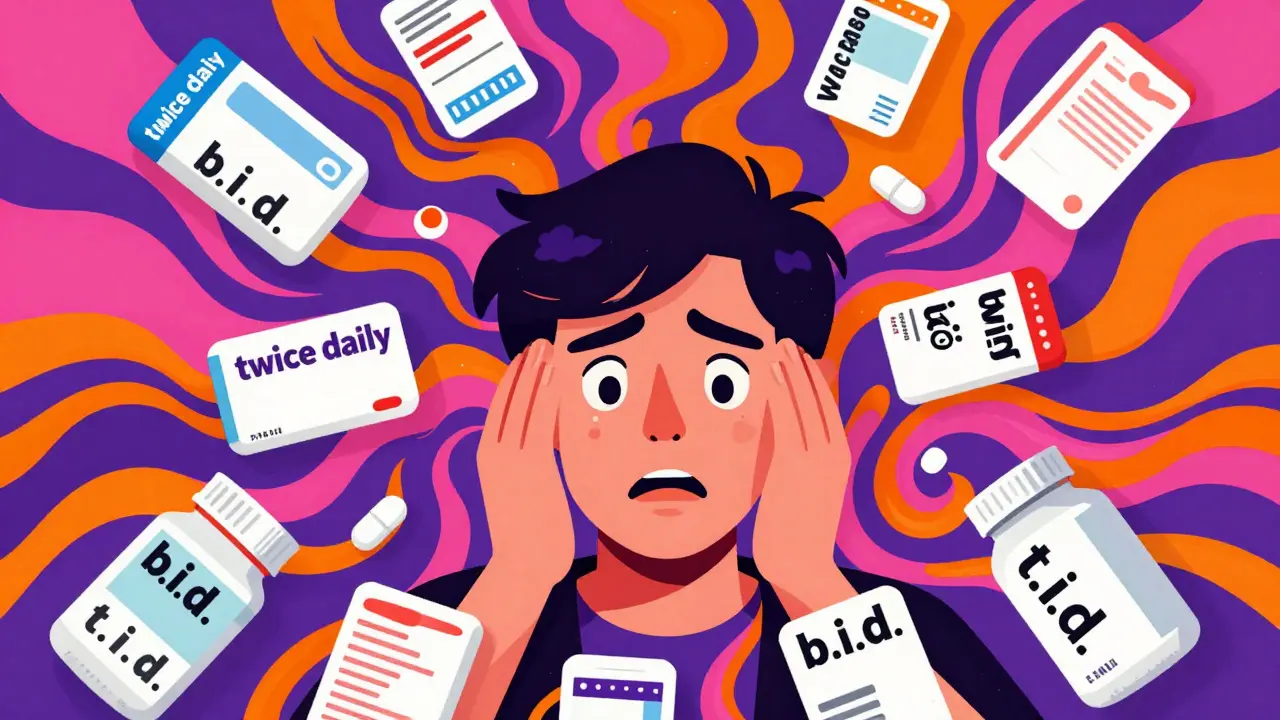
Many of us are used to seeing Latin abbreviations or general phrases on our bottles. You might see b.i.d. (twice daily) or t.i.d. (three times daily). While these are standard for doctors, they aren't always clear to patients. In fact, an American Medical Association survey showed that only about 37% of adults actually understand what these abbreviations mean. When a label says "once daily," some people take it at 8 AM on Monday and 3 PM on Tuesday. This inconsistency can cause the drug levels in your blood to dip or spike, making the treatment less effective. This is especially risky for drugs with a narrow therapeutic index-meaning the difference between a helpful dose and a toxic dose is very small. For these medications, the FDA (U.S. Food and Drug Administration) now pushes for exact administration windows, such as "between 8:00-10:00 AM," to keep patients safe.Decoding the Timing: Intervals vs. Explicit Instructions
There is a big difference between "interval timing" and "explicit timing." Interval timing tells you how often to take a drug (e.g., "every 6 hours"), while explicit timing tells you exactly when to take it (e.g., "with breakfast and dinner"). Research from Massachusetts General Hospital found that patients who had explicit instructions had adherence rates nearly 35% higher than those with general intervals. Why? Because tying a pill to a daily habit-like eating breakfast-is much easier for our brains to remember than calculating a 6-hour window from the moment we woke up. However, one size doesn't fit all. For night-shift workers, a label that says "take in the morning" can be confusing. If you sleep during the day, your "morning" might be 6 PM. If you work irregular hours, you should ask your pharmacist to write the instructions based on your actual wake-sleep cycle rather than standard clock time.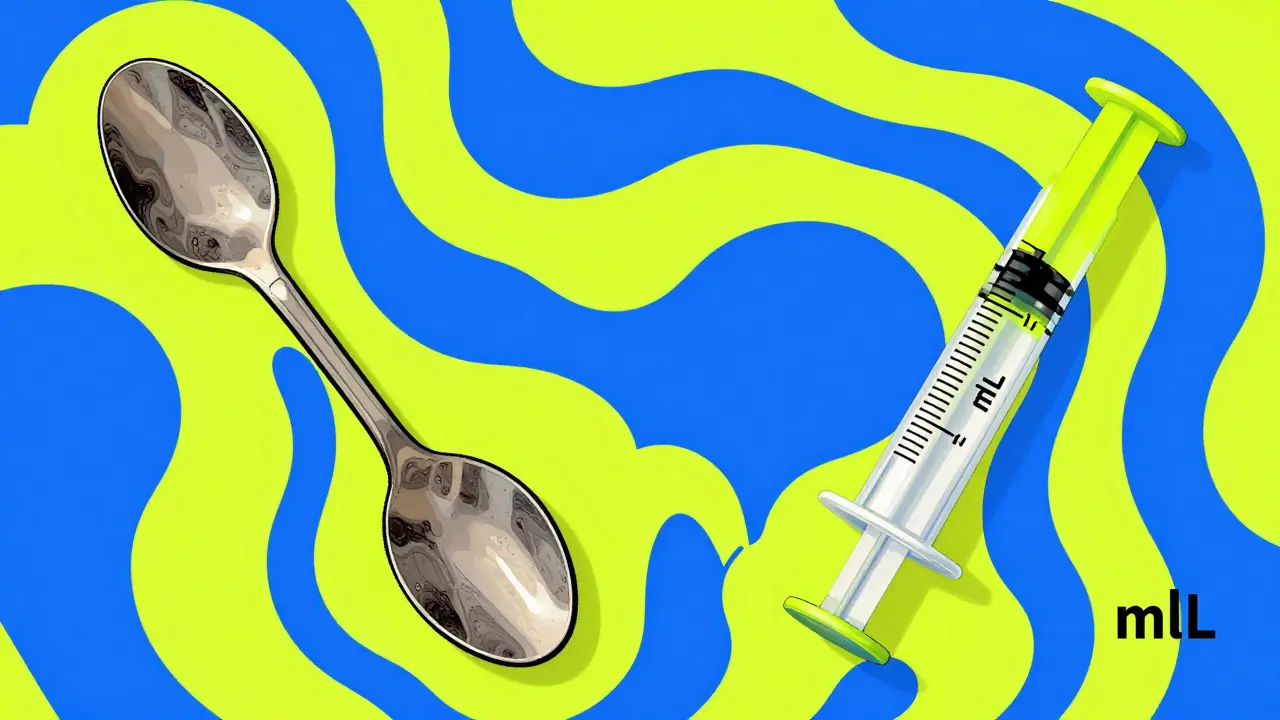
The Danger of "Household" Measurements in Liquid Meds
If you're dosing a child or taking a liquid medication, the biggest red flag is the word "teaspoon" or "tablespoon." These are not precise measurements. One person's teaspoon is different from another's, which can lead to significant dosing errors. To fix this, the NCPDP (National Council for Prescription Drug Programs) mandates the use of Milliliters (mL) as the only standard unit of measure. If your label still uses "spoons," you're at a higher risk of a measurement error. Always use the oral syringe or dosing cup provided by the pharmacy; never use a kitchen spoon.| Label Style | Example Instruction | Pros | Cons | Patient Adherence |
|---|---|---|---|---|
| Interval-Based | "Take 2 tablets daily" | Flexible for schedules | High confusion, easy to skip | Lower |
| Explicit Timing | "1 tablet with breakfast, 1 with dinner" | Easy to remember, linked to habits | Hard for shift workers | Higher (+34.7%) |
| Strict Window | "Take between 8:00-10:00 AM" | Highest safety for toxic drugs | Very rigid | Very High |
Understanding "As Needed" (PRN) Instructions
One of the most misinterpreted phrases on prescription labels is "take as needed" (often abbreviated as PRN). A Consumer Reports survey found that nearly 68% of people don't actually know the maximum daily dose for their "as needed" pain medications. Taking a drug "as needed" doesn't mean you can take it indefinitely. Every medication has a ceiling-a maximum amount you can safely take in 24 hours. If your label says "take 1-2 tablets every 6 hours as needed for pain," the implicit math is that you cannot exceed 8 tablets in a day. If this limit isn't clearly spelled out, it's a major safety gap. Always ask: "What is the absolute maximum number of doses I can take in 24 hours?"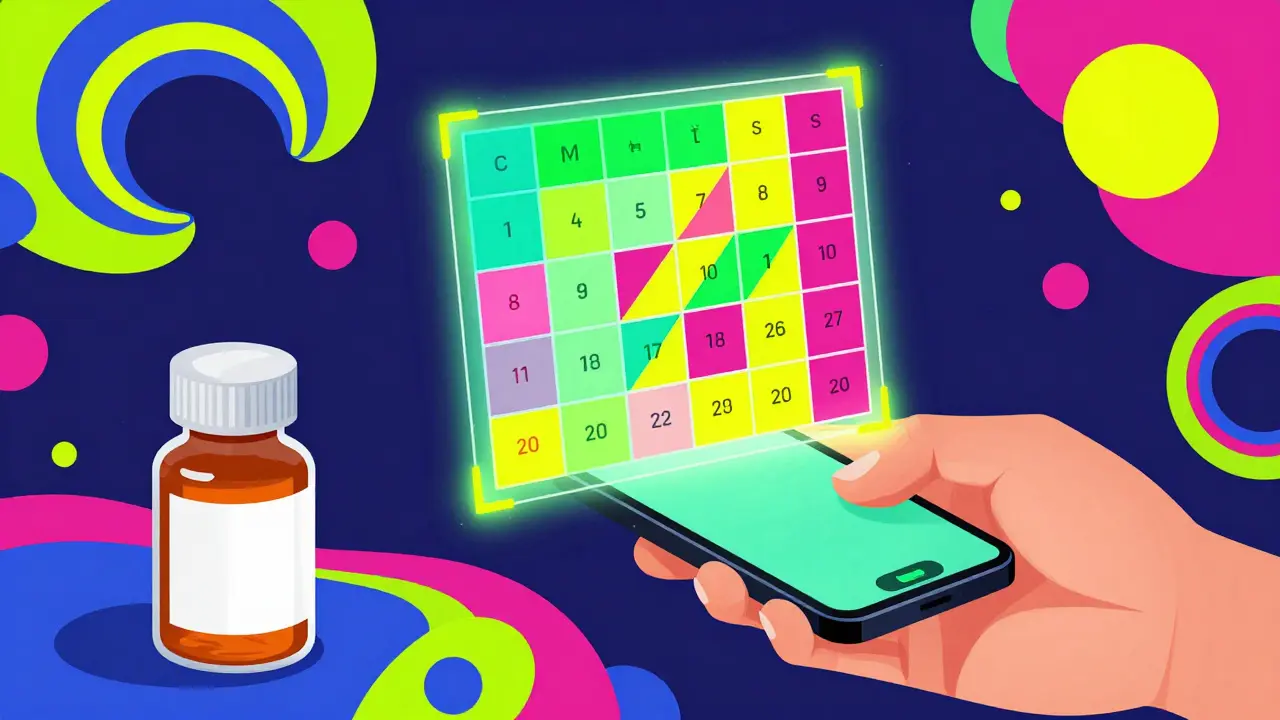
Common Pitfalls: Food, Water, and Timing
Timing isn't just about the clock; it's about what's in your stomach. Some medications require an empty stomach to be absorbed. For example, levothyroxine (used for thyroid issues) must be taken before food. However, studies show that over 32% of patients still take it with food because the label just said "once daily" without specifying the stomach requirement. On the flip side, some drugs, like metformin, can cause intense stomach upset if taken without food. When a label explicitly says "take with breakfast," it's not just a suggestion-it's a strategy to reduce side effects. If your label doesn't specify food requirements, check with your pharmacist to see if the drug should be taken on an empty stomach or with a meal.The Future of Labels: AR and Grids
We are moving away from the tiny, hard-to-read print on plastic bottles. The FDA is currently piloting augmented reality (AR) labels. By scanning a bottle with a smartphone, patients can see a visual demonstration of when and how to take their meds, which has already shown a 52% reduction in timing errors in early trials. Furthermore, a new proposed rule may soon require a "Medication Schedule Grid." Instead of a long sentence of text, you'll get a visual calendar showing exactly which doses happen on which days and at what times. This removes the guesswork and helps people managing multiple chronic conditions stay on track.What does "b.i.d." or "t.i.d." mean on my prescription?
"b.i.d." is Latin for *bis in die*, meaning twice a day. "t.i.d." stands for *ter in die*, meaning three times a day. Because these can be confusing, it is always better to ask your pharmacist for the specific times of day you should take the medication.
Why shouldn't I use a kitchen spoon for liquid medicine?
Kitchen spoons vary wildly in size and shape, making it impossible to get an accurate dose. Using them can lead to under-dosing (where the medicine doesn't work) or over-dosing (which can be toxic). Always use a metric mL syringe or the dosing cup provided by the pharmacy.
What should I do if I work night shifts and my label says "morning"?
Contact your pharmacist and explain your sleep-wake schedule. They can rewrite the label to specify times that align with your day (e.g., "take upon waking" or specific hours like "6 PM") to ensure you maintain a consistent interval between doses.
What is the danger of taking "as needed" medication without a maximum dose?
Without a clear daily maximum, patients may accidentally take too much of a drug, leading to toxicity or overdose. Always ensure your label explicitly states the maximum number of doses allowed in a 24-hour period.
Does taking medicine with food always help?
No. While some drugs need food to prevent stomach irritation or improve absorption, others are blocked by food. For example, some thyroid medications must be taken on an empty stomach to work correctly. Always verify the food requirements for each specific drug.
Next Steps for Patients and Caregivers
If you are currently managing medications, don't assume the label is complete. Take these steps during your next pharmacy visit:- Audit your labels: Look for vague terms like "daily" or "as directed." If you find them, ask for explicit times (e.g., "8 AM and 8 PM").
- Verify measurements: Ensure all liquid medications are listed in mL. If you see "teaspoons," ask for a corrected label and a proper dosing syringe.
- Clarify the "Ceiling": For any PRN (as needed) medication, write down the absolute maximum daily dose in a place where you can see it.
- Request a Grid: If you take more than three medications, ask your pharmacist to help you create a manual schedule grid until the FDA's standardized grids become common.
shelley wales
April 6, 2026 AT 01:34This is such a helpful reminder for everyone. It can be so overwhelming to manage a few different prescriptions, and just having a bit of extra clarity can make a world of difference in how we feel every day. I really appreciate the tip about the Medication Schedule Grid; it sounds like a wonderful way to stay organized and feel more in control of our health.
Timothy Burroughs
April 7, 2026 AT 10:59imagine actually needing a guide to read a bottle lol some people just cant do basic math these days its pathetic really just use common sense and you wont end up in the er
Brady Davis
April 7, 2026 AT 19:07Oh wow, a whole guide on how to read. Truly groundbreaking stuff here. I'm sure the FDA is just thrilled that we're finally figuring out that a spoon isn't a medical instrument. Absolute peak cinema.
Danielle Kelley
April 9, 2026 AT 16:17The FDA is pushing these "AR labels" just so they can track exactly when and where you're taking your meds. It's not about safety, it's about surveillance. They want a digital footprint of every single pill you swallow so they know exactly how to manipulate the dosage from their end. Wake up people, this is just another way to get us hooked on a system they control entirely!
Christopher Cooper
April 11, 2026 AT 03:48The point about the narrow therapeutic index is really critical. It's fascinating how a slight deviation in timing can shift a drug from being therapeutic to being toxic. I wonder if the shift toward explicit timing will eventually lead to a complete overhaul of how pharmacists communicate with patients globally, as it seems the interval-based system is fundamentally flawed for the average person's routine.
Dhriti Chhabra
April 12, 2026 AT 05:15It is most prudent to ensure that one maintains a dialogue with their healthcare provider to avoid any discrepancies in medication administration.
Rupert McKelvie
April 14, 2026 AT 03:55I've always found that setting a phone alarm works wonders for the "twice daily" conundrum. It's a simple fix that takes the guesswork out of the equation and ensures you're consistent every single day.
Sarabjeet Singh
April 14, 2026 AT 05:19Spot on. Just get those alarms set and stay on top of it!
Alexander Idle
April 15, 2026 AT 08:04Honestly this is just way too much reading for a basic concept. Like, really, we need a whole table to understand that spoons are bad? It's practically an essay at this point and I'm just exhausted just looking at the formatting. I mean, sure, the info is fine, but who has the time to audit their entire medicine cabinet like they're doing a corporate tax audit? It's just too much drama for a bottle of pills. I'll just keep doing what I'm doing and hope for the best because this whole "grid" thing sounds like a chore that requires way more effort than I'm willing to put in on a Tuesday afternoon. Seriously, just tell me when to take it and leave me alone.
charles mcbride
April 15, 2026 AT 20:13I believe that taking a proactive approach with your pharmacist is the best way to ensure your long-term health outcomes are optimized.