
A goiter isn’t just a bump in the neck-it’s a sign your thyroid is working overtime. The thyroid, a small butterfly-shaped gland at the base of your throat, normally weighs about 15 to 20 grams. When it swells, it can grow to 50, 80, even 100 grams or more. That’s not just a cosmetic issue. A large goiter can press on your windpipe, making it hard to breathe, or on your esophagus, making swallowing tough. Some people notice their voice becoming hoarse. Others feel a tightness in their throat they can’t explain.
What Causes a Goiter?
The most common cause worldwide? Not enough iodine. About 90% of goiters in places without iodized salt are due to iodine deficiency. Your thyroid needs iodine to make thyroid hormones. If it doesn’t get enough, it grows bigger trying to catch up-like a muscle straining to lift a heavier weight. This is why goiter was once so common in mountainous regions like the Alps or the Great Lakes, where soil and water lacked iodine.
In the U.S., things are different. Since the 1920s, we’ve added iodine to table salt. That cut goiter rates by over 90%. Today, the biggest culprits are autoimmune diseases. Hashimoto’s thyroiditis, where your immune system attacks your thyroid, is the #1 cause. It often leads to an enlarged gland that’s also underactive. Graves’ disease, another autoimmune condition, causes the thyroid to overproduce hormones and swell-this is called a toxic goiter.
Other less common causes include thyroid nodules, inflammation from infection, or even certain medications. But for most people, it’s either iodine deficiency or an autoimmune problem.
Who’s at Risk?
Women are three times more likely to develop a goiter than men. After age 40, your risk goes up. If you have a family history of thyroid disease, you’re more vulnerable. Pregnant women need more iodine-220 mcg daily-and if they don’t get it, their thyroid can swell. Breastfeeding women need even more: 290 mcg.
Even in countries with iodized salt, some people still fall short. Vegans, people who avoid dairy and eggs, or those who use non-iodized sea salt might not be getting enough. A single gram of iodized salt has about 45 mcg of iodine. The recommended daily amount for adults is 150 mcg. That means you’d need about 3.5 grams of salt-less than a teaspoon-to meet your needs. But most people don’t eat that much salt. And if you’re using Himalayan or kosher salt, it’s likely not iodized at all.
How Iodine Supplementation Works
If your goiter is from iodine deficiency, adding iodine back in can shrink it. Clinical studies show that taking 150 mcg of iodine daily for 6 to 12 months reduces thyroid size by 30 to 40%. That’s not magic-it’s biology. Your thyroid stops overworking once it has what it needs.
Supplements come in different forms: potassium iodide tablets, multivitamins with iodine, or even kelp-based products. But not all are equal. The American Thyroid Association recommends sticking to potassium iodide-it’s pure, stable, and predictable. Kelp supplements? They can vary wildly in iodine content. One pill might have 50 mcg. Another might have 500 mcg. Too much iodine can actually trigger thyroid problems in susceptible people.
For pregnant women, prenatal vitamins with 150 mcg of iodine are standard. If you’re not taking one, talk to your doctor. The same goes for people living in areas with low iodine in the soil or water. A simple blood test can check your iodine levels through urinary iodine concentration.
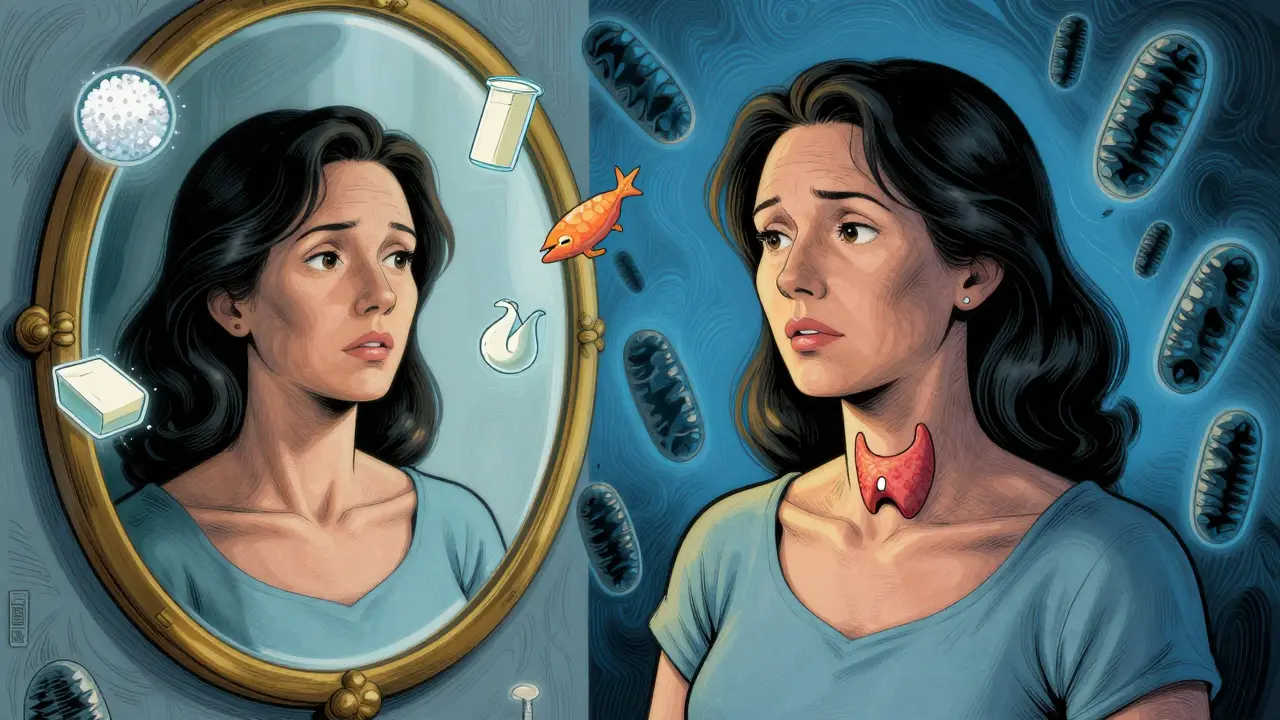
What About Other Supplements?
You’ve probably heard about selenium for thyroid health. It’s true that selenium helps convert thyroid hormones and reduces inflammation. But here’s the catch: a 2021 Cochrane Review looked at 11 studies and found no meaningful reduction in goiter size from selenium supplements. The odds of improvement? Almost the same as taking a placebo.
Some European guidelines suggest selenium might help in early Hashimoto’s, especially if you’re deficient. But it’s not a goiter treatment. It’s a supportive measure at best. Don’t waste money on selenium pills hoping they’ll shrink your thyroid. Focus on iodine first-if deficiency is the cause.
Treatment Beyond Iodine
If your goiter isn’t from iodine deficiency, supplementation won’t fix it. That’s where things get more complex.
For Hashimoto’s-related goiters, the goal isn’t shrinking the gland-it’s replacing the hormones your thyroid can’t make anymore. Levothyroxine, a synthetic thyroid hormone, is the standard. It stops your pituitary from overstimulating the thyroid, which can slow further growth. But because Hashimoto’s causes scarring, the goiter shrinks only 10 to 20%-not enough to disappear. Most people live with a small, stable lump.
Graves’ disease is different. The thyroid is overactive. Medications like methimazole (5-30 mg daily) can bring hormone levels down and shrink the gland by 40 to 60% over a year or two. But relapse is common after stopping the drug. Radioactive iodine treatment is often used next. It destroys part of the thyroid, reducing size by half in 6 to 12 months. The downside? 75 to 80% of people end up with permanent hypothyroidism and need lifelong hormone replacement.
Surgery is reserved for large goiters-over 80 to 100 mL-or those causing breathing or swallowing problems. A total thyroidectomy removes 30 to 40 grams of tissue. Recovery takes weeks. Risks include voice changes (in 15% of cases) and low calcium levels (in 8%). Patient reviews show only 42% satisfaction with surgical outcomes, mostly due to these side effects.
How Do You Know What You Have?
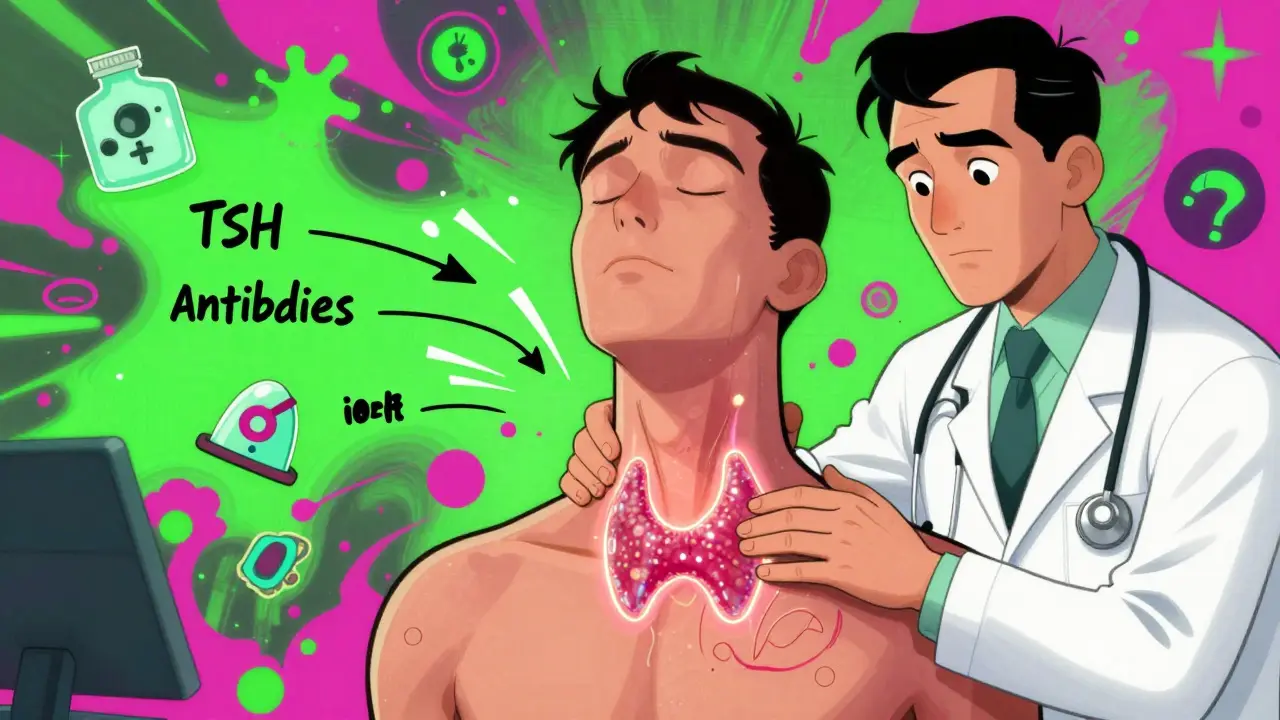
Not all goiters are obvious. Some are tiny, found only on an ultrasound. Others are large enough to see in the mirror. Your doctor will check your neck, feel for swelling, and listen for a bruit-a whooshing sound caused by increased blood flow.
Tests include:
- Thyroid function tests: TSH, free T4, free T3. High TSH means your thyroid is underactive. Low TSH means it’s overactive.
- Antibody tests: TPO antibodies for Hashimoto’s, TRAb for Graves’.
- Ultrasound: Measures thyroid volume. Anything over 25 mL is abnormal.
- Radioactive iodine uptake: Helps tell if the gland is overactive or underactive.
- Urinary iodine: Shows your iodine status over the past few days.
Don’t assume your goiter is from iodine deficiency just because you live in the U.S. Autoimmune causes are far more common here. Testing is the only way to know.
Can You Prevent It?
Yes-mostly by getting enough iodine. The easiest way? Use iodized salt. A pinch on your food adds 45 mcg. If you avoid salt, eat dairy, eggs, or seafood a few times a week. Cod, shrimp, and yogurt are good sources. Seaweed? It’s packed with iodine-but one sheet of nori can have 16-43 mcg. Too much can backfire.
Pregnant women should take a prenatal vitamin with iodine. Children in areas without iodized salt need supplements. The WHO recommends 90-150 mcg daily for kids, depending on age.
Don’t take iodine supplements unless you’ve been tested. Too much can trigger hyperthyroidism, especially in older adults or those with nodules.
What’s the Outlook?
If your goiter is from iodine deficiency and you start supplementation early, you’ve got a great chance-70 to 85% of cases resolve completely within a year or two. No pills, no surgery. Just a simple fix.
But if it’s autoimmune, you’re looking at long-term management. Most people with Hashimoto’s will eventually need thyroid hormone replacement. Around 60% develop a shrunken, inactive thyroid over 10 to 15 years. That’s not failure-it’s progression. It’s just how the disease works.
For toxic goiters, treatment is effective, but recurrence is common. Radioactive iodine and surgery offer lasting results, but they come with trade-offs. You’ll need to monitor your thyroid for life.
Research is moving fast. The NIH’s TRIPOD study, tracking 5,000 people across 10 countries, has already found 37 genetic spots linked to thyroid size. That could one day help predict who’s at risk before the gland even swells.
The global market for thyroid treatments is growing fast-projected to hit $6.3 billion by 2027. Levothyroxine is the most prescribed drug in the U.S. for thyroid issues, with over 120 million prescriptions a year. That tells you how common this problem really is.
But here’s the bottom line: goiter isn’t a mystery anymore. We know what causes it. We know how to fix it-when we catch it early. If you notice a lump, a tight throat, or trouble swallowing, don’t wait. Get checked. Your thyroid is small, but it controls everything.
Is a goiter always a sign of thyroid cancer?
No, a goiter is almost never cancer. Less than 5% of enlarged thyroids turn out to be malignant. Most goiters are caused by iodine deficiency, autoimmune disease, or benign nodules. But any new lump should be checked. Doctors use ultrasound and sometimes a biopsy to rule out cancer. Don’t panic-but don’t ignore it.
Can I get enough iodine from sea salt or Himalayan salt?
No. Most sea salts, Himalayan salt, and kosher salt don’t contain added iodine. They’re just sodium chloride with trace minerals. If you’re using these instead of iodized table salt, you’re likely not getting enough iodine. Check the label-if it doesn’t say "iodized," it probably doesn’t have iodine.
Should I take iodine supplements if I have Hashimoto’s?
Usually not. Hashimoto’s is an autoimmune condition, not a lack of iodine. Taking extra iodine can make your immune system attack your thyroid harder, making symptoms worse. Only take iodine if your doctor confirms you’re deficient. Most people with Hashimoto’s do fine with levothyroxine and a balanced diet.
How long does it take for iodine supplementation to shrink a goiter?
It takes time. Most people see a noticeable reduction in thyroid size after 6 months of taking 150 mcg of iodine daily. Full shrinkage-up to 40%-usually happens by 12 months. Don’t expect quick results. The thyroid doesn’t shrink overnight. Consistency matters more than dosage.
Can children develop goiters from iodine deficiency?
Yes, and it’s serious. In children, iodine deficiency can lead to stunted growth, delayed development, and lower IQ. That’s why WHO recommends 90-150 mcg of iodine daily for kids, depending on age. In areas without iodized salt, children are often given supplements. In the U.S., most kids get enough from dairy, eggs, and iodized salt-but picky eaters or vegans may need extra.
Is radioactive iodine treatment safe for goiter?
It’s safe for most people, but it’s not without risks. Radioactive iodine effectively shrinks toxic goiters by destroying overactive thyroid tissue. However, it causes permanent hypothyroidism in 75-80% of cases, meaning you’ll need to take thyroid hormone for life. It’s not recommended for pregnant women or those planning pregnancy. The dose is carefully calculated, and side effects like dry mouth or taste changes are usually mild and temporary.
What foods are high in iodine?
Good sources include iodized salt, dairy products like milk and yogurt, eggs, seafood (especially cod, shrimp, and tuna), and seaweed (like kelp and nori). One cup of milk has about 56 mcg, one egg has 24 mcg, and 3 ounces of cod has 99 mcg. Seaweed can have very high levels-sometimes over 1,000 mcg per gram-so eat it sparingly.
Can stress cause a goiter?
Stress doesn’t directly cause a goiter. But chronic stress can worsen autoimmune conditions like Hashimoto’s by affecting your immune system. It won’t make your thyroid swell on its own, but if you already have an underlying issue, stress might speed up the process. Managing stress won’t shrink a goiter, but it can help your overall thyroid health.
Uju Megafu
January 21, 2026 AT 22:17MAHENDRA MEGHWAL
January 22, 2026 AT 15:48Kevin Narvaes
January 23, 2026 AT 17:06Dee Monroe
January 24, 2026 AT 00:12Philip Williams
January 24, 2026 AT 20:33Ben McKibbin
January 26, 2026 AT 05:57Melanie Pearson
January 27, 2026 AT 04:31Rod Wheatley
January 27, 2026 AT 17:04Jerry Rodrigues
January 29, 2026 AT 13:14Stephen Rock
January 29, 2026 AT 14:41Andrew Rinaldi
January 30, 2026 AT 02:02Gerard Jordan
January 30, 2026 AT 23:49