
When a brand-name drug loses patent protection, the race to sell the first generic version begins. But here’s the twist: the company that made the original drug might launch its own generic version - same pills, same factory, same label - right as the first generic hits shelves. This isn’t a mistake. It’s a strategy. And it changes everything about how much you pay for medicine.
What’s the difference between a first generic and an authorized generic?
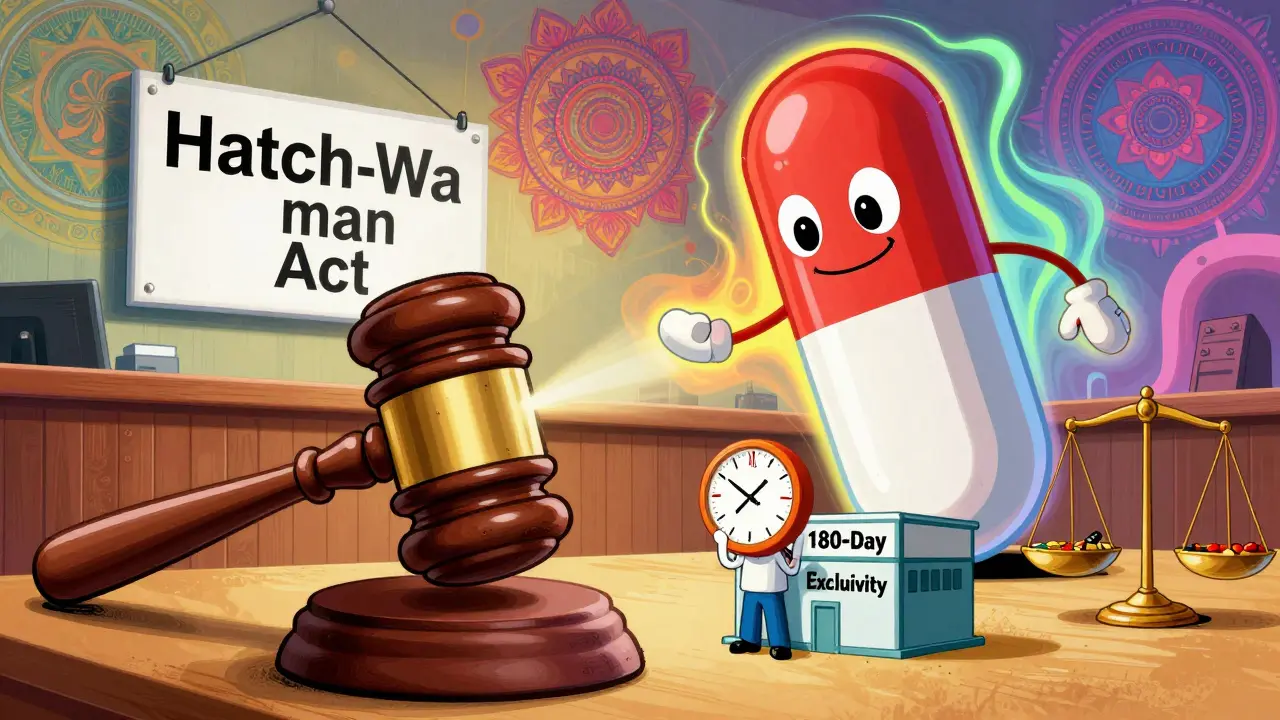
A first generic is made by a company that challenged the brand’s patent and got FDA approval first. They spent years and millions of dollars on legal battles and clinical testing to prove their version works just like the brand. In return, the law gives them 180 days of exclusive rights to sell that generic. During that time, no other generic can enter the market. That’s their reward for taking the risk.
An authorized generic is different. It’s made by the brand-name company - or someone they’ve partnered with - and sold under a generic label. It’s identical to the brand drug: same ingredients, same factory, same packaging. But because it’s based on the original New Drug Application (NDA), it doesn’t need to go through the full FDA review process. That means it can hit the market in weeks, not years.
Here’s the key point: the authorized generic doesn’t need to wait for the 180-day exclusivity period to end. It can launch on the same day as the first generic. And when it does, it splits the market.
Why timing matters more than you think
The whole point of the 180-day exclusivity rule - written into the Hatch-Waxman Act of 1984 - was to reward companies brave enough to take on big drugmakers. The idea was simple: let the first generic dominate the market for six months, drive prices down, and then let others join. That’s how you get real competition.
But in practice, brand companies learned to game the system. Research from Health Affairs shows that 73% of authorized generics launched within 90 days of the first generic’s approval. Over 40% launched on the exact same day.
Take Lyrica, the nerve pain drug made by Pfizer. When Teva launched the first generic version in July 2019, Pfizer rolled out its own authorized generic through Greenstone LLC - same pill, different label - within days. Teva expected to capture 80% of the generic market. Instead, they got stuck with about 50%. Pfizer’s version took 30%. The rest went to later entrants. Revenue for Teva dropped by nearly half.
This isn’t rare. It’s standard. In cardiovascular drugs, CNS medications, and metabolic treatments, this move happens over and over. The brand company doesn’t wait. They strike fast.
How this affects your prescription costs
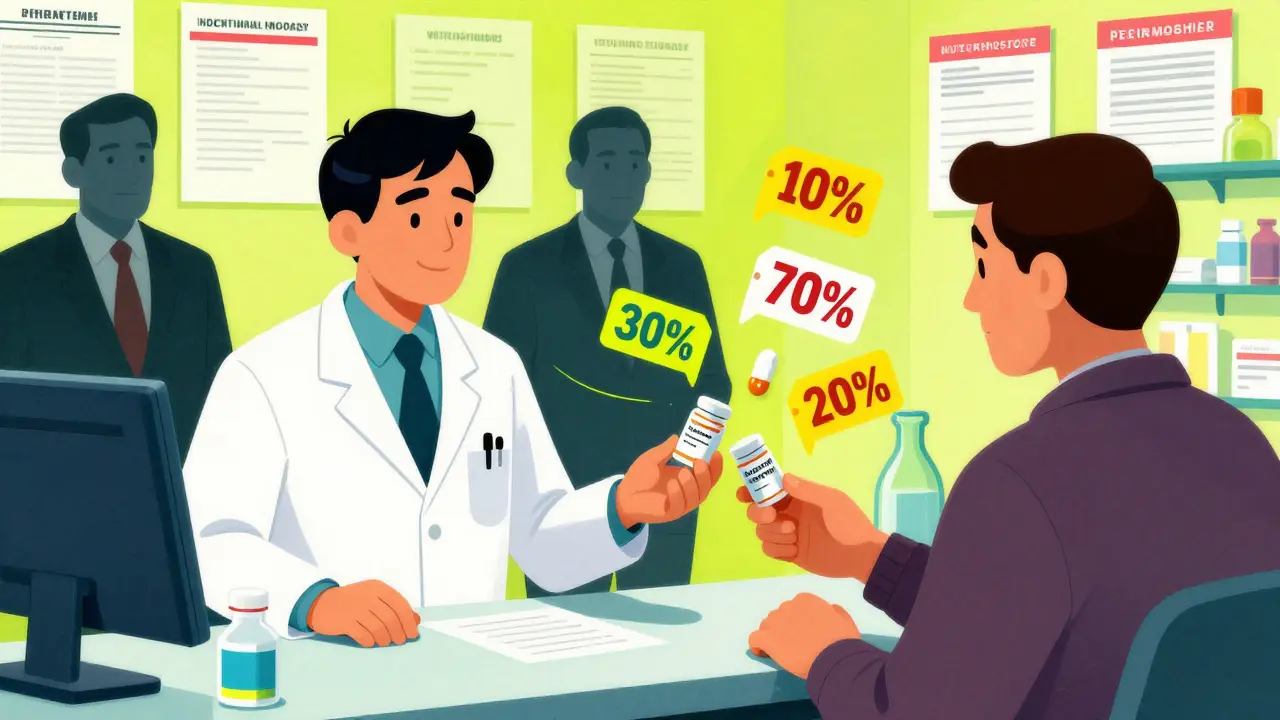
Generic drugs usually cut prices by 80% to 90%. That’s the promise. But when an authorized generic enters the market at the same time as the first generic, the price drop stalls.
RAND Corporation found that when authorized generics launch alongside first generics, prices only fall 65% to 75%. That’s billions of dollars in lost savings for patients, insurers, and Medicare.
Why? Because now there are two generic versions competing - not one. Instead of one low-priced option, you get two slightly different ones. Pharmacies may switch back and forth between them. Insurers may prefer one over the other. The result? Prices don’t crash. They dip, then plateau.
And here’s the kicker: the authorized generic is often priced just below the brand-name drug. Not at rock-bottom generic rates. Just low enough to look like a deal - but high enough to keep the brand’s profits alive.
The legal and regulatory gray zone
The FDA doesn’t stop authorized generics. In fact, they’re allowed under current rules. The brand company doesn’t break any law. They’re just using the system the way it’s written - not the way it was meant to work.
The Inflation Reduction Act of 2022 tried to clarify things. It said authorized generics don’t count as “generic competitors” when Medicare negotiates drug prices. That’s a quiet admission: these aren’t true generics. They’re brand products in disguise.
Meanwhile, the FTC has gone after “pay-for-delay” deals - where brand companies pay generics to delay entry. But authorized generics? Those are legal. Even when they’re launched the same day as the first generic. The courts haven’t stepped in to stop them.
Industry groups are divided. The Association for Accessible Medicines says authorized generics increase access and lower costs. They point to drugs like Lipitor and Prilosec, where generics brought down prices dramatically.
But public health researchers argue something else: authorized generics weaken the incentive to challenge patents. Why spend $10 million and risk a lawsuit if the brand can just launch its own version and steal your profits?
What this means for generic manufacturers
For companies that make generics, the game has changed. The window to profit from a first generic has shrunk from 180 days to as little as 45-60 days in many cases. Executives at mid-sized generic firms say they now build risk models around the chance of an authorized generic launch.
Some are shifting strategy. Instead of betting everything on one blockbuster drug, they’re building portfolios - spreading risk across multiple products. Others are accelerating their timelines, filing ANDAs earlier, and working with manufacturers who can ramp up production in days, not months.
But even with better planning, they’re still outgunned. Brand companies have more money, better access to manufacturing, and no need to prove bioequivalence. They can turn on a dime. Generics can’t.
What’s next for the generic drug market?
By 2027, authorized generics are expected to make up 25% to 30% of all generic prescriptions - up from 18% in 2022. That’s not a small shift. It’s a structural change.
Drugs like Eliquis and Jardiance are next in line. Both are top-selling brand-name medications with patents expiring soon. Analysts expect authorized generic launches to follow closely behind any first generic entry.
Patients won’t see a difference in the pill. But they’ll feel it in their wallets. Prices won’t drop as far. Savings won’t last as long. And the system meant to lower drug costs - the Hatch-Waxman Act - is being used to keep them higher than they should be.
The real question isn’t whether authorized generics are legal. It’s whether they’re fair. And whether the system will change before more patients pay more for less competition.
How to know if your generic is an authorized generic
You can’t always tell just by looking at the pill. But here’s how to find out:
- Check the manufacturer name on the bottle. If it’s the same as the brand (e.g., Pfizer, AbbVie, Merck), it’s likely an authorized generic.
- Look up the drug on the FDA’s Orange Book. It lists all approved generics and their manufacturers.
- Ask your pharmacist. They can tell you if your prescription is a traditional generic or an authorized version.
- Compare prices. If your generic is priced closer to the brand than to other generics, it’s probably authorized.
There’s nothing wrong with authorized generics themselves. They’re safe. They work. But they’re not the same as the independent generics the Hatch-Waxman Act was designed to encourage.
Are authorized generics the same as regular generics?
Yes, in terms of ingredients and effectiveness. Authorized generics are identical to the brand-name drug - same active ingredients, same manufacturer, same factory. The only difference is the label. Regular generics are made by independent companies that had to prove bioequivalence to the FDA. Authorized generics skip that step because they’re based on the brand’s original approval.
Why do brand companies launch authorized generics?
To protect their profits. When a first generic enters the market, it usually takes 80% of sales and drives prices down. But if the brand launches its own generic at the same time, it splits the market. That cuts the first generic’s revenue and keeps overall prices higher than they’d be with true competition.
Can an authorized generic launch before the first generic?
No. Authorized generics can’t launch until the brand’s patent expires and the first generic gets FDA approval. But they can launch on the exact same day - and often do. That’s the timing tactic that undermines the 180-day exclusivity period.
Do authorized generics lower drug prices?
They lower prices a little, but not as much as true generic competition. Studies show that when authorized generics enter alongside first generics, prices drop only 65-75%, not the usual 80-90%. That’s because there’s no real price war - just two versions sharing the market.
Is it legal for a brand company to launch its own generic?
Yes. It’s completely legal under current FDA rules. The Hatch-Waxman Act doesn’t prohibit it. Regulators haven’t blocked it. Courts haven’t ruled against it. But many experts argue it goes against the spirit of the law - which was to reward independent generic manufacturers for challenging patents.
Payton Daily
December 28, 2025 AT 14:28So let me get this straight - the big pharma guys just slap a new label on their own pills and call it a ‘generic’? And we’re supposed to be impressed? That’s like McDonald’s opening a ‘budget burger’ that’s exactly the same as their Big Mac but cheaper - and then acting like they’re the hero of the people. Wake up. This isn’t capitalism. It’s theft with a pharmacy badge.
Kelsey Youmans
December 28, 2025 AT 19:00It is deeply concerning that the legislative framework intended to promote affordable access to essential medications has been co-opted in such a manner. The authorized generic mechanism, while technically compliant with current regulations, fundamentally undermines the equitable intent of the Hatch-Waxman Act. One must consider the broader societal implications of profit-driven structural manipulation within the pharmaceutical supply chain.
Hakim Bachiri
December 29, 2025 AT 18:25Y’all are losing your minds over a label?? This is AMERICA. If you got the cash, you play the game. The FDA lets it happen? Then it’s LEGAL. And if you’re mad, maybe you should’ve gone to med school instead of crying on Reddit. These companies didn’t steal anything - they outsmarted the system. And guess what? The system was built to be outsmarted. #MakeAmericaAffordableAgain
Celia McTighe
December 31, 2025 AT 09:23Ugh I just cried reading this 😭 Like… I’m on a fixed income and my insulin went from $30 to $45 even after the ‘generic’ came out? And now I find out it’s just the same bottle with a different sticker?? That’s not fair. That’s just… cruel. 🥺 Can we please fix this??
Ryan Touhill
January 1, 2026 AT 08:22Let’s not pretend this is accidental. The FDA, the FTC, Congress - they’re all complicit. This isn’t a loophole. It’s a backdoor. The same people who profit from brand-name drugs sit on advisory boards that approve these ‘authorized’ versions. And yes, I know what you’re thinking - ‘conspiracy theory.’ But when 73% of them launch within 90 days? That’s not luck. That’s a playbook. And someone’s getting paid to keep it quiet.
Teresa Marzo Lostalé
January 1, 2026 AT 19:01It’s weird how we cheer for ‘competition’ until it’s the exact same thing with a different name. Like… if you and your twin both open lemonade stands across the street, but you use the same recipe, same pitcher, same sugar - is that competition? Or just… sharing the same cup? 🤔
ANA MARIE VALENZUELA
January 1, 2026 AT 22:21Wow. So the ‘first generic’ is just a pawn in a game they already won. Pathetic. These companies don’t innovate - they just wait for patents to expire so they can steal the market from the people who actually fought for it. And now we’re supposed to be grateful they didn’t raise prices? Please. This isn’t capitalism. It’s feudalism with a corporate logo.
Bradly Draper
January 2, 2026 AT 05:46My grandma takes Lyrica. She didn’t know her ‘generic’ was made by Pfizer. She just thought she got lucky. Now I feel awful. This is messed up.
Gran Badshah
January 2, 2026 AT 05:59bro in india we just buy generic from local pharma for $2 and it works fine. why u guys pay so much? this system is broken af.
Ellen-Cathryn Nash
January 3, 2026 AT 17:50It’s not just about money - it’s about trust. When you’re told ‘this is a generic,’ you expect someone brave and scrappy to beat the system. Not the same company that spent decades pricing you out. It’s a betrayal dressed up as a discount. And it makes me sick to my stomach.
Samantha Hobbs
January 4, 2026 AT 07:46Wait so if my pill says ‘Greenstone’ but it’s made by Pfizer… can I just ask my pharmacist to give me the ‘real’ generic? Or am I just being dumb?