What Happens During an FDA Inspection of a Generic Drug Facility?
If you work at a generic drug manufacturing plant, you know inspections aren’t just paperwork-they’re a real test of your day-to-day operations. The FDA doesn’t show up with a checklist and leave. They dig into your systems, your records, your people, and your culture. And they’ve gotten smarter about it.
In 2026, the FDA inspects generic drug facilities using a risk-based approach. That means not every site gets checked the same way. A facility with a clean history, low-risk products, and strong data integrity might go years between inspections. But if you’ve had a warning letter, a spike in customer complaints, or you make high-risk drugs like injectables or sterile products? You’re on their radar. The FDA’s site selection model uses over a dozen risk factors-from confidential tips to past compliance records-to decide who gets inspected next.
The Six Systems the FDA Always Checks
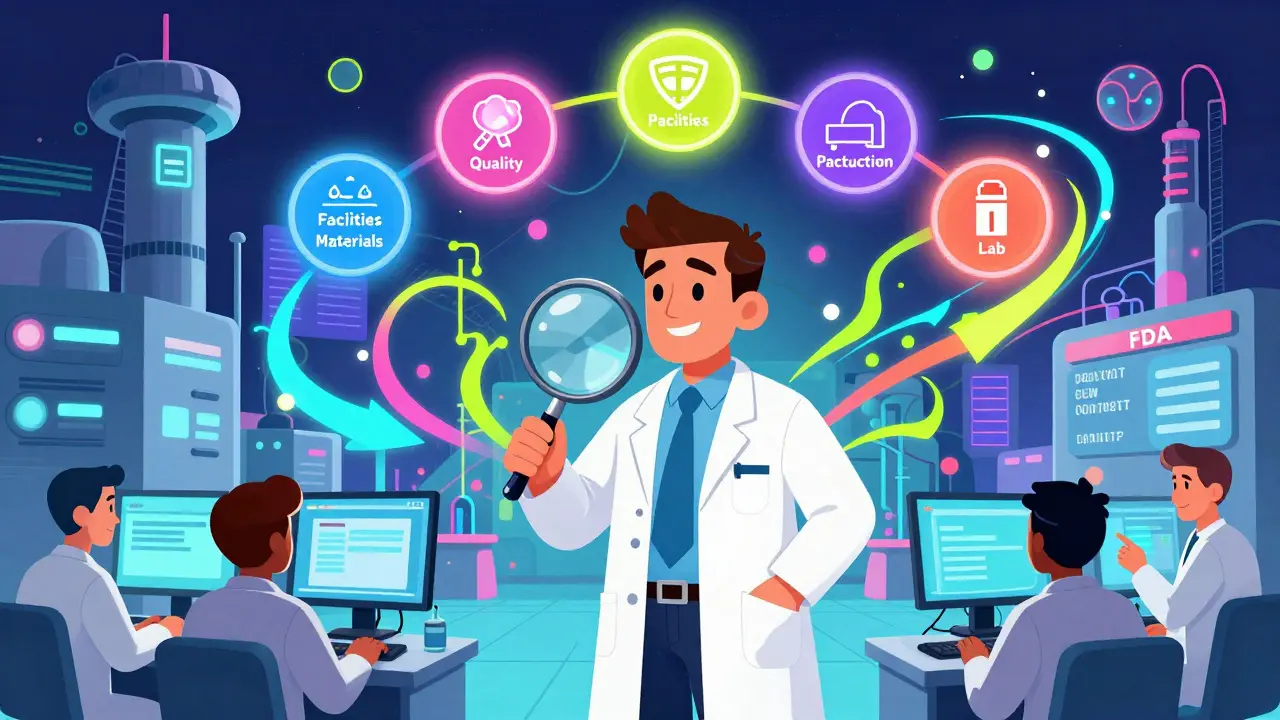
During every inspection, FDA investigators use a six-system framework. It’s not optional. They don’t pick and choose. You’re evaluated on:
- Quality System - Always reviewed. This includes your quality unit’s independence, your SOPs, your deviation management, and how you handle complaints.
- Facilities and Equipment - Is your cleanroom maintained? Are your equipment logs up to date? Is calibration current? No excuses.
- Materials - Where do your raw materials come from? Are suppliers qualified? Do you test incoming batches? If you’re using a vendor without a DMF or audit history, you’re at risk.
- Production - Can you prove your process is validated? Do your batch records match your protocol? Are operators trained and following procedures?
- Packaging and Labeling - One wrong label on a bottle of metformin can cause harm. The FDA checks for correct strength, NDC codes, expiration dates, and lot numbering.
- Laboratory Control - Your lab is under a microscope. Are your analytical methods validated? Are stability samples stored properly? Are data files backed up and unaltered?
The Quality System is the foundation. If that’s weak, the rest collapses. The FDA doesn’t just look at what you do-they look at how you know you’re doing it right.
What Is a Pre-Approval Inspection (PAI)?
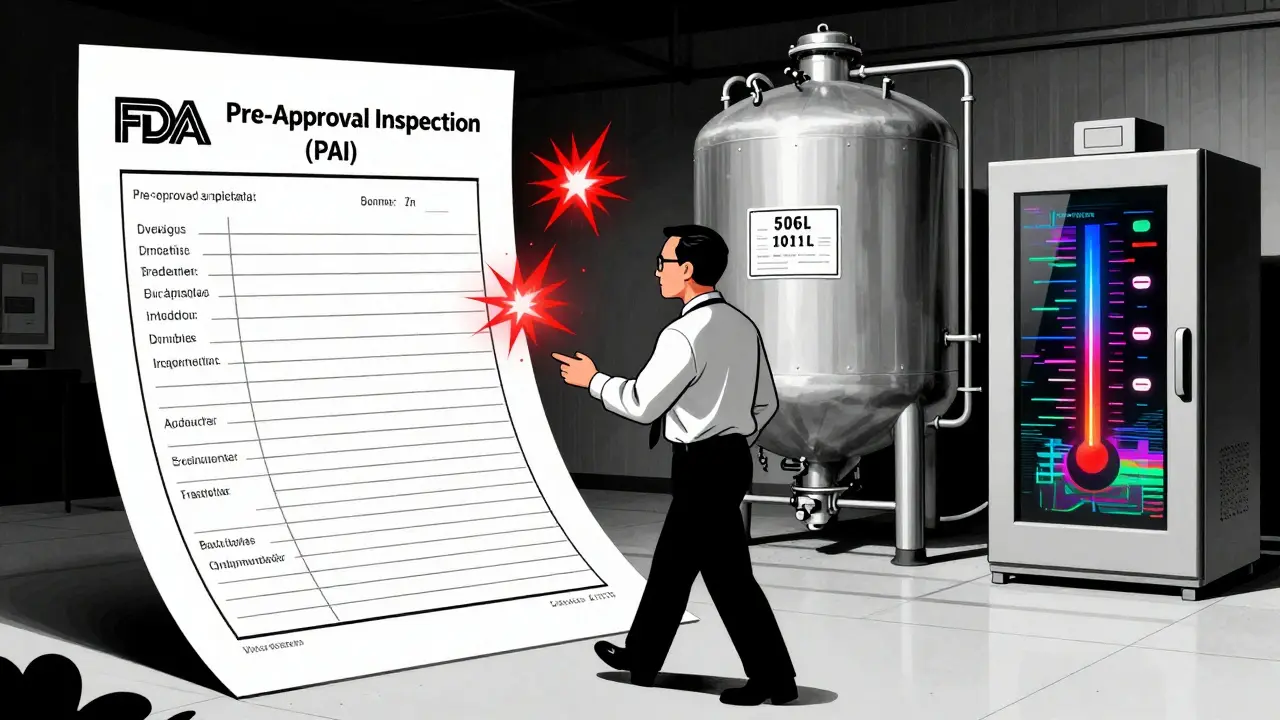
If you’re submitting a new ANDA (Abbreviated New Drug Application) to the FDA, you’ll get a Pre-Approval Inspection. This isn’t a formality. It’s your last chance to prove your facility can actually make the drug you said you could.
The inspection team focuses on three things:
- Is your facility ready for commercial production?
- Does what’s in your application match what’s happening on the floor?
- Is your data complete and accurate?
They’ll walk through your production line and compare every step to your application. If you said you use a 500L reactor but the FDA sees a 1000L tank? That’s a red flag. If your stability protocol says samples are stored at 25°C/60% RH but the chamber is set to 30°C? That’s a violation.
PAIs are especially strict for high-risk products-think inhalers, injectables, or complex generics. One missing validation step can delay approval for months.
What Is an FDA 483? And What Happens After?
If the FDA finds issues, they’ll hand you Form FDA 483. It’s not a warning letter. It’s a list of observations. But don’t treat it lightly. Each item ties back to a specific regulation-like 21 CFR 211.22(a) for lack of a qualified quality unit, or 211.194(a) for missing stability data.
Here’s how it works:
- The inspector lists observations in order of severity.
- You have 15 business days to respond.
- Your response must be detailed, factual, and include root cause analysis and corrective actions.
A weak response-like “we’ll train staff”-will get flagged. A strong one says: “We identified that the SOP was outdated because it wasn’t reviewed since 2021. We’ve revised it (version 3.1), trained 12 staff members, and added quarterly reviews. Evidence attached.”
If the FDA thinks your response is inadequate, they may issue a warning letter. That’s when things get serious. You’ll need to schedule a Post-Warning Letter Meeting (PWLM), which the FDA finalized guidance for in June 2025. These meetings are your chance to show you’ve fixed the problem-before they shut you down.
How to Prepare: Beyond the Checklist
Most companies think preparation means cleaning the floor and printing SOPs. That’s not enough. The FDA sees through that. They want to know: Do you live by your quality system-or just follow it when they’re around?
Here’s what actually works:
- Run mock inspections - Bring in an external auditor every quarter. Pretend they’re FDA. Record the session. Review what tripped you up.
- Designate an inspection zone - Have a quiet room ready with power, internet, and seating. No one should be scrambling for a table when the team arrives.
- Train everyone - Not just QA. Even the janitor should know not to touch a batch record or say, “I don’t know who does that.”
- Keep your facility in constant GMP condition - Don’t wait for an inspection to fix a leaky pipe or a missing calibration sticker. Live in a state of readiness.
Facilities that treat compliance like a culture-not a project-have smoother inspections. The FDA can tell the difference.
The New PreCheck Program: A Game Changer
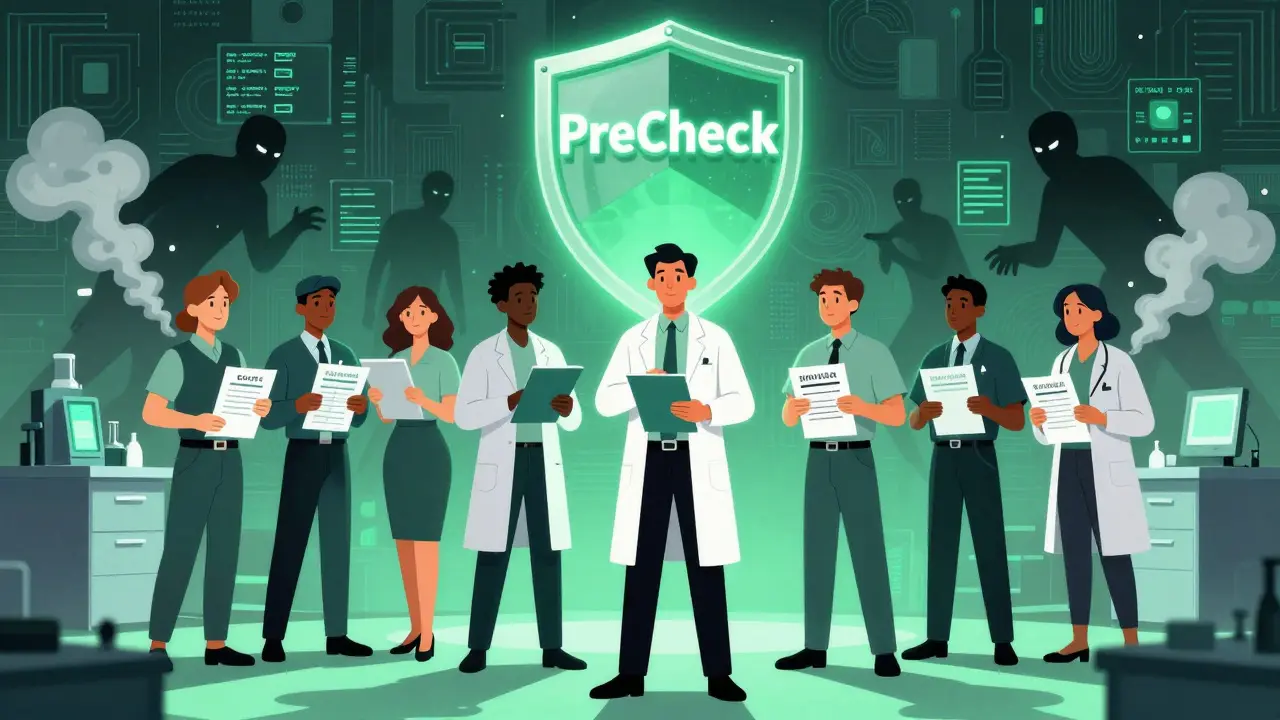
In 2024, the FDA launched PreCheck-a program designed to help manufacturers avoid problems before they happen. It’s not a shortcut. It’s a safety net.
PreCheck lets you submit detailed facility plans during design, construction, and pre-production. You send a Type V Drug Master File (DMF) with your layout, equipment specs, and quality system documentation. The FDA reviews it and gives feedback-before you spend millions building a plant that won’t pass inspection.
Companies using PreCheck report fewer deviations and faster approvals. It’s especially helpful for new entrants or those scaling up. If you’re building a new facility, don’t wait for the inspection. Engage the FDA early.
What the FDA Looks for in Data Integrity
Data integrity isn’t just about backups. It’s about trust. The FDA now trains investigators to spot signs of manipulation:
- Deleted or overwritten chromatography runs
- Manual changes to electronic records without audit trails
- Missing metadata in LIMS or ERP systems
- Same user ID used by multiple people
They’ll pull your raw data. Not summaries. Not printouts. The original files. If your system doesn’t have secure, time-stamped audit trails, you’re at risk.
One company lost approval because their lab tech manually edited a stability report to “fix” an out-of-spec result. The original file was still on the server. The FDA found it. The warning letter followed.
High Compliance Rates-But Why?
The FDA says over 90% of inspections result in acceptable compliance. That sounds reassuring. But here’s the truth: those numbers reflect facilities that treat quality as a priority-not a cost center.
Companies with mature quality management systems, regular internal audits, and empowered quality units don’t panic during inspections. They’re ready. They’ve already fixed the issues before the FDA even showed up.
The real challenge isn’t the rules. It’s the culture. If your team sees compliance as something the QA department handles, you’re already behind.
Final Thoughts: It’s Not About Passing-It’s About Trust
The FDA doesn’t want to shut you down. They want you to make safe, effective drugs. But they won’t trust you unless you prove it-every day, in every record, in every decision.
Inspections aren’t punishment. They’re feedback. The best manufacturers don’t fear them. They use them to improve.
Are FDA inspections always announced?
No. While many inspections are scheduled, the FDA can conduct unannounced inspections-especially for high-risk facilities, those with past compliance issues, or if there’s new information suggesting a problem. Assuming you’ll get advance notice is a mistake. Always be ready.
How long does an FDA inspection usually last?
Most inspections last 3 to 7 days, but complex facilities or those with major findings can extend to two weeks. The duration depends on the facility’s size, the number of products, and the scope of the inspection. A small tablet line might be done in two days. A multi-product sterile facility could take a week or more.
Can the FDA shut down a facility during an inspection?
Yes. If the FDA finds serious, widespread violations that pose a risk to public health, they can issue an injunction or seize products. This is rare but possible. Most often, they issue a warning letter first and give you time to fix things. But if you ignore them or repeat the same violations, shutdown is a real possibility.
What’s the difference between an FDA 483 and a warning letter?
An FDA 483 is a list of observations-potential issues the inspector noticed. A warning letter is a formal regulatory action issued if the FDA believes your response to the 483 is inadequate or if violations are severe. A warning letter is public, can trigger import alerts, and may lead to legal consequences.
How often are generic drug facilities inspected?
There’s no fixed schedule. The FDA uses a risk-based model. Low-risk facilities with clean records may be inspected every 3-5 years. High-risk sites-like those making injectables or with past violations-can be inspected every 1-2 years. Some facilities get inspected multiple times in a year if new concerns arise.
What happens if I don’t respond to an FDA 483?
Not responding is a major red flag. The FDA will assume you’re not taking the findings seriously. This significantly increases the chance of a warning letter, import alerts, or even a consent decree. Even if you disagree with an observation, you must respond. Silence equals non-compliance in the FDA’s eyes.
Can I appeal an FDA inspection outcome?
You can’t appeal the inspection itself, but you can respond to findings and request meetings. If you receive a warning letter, you can request a Post-Warning Letter Meeting (PWLM) to discuss corrective actions. The FDA will consider your response and may schedule a follow-up inspection. The goal is resolution, not punishment-but only if you engage honestly and promptly.
Next Steps: How to Stay Ahead
If you’re in generic manufacturing, here’s what to do now:
- Review your last internal audit. Are the same issues still there?
- Check your SOPs. Are they current? Are people using them?
- Test your data systems. Can you pull raw data from the last six months? Is the audit trail intact?
- Train your team. Not just QA-everyone. Make quality everyone’s job.
- Consider PreCheck if you’re building, expanding, or submitting a new ANDA.
Inspections aren’t going away. But with the right mindset, they become a tool-not a threat.
Jacob Paterson
January 8, 2026 AT 02:32Angela Stanton
January 8, 2026 AT 12:18Johanna Baxter
January 10, 2026 AT 03:13Jerian Lewis
January 11, 2026 AT 07:34Catherine Scutt
January 12, 2026 AT 02:39Kiruthiga Udayakumar
January 12, 2026 AT 08:56Patty Walters
January 12, 2026 AT 23:20Phil Kemling
January 14, 2026 AT 10:11tali murah
January 14, 2026 AT 16:30Diana Stoyanova
January 14, 2026 AT 21:20Jenci Spradlin
January 15, 2026 AT 19:17Elisha Muwanga
January 17, 2026 AT 01:46Maggie Noe
January 17, 2026 AT 20:09Gregory Clayton
January 19, 2026 AT 00:40