Diuretic Interaction & Risk Checker
Select any of the following if currently prescribed or used regularly:
The Hidden Danger Behind Water Pills
You might take them just to lower blood pressure, but Diuretics are powerful drugs that fundamentally change how your kidneys filter blood. While they help remove extra fluid from your body, they mess with your internal chemistry more than most people realize. As of 2023, about 30 million Americans are on these prescriptions annually according to CDC data. That is a massive number of people relying on drugs that shift your salt and minerals. If you are taking these meds, or caring for someone who is, knowing what shifts inside your blood work is vital for staying safe.
Many doctors prescribe them without discussing the delicate balance involved. A common assumption is that these drugs are harmless background noise. They aren't. A landmark study analyzing 20,000 emergency room patients found that 11% were taking diuretics, and some of those cases ended up in the hospital because their chemistry went off the rails. When we talk about "water pills," we are really talking about agents that force your kidneys to dump sodium. Water follows salt, so you pee more, but the mineral loss can be dangerous if you don't track it.
How Your Body Loses Salt and Minerals
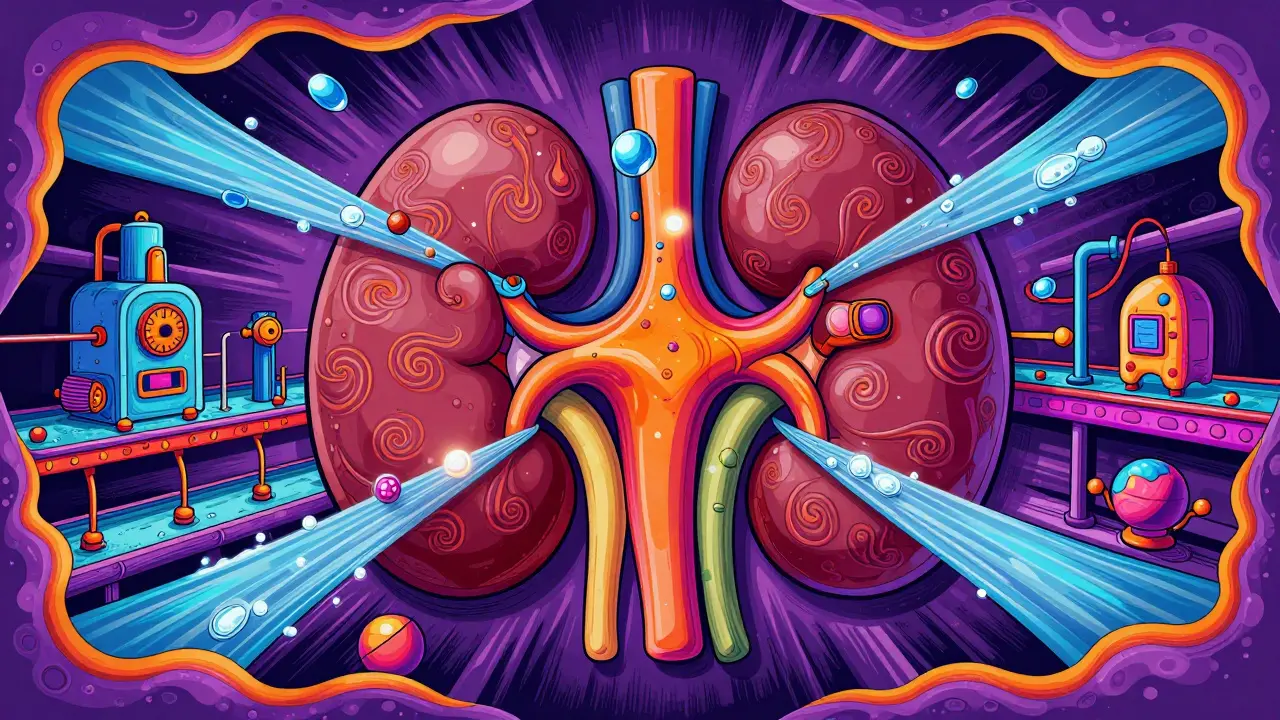
To understand the risks, you have to look at the machinery. Your kidneys act like a complex factory line with different sections called nephrons. Different types of diuretics target different parts of this line to stop your body from reabsorbing salt.
Loop Diuretics such as furosemide, work on the thick ascending limb of the kidney tubule. These are heavy hitters. They block a transporter that normally grabs back 25% of the sodium your body filters. Because they are so strong, they generate a huge amount of urine quickly. However, this process often dumps potassium along with the sodium. Another class, Thiazide Diuretics like hydrochlorothiazide, targets the distal convoluted tubule further down the line. These handle about 5-7% of sodium reabsorption. They are milder but sneakier when it comes to certain electrolyte imbalances.
Then there are Potassium-Sparing Diuretics like spironolactone, which actually save potassium instead of dumping it. They work by blocking aldosterone receptors in the collecting duct. While this sounds safer for your heart rhythm, the flip side is that they can trap too much potassium, creating a completely different set of dangers. You cannot treat them all the same way.

Specific Electrolyte Shifts You Must Watch
When you start this medication, your blood work changes in predictable patterns. Research published in PMC in 2013 looked at patients over two years and gave us hard numbers on the risks. If you ignore these labs, you risk serious complications.
- Hypokalemia (Low Potassium): This is very common with loop and thiazide diuretics. The odds ratio was 2.31 for loop diuretics compared to non-users. Low potassium makes your muscles weak and can cause dangerous heart palpitations.
- Hyponatremia (Low Sodium): Thiazides are notorious here. The study showed an odds ratio of 3.15 for low sodium levels under 135 mmol/L. This causes confusion, falls, and seizures in severe cases. Elderly women are particularly vulnerable to this.
- Hypernatremia (High Sodium): This happens more often with loop diuretics. Your body dumps pure water faster than it loses salt, leaving your blood concentrated. The odds ratio here was 1.87.
- Hyperkalemia (High Potassium): This is the big risk with potassium-sparing agents like spironolactone. One meta-analysis found these drugs increased serum potassium by 0.5-1.0 mmol/L on average. High potassium stops the heart suddenly.
These aren't just minor lab tweaks. All of these electrolyte disorders were independent predictors of death inside hospitals. Severe hyperkalemia had a hazard ratio of nearly 3 times higher mortality. You need to understand that these numbers mean your life expectancy drops significantly if these levels go unchecked.
When Other Medications Mix Badly
The trouble usually starts when you combine your diuretic with other common treatments. It seems counterintuitive, but adding heart medicines can sometimes break the system.
A major issue arises with NSAIDs like ibuprofen or indomethacin. These painkillers inhibit prostaglandins in your kidneys. Prostaglandins are necessary to keep blood flow high enough for the diuretic to work. Without them, the effectiveness of loop diuretics drops by 30-50%. Essentially, you swallow the pill, but your body ignores it, yet you still get the side effects.
ACE inhibitors are another tricky mix. They pair well with thiazides to lower blood pressure, but combining them with potassium-sparing diuretics creates a perfect storm for hyperkalemia. Data from a JAMA Internal Medicine analysis of over 12,000 heart failure patients showed that combining ACE inhibitors with spironolactone raised potassium levels by 1.2 mmol/L versus 0.4 mmol/L with just one drug. That difference can push a patient from safe to critical in a matter of days.
Newer heart medications, SGLT2 inhibitors like dapagliflozin, also interact interestingly. Studies suggest they actually boost the natriuretic effect of loop diuretics by up to 190% when combined properly. However, they rely on the same kidney pathways. If you are dehydrated, stacking these can stress the kidneys beyond repair.
| Drug Combination | Primary Effect | Risk Level |
|---|---|---|
| Diacritic + NSAIDs | Reduces diuretic efficacy | Moderate |
| K-Sparing Diuretic + ACE Inhibitor | Severe Hyperkalemia | High |
| SGLT2 Inhibitor + Loop Diuretic | Enhanced fluid removal | Moderate (Dehydration) |
| Trimethoprim + Spironolactone | Rapid Potassium Spike | Critical |
Real-world examples show why this matters. On medical forums, clinicians discuss cases where a patient on spironolactone took Bactrim (an antibiotic) and crashed with potassium levels over 6.0 mmol/L. This is a textbook interaction, yet it catches people unprepared. Even standard cold medicine containing pseudoephedrine can complicate blood pressure control when taken with these agents.

Fighting Back When Drugs Stop Working
Have you noticed the swelling comes right back after a few days? This is something called diuretic resistance. Dr. Charles Wilcox explains in his 2020 paper that within 72 hours of using a loop diuretic, your kidney compensates by increasing sodium reabsorption downstream. This is the "braking phenomenon." Your body adapts to the drug, turning off the tap again.
To fix this, doctors sometimes use sequential nephron blockade. They might add a thiazide like metolazone to a loop diuretic. This hits two different parts of the kidney line at once. European Society of Cardiology guidelines recommend this for refractory edema. It works for many-68% of patients in the DOSE trial achieved adequate decongestion with combos versus 32% with loops alone.
However, this aggressive strategy has risks. A 2017 study noted acute kidney injury occurred in 22% of patients using high-dose combinations. High-dose furosemide plus metolazone can drain you so hard your kidneys fail. You must weigh the benefit of dry legs against the risk of kidney shutdown.
Your Personal Monitoring Checklist
If you are prescribed these drugs, you cannot rely on memory alone. You need a schedule. Clinical decision support resources specify checking serum electrolytes within 3-7 days of starting the therapy. After that, stable patients should check every 1-3 months.
If you increase your dose, bump up monitoring to every 24-48 hours. Why? Because potassium can swing wildly in short windows. Also, pay attention to the timing. Furosemide given intravenously peaks in 30 minutes, while oral versions take 1-2 hours. Thiazides are slower to start but last longer, making them good for daily maintenance rather than emergencies.
Don't forget the context of your health. Patients with Heart Failure a condition involving volume overload where diuretics are essential. have tighter margins for error. A recent review warned that 31% of hospitalized heart failure patients received dangerous regimens. Standardized protocols at places like Johns Hopkins reduced hyponatremia incidents by 37%. Implementing a routine helps prevent the crashes that land people in the ER.
Ask your doctor about fractional excretion of sodium tests if you feel like the drugs aren't working. If that number is under 1%, your kidneys aren't responding despite the dose. In cirrhosis, doctors might even give IV albumin alongside the diuretic to improve delivery to the tubular lumen, boosting results by 40%. Every tool helps, but you must stay vigilant.
Can I take ibuprofen with my diuretic?
Generally, no. NSAIDs like ibuprofen reduce the effectiveness of diuretics by blocking prostaglandins needed for kidney blood flow. This can lead to kidney strain and less fluid removal.
What are the signs of low potassium?
Watch for muscle weakness, cramping, fatigue, and irregular heartbeats. Blood work is the most reliable way to catch it before symptoms appear.
How often should I check my blood levels?
Check within the first week of starting treatment. Once stable, monthly checks are standard, but weekly checks are needed if doses are changing or combining drugs.
Why do doctors combine different diuretics?
They use sequential blockade to hit different parts of the kidney. This overcomes resistance where one drug stops working due to the kidney compensating.
Does age change the risk?
Yes, elderly patients are at higher risk for hyponatremia with thiazide diuretics. Guidelines recommend starting with lower doses to prevent severe electrolyte drops.
Jordan Marx
March 28, 2026 AT 17:53The concept of sequential nephron blockade is absolutely critical when addressing refractory edema cases in clinical practice. We see that loop diuretics often encounter the braker phenomenon where renal compensation increases sodium reabsorption downstream. Adding a thiazide component disrupts this compensatory mechanism and restores fluid removal efficacy. It is fascinating how the distal convoluted tubule handles that specific percentage of salt reabsorption compared to the thick ascending limb. Most practitioners forget that prostaglandins play a non-negotiable role in maintaining adequate blood flow for these medications to function correctly. NSAID interference creates a silent failure mode that leads to treatment resistance without obvious symptoms initially. The data on fractional excretion of sodium provides a clear diagnostic marker for when the kidneys stop responding to the current dosage protocol. We must consider the kinetic differences between intravenous administration and oral bioavailability windows. Patient monitoring schedules need strict adherence to detect electrolyte shifts before clinical instability manifests. Chronic diuretic users require monthly electrolyte panels at minimum to prevent catastrophic cardiac events. The interplay between aldosterone receptors and potassium retention defines the safety profile of spironolactone usage. Combining ACE inhibitors with potassium-sparing agents demands extreme vigilance regarding serum hyperkalemia thresholds. Clinical guidelines suggest early intervention with metolazone if initial decongestion fails within seventy-two hours. Renal perfusion pressure dictates the ultimate success or failure of volume management strategies in heart failure patients.
Eva Maes
March 30, 2026 AT 05:45This article paints a rather bleak picture of modern pharmacology which feels slightly alarmist in its delivery. Doctors prescribing these regimens usually ignore the nuanced chemistry involved in daily prescriptions. The assumption that patients understand mineral shifts is laughable given the average health literacy scores. I find the focus on emergency room statistics redundant since prevention could theoretically mitigate hospital admissions entirely. We need stricter oversight on who gets flagged for high-risk combinations without causing mass panic among elderly populations. The pharmaceutical industry certainly benefits from constant monitoring cycles for blood work regardless of stability. It is insulting to suggest that standard care does not account for these predictable metabolic consequences.
Paul Vanderheiden
March 31, 2026 AT 01:34i think we shouldnt get too scared because doctors really know what they are doing most of the time and your body is amazing at healing itself even with help you just have to trust the process and keep taking those vitals seriously dont worry about the little stuff
Tommy Nguyen
March 31, 2026 AT 20:14Just listen to your body and stay healthy today.
Jeannette Kwiatkowski Kwiatkowski
April 1, 2026 AT 14:52The layperson explanation here is woefully inadequate for actual informed consent scenarios. Patients deserve more than vague warnings about 'chemistry going off the rails' which implies negligence rather than biology. Medical professionals ought to articulate the specific odds ratios regarding hyponatremia vulnerabilities in geriatric demographics. Ignoring the statistical significance of those mortality predictors suggests a cavalier approach to patient safety protocols. We need to elevate the discourse beyond simple scare tactics into actionable preventative medicine frameworks.
Sabrina Herciu
April 3, 2026 AT 13:18I want to clarify some essential points regarding electrolyte monitoring for anyone concerned about their regimen safety. Checking levels within three to seven days of initiation is crucial because potassium swings happen fast. Stable patients can move to quarterly checks but dose changes trigger immediate retesting requirements. Muscle weakness indicates low potassium which is dangerous but often asymptomatic until cramping starts. Confusion or falls signal low sodium which affects brain function directly through osmotic pressure shifts. High potassium from spironolactone blocks heart rhythms suddenly without warning signs sometimes. Mixing ibuprofen reduces drug efficacy significantly so pain management needs separate channels entirely. Sequential blockade works best for stubborn swelling but carries acute kidney injury risks requiring close supervision. Heart failure patients have tighter margins for error so standardized hospital protocols exist to reduce incidents. Fractional excretion tests reveal if kidneys actually respond to medication dosages effectively. Cirrhosis cases may require IV albumin support alongside standard diuretic therapy options. Blood pressure meds interact deeply with water pills so review all prescriptions annually. Symptoms like palpitations demand immediate attention rather than waiting for scheduled visits next month. Always communicate dizziness or fatigue to your provider immediately upon noticing these subtle changes.
Devon Riley
April 4, 2026 AT 21:28This information is incredibly helpful! 💙 Knowing exactly when to test makes a huge difference in managing long term health. Stay strong everyone! ❤️ Your health journey matters so much here!
Kameron Hacker
April 5, 2026 AT 10:59The systemic reliance on diuretics without comprehensive monitoring represents a significant failure in public health infrastructure. Medical literature confirms severe outcomes yet implementation remains inconsistent across general practices. We must demand accountability for preventable complications arising from routine prescription patterns. Ignoring the evidence presented in landmark studies constitutes professional negligence. Patients possess a right to full disclosure regarding mortality hazards associated with these agents.
Poppy Jackson
April 7, 2026 AT 00:26It truly is a terrifying thought how easily balance can tip into disaster when we rely solely on chemical intervention. The drama of bodily betrayal unfolds silently until catastrophe strikes
Debra Brigman
April 8, 2026 AT 05:48We must contemplate the philosophical implications of altering our internal alchemy through synthetic means. The relationship between water and salt mirrors the duality of life itself balancing chaos with order. To force the kidneys into submission is an act of hubris against natural homeostasis mechanisms. Yet survival requires us to embrace these tools despite their inherent dangers to the soul.
kendra 0712
April 8, 2026 AT 20:28Wow!!! This really makes me think!!! Are we really masters of our own bodies??? Not quite!!! The philosophy part is SO interesting!!! But the science is the best part!!! Thanks for sharing!!!
Aaron Olney
April 9, 2026 AT 13:41i knwo i had badi exp with these meds they made me feel weird like my heart was stopping i dont trust them anymore doctors give us poison sometimes why do people take them anyway it scares me tho
Sophie Hallam
April 10, 2026 AT 04:02It is understandable to feel apprehensive after experiencing adverse effects personally. Medical decisions always carry risk factors that individual experiences highlight vividly. We should encourage open dialogue with healthcare providers about these concerns constructively. Your feelings are valid but discussing alternatives ensures safety moving forward.
Rohan Kumar
April 10, 2026 AT 22:29The pharma companies definitely hide the worst side effects from us poor people. Everyone dies eventually so why bother trying to fix it 🙄 Just let nature take its course instead of paying bills.