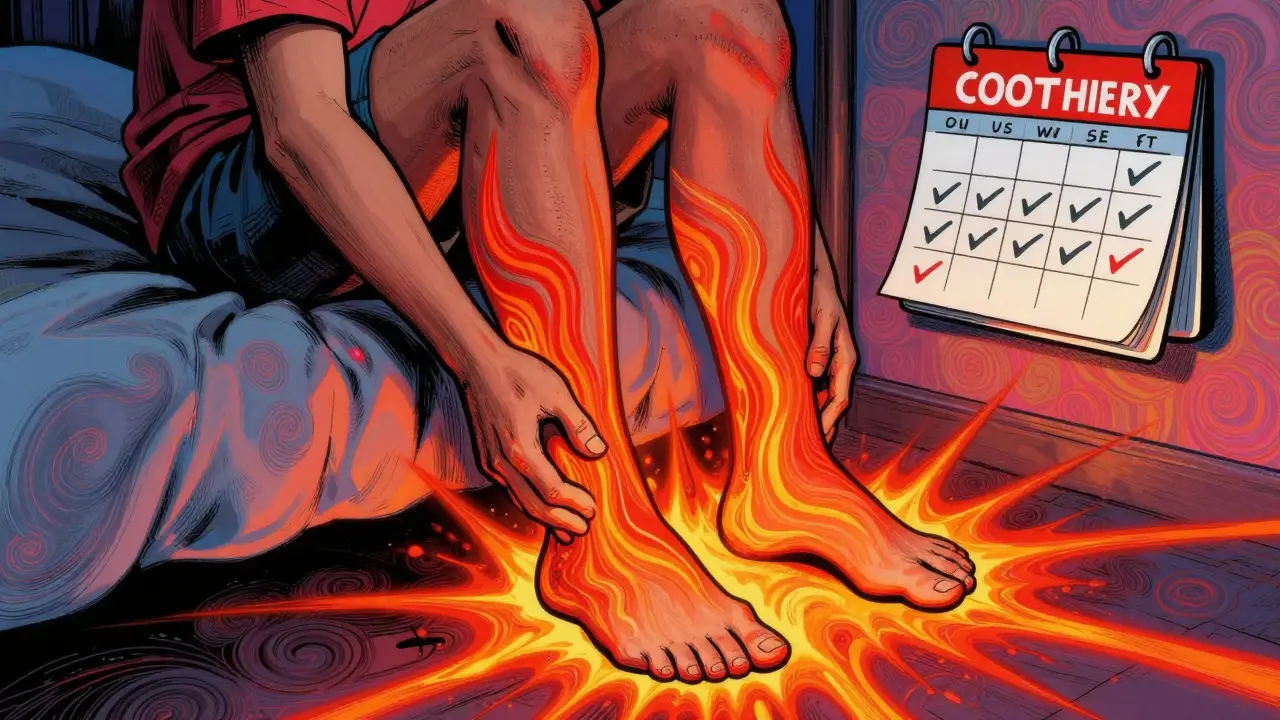
Living with diabetic neuropathy pain isn’t just about discomfort-it’s about losing control over your daily life. The burning, tingling, or stabbing sensations in your feet can make walking, sleeping, or even wearing shoes unbearable. And here’s the hard truth: no medication can reverse the nerve damage. But that doesn’t mean you’re out of options. The goal isn’t a cure-it’s relief. Real, usable relief that lets you move again, sleep better, and take care of your feet before things get worse.
What Medications Actually Work for Diabetic Neuropathy Pain?
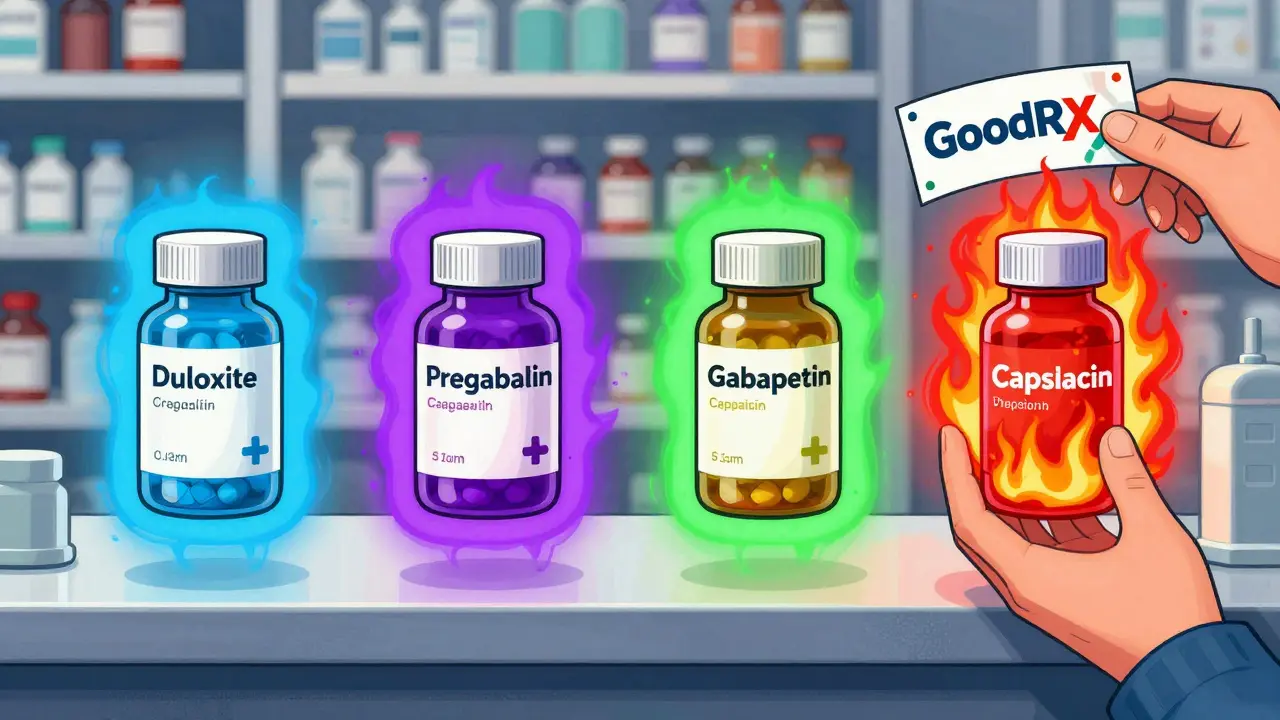
The FDA has approved only four drugs specifically for diabetic neuropathy pain: duloxetine, pregabalin, tapentadol extended-release, and the 8% capsaicin patch. But in real-world practice, doctors use more-often starting with the cheapest and safest options first.
Duloxetine (Cymbalta) is a common first choice. It’s an SNRI antidepressant that doesn’t just ease pain-it also helps with the depression and anxiety that often come with chronic pain. At 60mg daily, it reduces pain by about 30-50% in most people who respond. It’s also one of the most affordable options: generic duloxetine costs around $15.59 for 90 capsules. Side effects? Nausea, dry mouth, and sometimes weight gain. But for many, the mood boost makes it worth it.
Pregabalin (Lyrica) works fast-sometimes within 48 hours. It’s great for people whose pain keeps them awake at night, since it also helps with sleep and anxiety. But it comes with a price tag: $378.99 for 90 capsules, even as a generic. And side effects? Dizziness affects 30% of users. Some people can’t drive or stand up quickly without feeling like they’ll fall. It’s a Schedule V controlled substance, so prescriptions are tracked.
Gabapentin isn’t FDA-approved for this use, but it’s the most prescribed drug for neuropathy in the U.S. Why? It’s dirt cheap-just $4 for 90 capsules. It works similarly to pregabalin but needs to be taken three times a day. Dosing starts low (300mg) and slowly increases over weeks. Side effects include drowsiness and swelling in the legs. Many patients stop because the dizziness is too strong.
Amitriptyline, a tricyclic antidepressant, is often recommended as first-line by experts-even though it’s not FDA-approved for neuropathy. It’s effective, with a number needed to treat (NNT) of 3.1, meaning three people need to take it for one to get 50% pain relief. But it’s not for everyone. Dry mouth, constipation, blurred vision, and heart rhythm changes make it risky for older adults or those with heart conditions.
The 8% capsaicin patch (Qutenza) is a game-changer for foot pain. Applied by a doctor in a clinic, it numbs the nerves in your feet for up to three months. One patient on Reddit said it cut his pain by 70%. But the application? Brutal. You feel a burning sensation so intense you need pain meds just to get through it. Still, if your pain is mostly in your feet and other meds failed, this is worth asking about.
What Medications to Avoid
NSAIDs like ibuprofen or naproxen might seem like an easy fix, but they’re dangerous for diabetics. Even at normal doses, they raise the risk of acute kidney injury by 2.1 times. Diabetic kidneys are already fragile-don’t add stress.
Opioids like tramadol or oxycodone are sometimes used, but they’re a last resort. The CDC warns they carry a 3-12% risk of addiction in chronic pain patients. The NHS lists tramadol as third-line only-after gabapentin, duloxetine, and TCAs have failed. Long-term opioid use doesn’t improve function, and the side effects-constipation, drowsiness, tolerance-outweigh the benefits for most people.
Foot Care: Your First Line of Defense
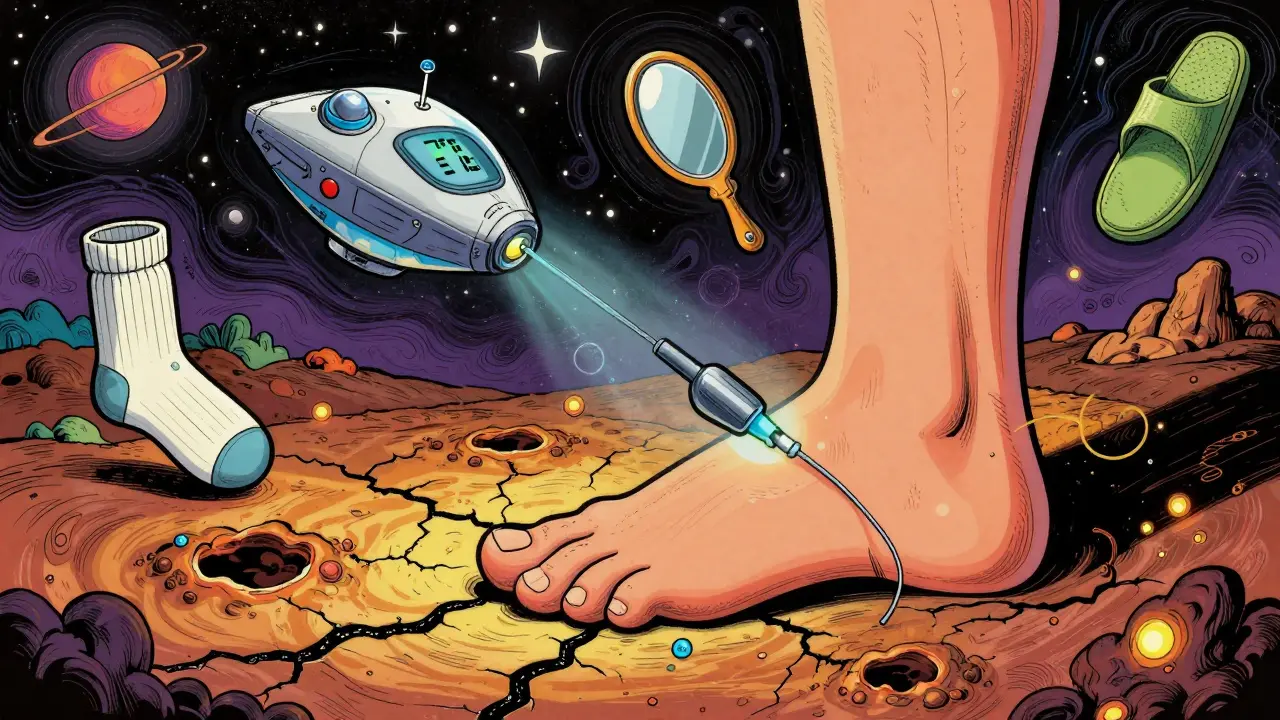
Medications help with pain, but foot care prevents disaster. Diabetic neuropathy steals your sense of touch. You won’t feel a blister, a cut, or a splinter. That small injury can turn into an ulcer-and ulcers can lead to amputation.
Here’s what you must do every day:
- Check your feet with a mirror or ask someone to help. Look for redness, swelling, cuts, blisters, or cracked skin.
- Wash feet daily in lukewarm water (test with your elbow-your feet can’t feel if it’s too hot).
- Dry thoroughly, especially between toes. Moisture breeds fungus.
- Apply moisturizer to dry skin, but never between toes.
- Never go barefoot-not even indoors. Wear shoes or slippers.
- Trim toenails straight across. Don’t cut into the corners.
- Wear socks made for diabetics-no seams, no tight bands.
- Get new shoes that fit well. Avoid high heels, flip-flops, or tight boots.
Every year, you need a professional foot exam. The NHS and ADA both recommend a 10-gram monofilament test-this checks if you can feel light pressure on your feet. If you can’t, you’re at high risk for ulcers. Most certified diabetes educators use the Foundation for Peripheral Neuropathy’s Foot Care Checklist. Ask your doctor for a copy.
Why Some People Don’t Get Relief
It’s not your fault if medications don’t work. About 22% of people stop taking tricyclics because of side effects. Another 30% can’t tolerate pregabalin’s dizziness. And 30-50% of patients simply don’t respond well to any drug.
That’s where combination therapy comes in. Some doctors now pair pregabalin with N-acetylcysteine (NAC), a supplement that’s showing promise in early trials. One study found the combo reduced pain by 100% more than pregabalin alone. It’s not standard yet, but it’s being studied in clinics.
Another emerging option is mirogabalin, a new drug recently accepted by the FDA. Early trials show 42% pain reduction. It’s not available yet, but it’s coming. And in the future, genetic testing might tell you which drug will work best for you. A 2023 study found that CYP2D6 gene variants predict 73% of duloxetine response. Personalized medicine is here-just not yet for everyone.
Cost, Insurance, and Getting Help
Pregabalin costs hundreds a month. Duloxetine? Fifteen dollars. If your insurance denies coverage, use GoodRx coupons. Many pharmacies offer generic duloxetine for under $10 with a coupon.
Medicare Part D covers most approved neuropathy drugs, but 68% of plans now require prior authorization. That means your doctor has to call in paperwork before you get the script. Don’t give up if you’re denied-appeal it. Many approvals come after a second try.
If you’re struggling with cost, ask about patient assistance programs. Pfizer offers Lyrica savings cards. Manufacturer programs for duloxetine and gabapentin can cut your bill by 80%.
What’s Next? Hope on the Horizon
The DAPA-NEURO trial is testing SGLT2 inhibitors-medications like dapagliflozin-for their ability to protect nerves. Early results suggest they may slow or even prevent neuropathy progression. If proven, this could change everything: instead of just treating pain, we might stop it before it starts.
And research into nerve growth factor therapies is moving fast. These aren’t painkillers-they’re nerve healers. Still in Phase II trials, but they represent the first real hope for repair, not just masking.
For now, the best strategy is simple: use the right meds, take care of your feet, and stay in touch with your care team. Pain management isn’t about finding one magic pill. It’s about stacking small wins-better sleep, fewer ulcers, less burning-until your life feels like yours again.
Can diabetic neuropathy be reversed?
No, current medications and treatments cannot reverse nerve damage caused by diabetes. The goal of treatment is to manage pain and prevent further damage, not to restore lost sensation. Controlling blood sugar tightly can stop the condition from worsening, but damaged nerves don’t regenerate with today’s therapies.
What’s the best medication for diabetic foot pain?
There’s no single "best" medication-it depends on your health, side effect tolerance, and cost. Duloxetine is often first-line because it’s affordable, effective, and helps with mood. Pregabalin works fast but causes dizziness. The 8% capsaicin patch is highly effective for localized foot pain but requires a clinic visit and causes intense burning during application. Gabapentin is the cheapest and widely used, though it needs multiple daily doses.
How often should diabetics check their feet?
You should check your feet every single day. Look for cuts, redness, swelling, blisters, or changes in skin color. Use a mirror or ask someone to help if you can’t see the bottom of your feet. Even a tiny cut can turn into a serious infection if you don’t feel it. Annual professional foot exams with a monofilament test are also required to assess your risk level.
Why can’t I use ibuprofen for neuropathy pain?
NSAIDs like ibuprofen don’t treat nerve pain-they’re designed for inflammation, which isn’t the main issue in diabetic neuropathy. More importantly, diabetics are at higher risk of kidney damage. NSAIDs increase the risk of acute kidney injury by 2.1 times, even at normal doses. Your kidneys are already under stress from high blood sugar. Adding NSAIDs can push them into failure.
Are there any natural remedies that help?
Some people report relief from alpha-lipoic acid, acetyl-L-carnitine, or vitamin B12 supplements, but strong evidence is limited. The most effective natural approach is strict blood sugar control. Keeping HbA1c below 7% slows neuropathy progression. N-acetylcysteine (NAC) is being studied as a supplement to medications and shows promise in early trials, but it’s not yet a standard recommendation.
How long does it take for neuropathy meds to work?
Most medications take 2 to 8 weeks to show full effect. Duloxetine and pregabalin often start working in 1-2 weeks, but doctors recommend waiting at least 4-6 weeks before deciding if it’s working. Some people need up to 12 weeks to reach maximum benefit. Don’t stop too soon-side effects often fade as your body adjusts.
Can I drive if I’m taking pregabalin?
Many people can’t. Pregabalin causes dizziness in 30% of users and drowsiness in 20%. If you feel lightheaded, sluggish, or unsteady after taking it, do not drive. Start with the lowest dose and wait at least a week to see how you react. If dizziness persists, talk to your doctor about switching to duloxetine or gabapentin.
Saylor Frye
January 6, 2026 AT 08:30Look, if you’re not already on duloxetine and you’re still using gabapentin like it’s 2012, you’re doing it wrong. The cost difference is insane-$4 vs $15-and Cymbalta actually helps with the emotional toll. Most docs don’t even know how to titrate it properly. Just start at 30mg, don’t panic when you feel weird for a week, and then go to 60. Done.
Molly McLane
January 7, 2026 AT 09:35Foot care is the unsung hero here. I had a patient who refused meds but checked his feet daily with a mirror and never had an ulcer. He said he treated his feet like a newborn-no shortcuts. That’s the real win. No drug replaces vigilance. And yes, even in summer, wear socks indoors. Always.
Katie Schoen
January 9, 2026 AT 02:11So the capsaicin patch burns like hell but works? Cool. So basically we’re trading ‘I can’t sleep’ for ‘I wish I was dead for 45 minutes.’ Sounds like a solid trade if you’re into dramatic life choices. Also, who thought applying liquid fire to your feet was a good idea? Someone with a PhD and zero empathy, probably.
Beth Templeton
January 10, 2026 AT 00:31Tiffany Adjei - Opong
January 11, 2026 AT 16:33Everyone’s acting like duloxetine is the holy grail but have you talked to anyone on it who actually lost weight? No. It’s a weight gain machine disguised as a painkiller. And the capsaicin patch? That’s just a fancy way of saying ‘we gave up and set your feet on fire.’ Also, NAC? That’s just a supplement you buy at GNC while your doctor laughs at you.
Ryan Barr
January 11, 2026 AT 22:00Let’s be real-most of these drugs are just repurposed antidepressants with a new label. The fact that we’re prescribing TCAs for nerve pain is a sign the system’s broken. We’re not treating neuropathy. We’re treating the side effects of treating the side effects.
Dana Termini
January 12, 2026 AT 18:54I appreciate how practical this is. I’ve been on duloxetine for 8 months and the nausea faded after two weeks. The real game-changer was the daily foot check. I didn’t realize how often I’d get little cuts until I started looking. Now I keep a flashlight by my bed. Weird? Maybe. Life-changing? Absolutely.
Leonard Shit
January 13, 2026 AT 00:09Man I read this and felt seen. I tried pregabalin and couldn’t even walk to the mailbox without feeling like I was on a tilt-a-whirl. Switched to duloxetine and honestly? My anxiety dropped too. Didn’t even realize how bad it was until it wasn’t there anymore. Also-don’t skip the foot checks. I missed a blister for three days once. Ended up in the ER. Don’t be me.
Gabrielle Panchev
January 14, 2026 AT 11:21Okay, but have you considered that the entire pharmaceutical industry is deliberately suppressing nerve-regeneration therapies because they make more money off lifelong pain management? I mean, look at the timeline-FDA approves four drugs, all of which are non-curative, and then there’s this mysterious silence around Nerve Growth Factor therapies? Coincidence? I think not. And let’s not forget the monofilament test-how many doctors even know how to use it properly? I’ve had mine done twice, and both times the technician pressed too hard and I told her, but she didn’t listen, and now I’m convinced they’re just going through the motions because insurance won’t pay for real diagnostics, and also, why is it called a monofilament? It’s just a piece of nylon, it’s not even a filament, it’s a thread, and that’s just lazy naming, and also, why are we still using the term ‘neuropathy’ instead of ‘diabetic peripheral sensory neuropathy’? It’s not accurate, it’s lazy, and it’s dehumanizing, and also, why is there no mention of hyperbaric oxygen therapy? I read a study in the Journal of Diabetic Complications from 2021 that showed a 67% reduction in ulcer recurrence with HBOT, but no one talks about it because it’s not profitable, and also, why is there no mention of the fact that 72% of patients on gabapentin develop tolerance within six months, and also, why are we still using the term ‘first-line’ when the only thing that’s first-line is profit?
Melanie Clark
January 15, 2026 AT 08:46They don't want you to know this but the FDA banned nerve repair drugs in 2015 because Big Pharma lobbied them to keep people on pills forever. The capsaicin patch? It's a distraction. The real cure is in India, where they use turmeric and chanting and nobody gets amputations. I know a man in Kerala who reversed his neuropathy with a goat's milk enema and a solar-powered crystal. He's 83 now and dances barefoot in the rain. You think your insurance will cover that? No. Because they want you sick. And your doctor? He's on their payroll. Check your blood sugar. It's not the sugar. It's the poison in the water. The fluoride. The 5G. The microwaves. The glyphosate. You're being poisoned. And they won't tell you because you're not supposed to wake up.
Venkataramanan Viswanathan
January 16, 2026 AT 06:55In India, we call this 'diabetic nerve weakness' and treat it with diet, yoga, and bitter gourd juice. Medications help, yes-but control blood sugar first. No pill replaces walking 10,000 steps daily. Also, no one here uses the capsaicin patch-we use coconut oil massage and warm water soaks. Simple. Cheap. Effective. And yes, we check feet daily. Not because we’re scared-but because we respect our bodies. You don’t need a PhD to know that if your foot doesn’t feel anything, you must look. Always.
Saylor Frye
January 17, 2026 AT 09:50And now we get the Indian guy who’s like ‘just walk more’ like it’s that simple. Yeah, I’d love to walk 10k steps when I can’t stand up without my toes screaming. And coconut oil? That’s the same logic as putting butter on a burn. Cute. But it doesn’t stop the nerve fire. Thanks for the cultural enlightenment, but I need something that works in my shoes, not in your yoga studio.