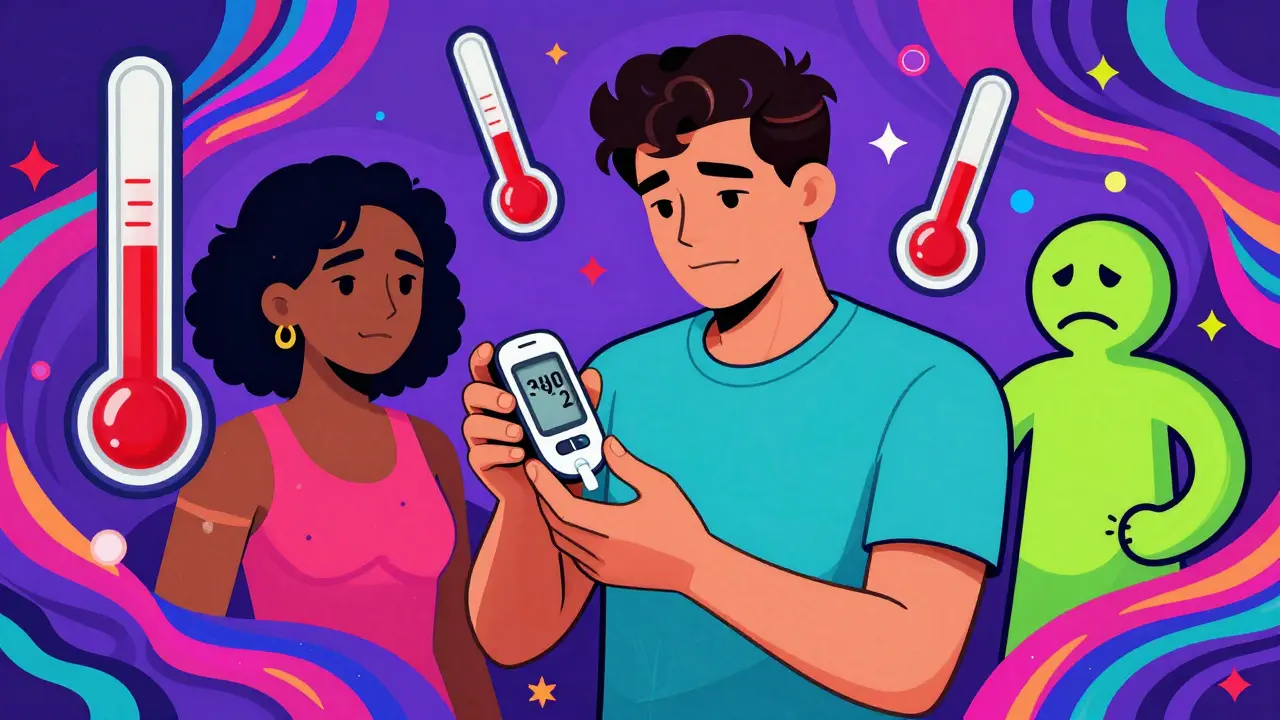
Every day, over 37 million Americans use diabetes medications to control blood sugar. But without proper safety knowledge, these drugs can cause dangerous complications. Managing diabetes medication safety isn’t optional-it’s life-saving. Hypoglycemia affects 20-40% of people taking sulfonylureas, and severe episodes requiring help happen in 1-7% of cases. This guide cuts through the confusion with real-world facts and actionable steps to keep you safe.
Why Diabetes Medication Safety Matters
Diabetes medications save lives, but they also carry hidden risks. The CDC reports that 25% of medication-related hospitalizations for diabetes involve people over 65. Hypoglycemia (dangerously low blood sugar) is the biggest threat, especially with insulin and sulfonylureas. A 2023 study found that 30% of well-controlled type 2 diabetes patients on sulfonylureas experience asymptomatic nighttime hypoglycemia. That means you might not feel symptoms until it’s too late. Drug interactions also play a role: antibiotics like sulfamethoxazole/trimethoprim can spike insulin effects, causing sudden drops in blood sugar. These aren’t hypothetical risks-they happen daily in real life.
Understanding Insulin Types and Their Risks
Insulin isn’t one-size-fits-all. Rapid-acting insulins like Humalog (lispro) work in 15 minutes but wear off in 3-4 hours. Long-acting insulins like Lantus (glargine) last 24 hours but can cause unpredictable lows if dosed incorrectly. Concentrated insulins like Humulin R U-500 are especially risky; a single mistake in dosing can lead to severe overdose. The FDA warns that U-500 requires special training to avoid accidental overdoses. Injection technique matters too: injecting into muscle instead of fat can cause erratic absorption and dangerous blood sugar swings. Always rotate injection sites to prevent lumps under the skin that alter insulin absorption.
Oral Medications: Classes and Safety Profiles
| Medication Class | Common Side Effects | Key Safety Concerns | Special Considerations |
|---|---|---|---|
| Sulfonylureas | Hypoglycemia, weight gain | High risk of severe hypoglycemia (1-7% requiring assistance) | Glipizide preferred for kidney issues; avoid in advanced kidney disease |
| Metformin | Nausea, diarrhea | Lactic acidosis risk in kidney failure | Stop if eGFR drops below 30; reduce dose at eGFR 45-60 |
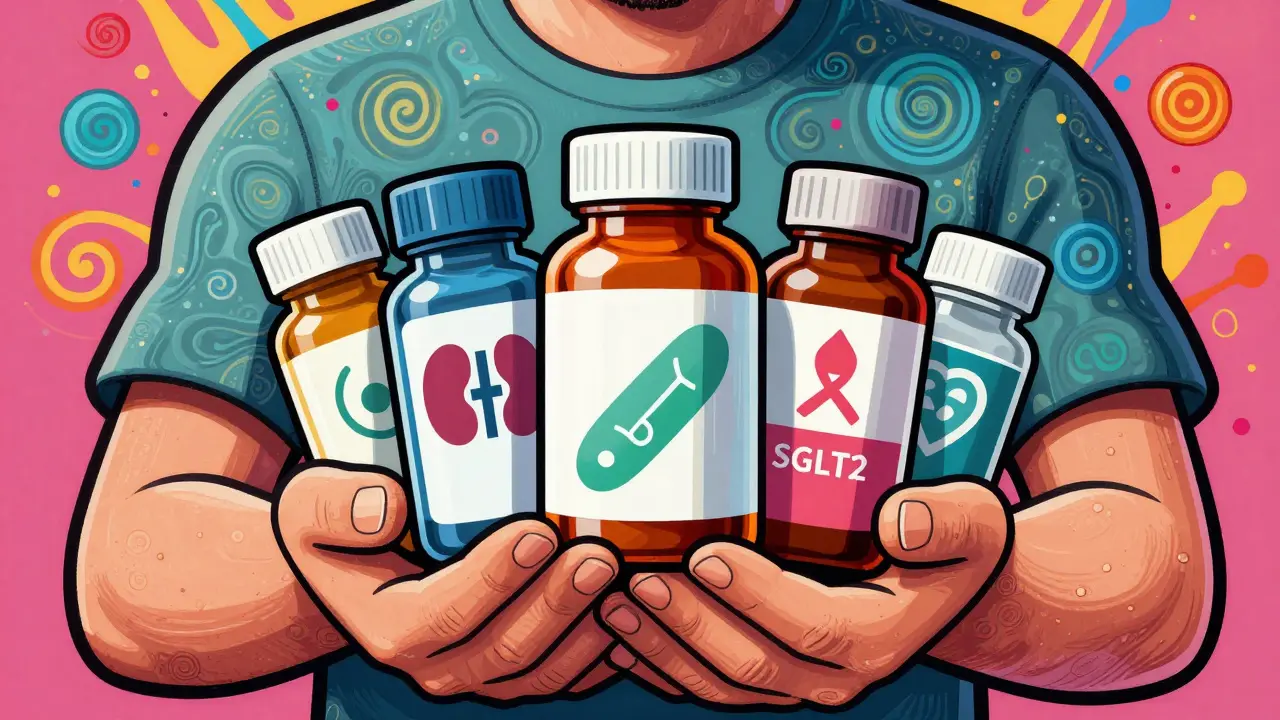
| SGLT2 Inhibitors | Genital yeast infections, UTIs | Diabetic ketoacidosis (DKA) during surgery or stress | Stop 24+ hours before surgery; avoid ketogenic diets |
| GLP-1 Receptor Agonists | Nausea, vomiting (30-50% of users) | Pancreatitis risk in history of pancreas issues | Not for type 1 diabetes; avoid with gallbladder disease |
| DPP-4 Inhibitors | Headache, upper respiratory infections | Joint pain in some users | Safer for kidneys; minimal hypoglycemia risk |
For example, a patient on Jardiance (an SGLT2 inhibitor) might develop DKA even with normal blood sugar levels during a minor surgery. The FDA has documented this in 5-10% of DKA cases linked to these drugs. Always tell your surgeon about your diabetes meds before any procedure.
Common Safety Concerns: Hypoglycemia, Drug Interactions, and DKA
Hypoglycemia is the silent killer in diabetes care. Symptoms like shakiness or sweating are obvious, but many people-especially older adults-lose warning signs over time. Banner Health reports dizziness from low blood sugar causes falls and fractures in 1 in 5 seniors. Drug interactions worsen this: taking sulfonylureas with certain antibiotics can double hypoglycemia risk. Meanwhile, SGLT2 inhibitors like Farxiga can trigger DKA even when blood sugar looks normal. This happened to a Reddit user who developed DKA after starting a keto diet while on SGLT2 therapy. The CDC stresses that DKA risk with these drugs is highest during illness, surgery, or extreme stress. Always check with your doctor before making lifestyle changes.
Special Populations: Older Adults and Kidney Issues
Older adults face unique risks. A 2023 AACE guideline found patients over 65 are 3 times more likely to have severe hypoglycemia when aiming for tight blood sugar control. Sulfonylureas like glyburide should be avoided in seniors; glipizide is safer because it doesn’t build up in the body. Kidney function is critical too. Metformin requires eGFR checks before starting and regularly after. If your eGFR drops below 30, you must stop it completely. For eGFR between 30-45, use half the dose. Many patients don’t know this: the American Diabetes Association reports 40% of type 2 diabetes patients on metformin haven’t had kidney tests in over a year. Always ask for your eGFR number at checkups.
Practical Steps for Safe Medication Use
Here’s what works in real life:
- Keep a medication log: Write down doses, times, and side effects. Apps like MySugr help track patterns.
- Check blood sugar before driving or operating machinery-hypoglycemia can impair judgment instantly.
- Avoid alcohol with sulfonylureas or insulin; it amplifies hypoglycemia risk.
- Store insulin properly: Unopened vials go in the fridge; opened ones stay at room temperature for 28 days.
- For SGLT2 inhibitors, drink extra water during heatwaves to prevent dehydration and DKA.
- Never skip kidney function tests. If your eGFR is below 45, discuss alternatives with your doctor.
Automated insulin delivery (AID) systems like the MiniMed 780G show promise for safety. A 2023 trial found they reduce hypoglycemia by 37% compared to manual pumps. But even tech needs human oversight: always calibrate sensors and check for error messages.
Frequently Asked Questions
What should I do if I experience symptoms of low blood sugar?
Check your blood sugar immediately. If it’s below 70 mg/dL, eat 15 grams of fast-acting carbs (like 4 glucose tablets or 1/2 cup juice). Wait 15 minutes and recheck. If still low, repeat. Once stable, eat a snack with protein and carbs (like peanut butter crackers) to prevent another drop. Never drive or operate machinery until your blood sugar is steady.
Can I take diabetes medications with antibiotics?
Some antibiotics increase hypoglycemia risk. Sulfonylureas combined with sulfamethoxazole/trimethoprim (Bactrim) can cause dangerous low blood sugar. Always tell your doctor about all medications before starting antibiotics. They may adjust your diabetes dose or switch antibiotics. Never stop diabetes meds without medical advice.
How does kidney function affect my medication choices?
Kidney function directly impacts drug safety. Metformin is unsafe if eGFR is below 30 and requires dose reduction at 45-60. SGLT2 inhibitors like Farxiga aren’t recommended for severe kidney disease. DPP-4 inhibitors are generally safe for mild kidney issues. Always get an eGFR test before starting new meds and annually after. Ask your doctor: "What’s my current eGFR number?" If it’s below 45, discuss alternatives immediately.
What precautions should I take before surgery with SGLT2 inhibitors?
The AACE recommends stopping SGLT2 inhibitors at least 24 hours before elective surgery and immediately for emergencies. These drugs can trigger DKA even during minor procedures. For example, a patient on Jardiance developed DKA after dental surgery despite normal blood sugar. Always inform your surgical team about your diabetes meds. They’ll provide specific instructions based on the procedure.
How can I prevent hypoglycemia while using insulin?
Match insulin doses to food intake and activity levels. Use continuous glucose monitors (CGMs) to catch trends early. Never skip meals when taking rapid-acting insulin. If you exercise, check blood sugar before, during, and after. Carry fast-acting carbs everywhere. For older adults, aim for less strict blood sugar targets-AACE advises HbA1c under 8% for seniors to reduce hypoglycemia risk. Work with your doctor to personalize your goals.
jan civil
February 5, 2026 AT 21:23Always check blood sugar before driving-hypoglycemia can happen fast.
Albert Lua
February 7, 2026 AT 14:22As a Filipino-American, I've seen family members struggle with diabetes. The guide's advice on insulin storage is spot-on. Always keep it cool but not frozen. My grandma learned that the hard way.
Katharine Meiler
February 8, 2026 AT 18:23Metformin's lactic acidosis risk is often overstated. The real danger is in renal impairment. Always monitor eGFR.
If it's below 30, stop immediately. No exceptions.
Studies show that with proper dosing and monitoring, metformin is safe even for patients with mild kidney issues.
The American Diabetes Association recommends regular eGFR checks every 6 months.
Many healthcare providers overlook this, leading to preventable complications.
It's crucial to understand that metformin isn't the issue-it's the lack of proper monitoring.
Always ask for your eGFR number at every checkup.
If it's below 45, discuss alternatives immediately.
For example, SGLT2 inhibitors may be safer in some cases.
The key is personalized care, not one-size-fits-all.
Patients should be proactive in their own health management.
Never assume your doctor is checking everything.
Take charge of your kidney health.
A recent study published in the Journal of Clinical Endocrinology found that patients with eGFR between 30-45 who continued metformin had a 20% higher risk of complications compared to those who switched medications.
This underscores the importance of individualized treatment plans.
Healthcare providers must stay updated on the latest guidelines to prevent adverse outcomes.
The bottom line is simple: regular kidney tests save lives. Don't wait until it's too late.
Joyce cuypers
February 9, 2026 AT 21:26I've been on metformin for 5 years. My doctor always checks my kidneys. But sometimes I forget to take it with food. Gotta be careful. Oh wait, I misspelled 'careful' as 'carrful'-sorry!
Andre Shaw
February 11, 2026 AT 17:55Actually, the FDA says metformin is safe down to eGFR 30. Your doctor's wrong. Always trust the guidelines, not some random doc. I've read all the studies-this is basic knowledge.
Tehya Wilson
February 13, 2026 AT 15:11SGLT2 inhibitors require careful management DKA risk exists even with normal blood sugar Always inform surgical team before procedures No exceptions
Georgeana Chantie
February 13, 2026 AT 19:44America's healthcare system is the best! We have the safest diabetes meds. 💪🇺🇸
Carol Woulfe
February 14, 2026 AT 22:04Big Pharma is hiding the truth about insulin. The real cause of diabetes is vaccines. Always check your insulin for hidden chemicals. Don't trust the FDA!
Lisa Scott
February 16, 2026 AT 13:35Your conspiracy theories are baseless. SGLT2 inhibitors have been studied extensively. The FDA's warnings are evidence-based. Stop spreading misinformation.
Kieran Griffiths
February 18, 2026 AT 02:04Let's focus on facts. Both insulin and oral meds have risks, but proper management works. Always consult your doctor. Stay safe out there. Science doesn't lie. We need to work together to manage diabetes safely.