Cyclosporine Safety Monitor
Check if your cyclosporine level is within safe limits based on your transplant type, timing, and testing method. This tool uses the latest guidelines to help you protect your kidney function.
Enter your details to see if your cyclosporine level is safe.
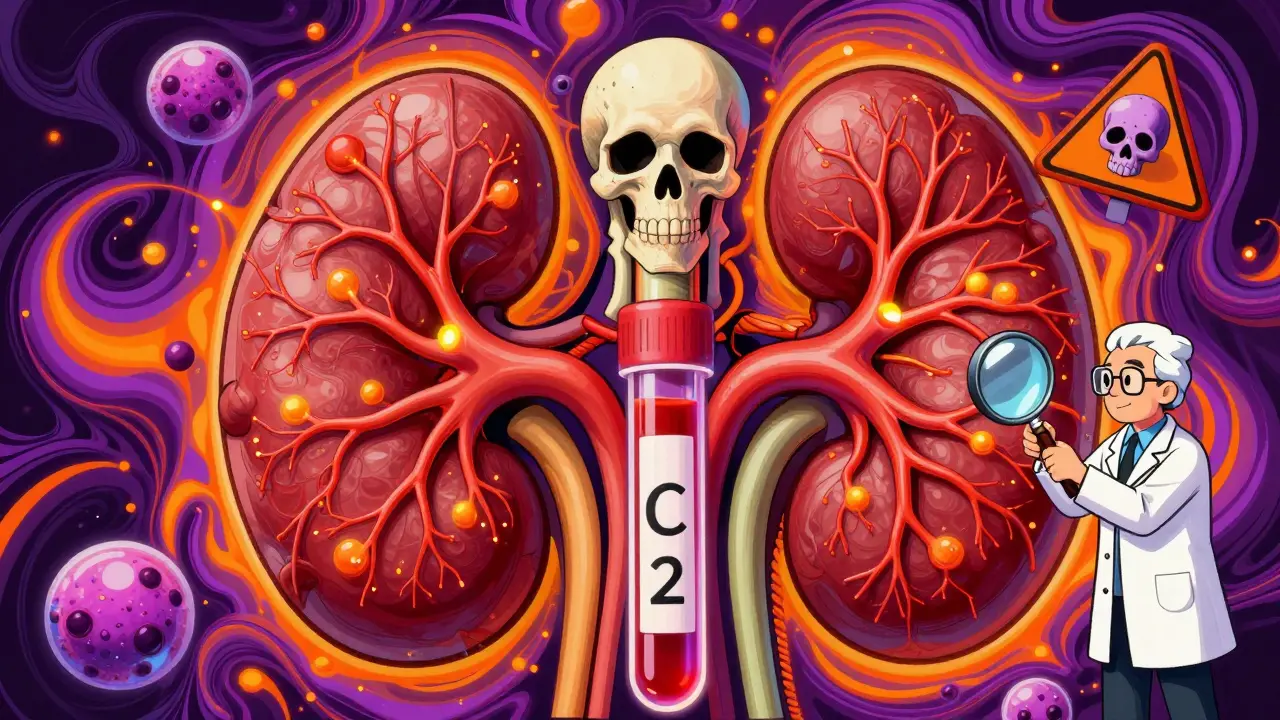
When you take cyclosporine after a kidney, heart, or liver transplant, you're trusting a drug that saves your life-but also one that can quietly damage your kidneys. This isn't a rare risk. About cyclosporine nephrotoxicity affects 25% to 75% of transplant patients, depending on how carefully levels are tracked. For many, it’s the main reason their new organ starts to fail years later. The good news? You can prevent most of it. The key is knowing exactly how to monitor both your drug levels and your kidney health-and doing it right.
Why Cyclosporine Is So Dangerous to Kidneys
Cyclosporine works by shutting down your immune system so your body doesn’t reject the new organ. But it doesn’t know the difference between a bad cell and a good one. At the same time, it tightens the blood vessels inside your kidneys. That reduces blood flow, and over time, your kidney tissue starts to scar. This isn’t just a side effect-it’s built into how the drug works. Studies from the 1980s first showed that cyclosporine causes tiny changes in kidney arteries: thickening, hardening, and deposits of protein. These changes show up in biopsies. Even if your creatinine looks normal, damage can be happening. The scary part? This damage isn’t always reversible. If you wait too long to lower the dose, you could lose kidney function for good.What Your Drug Levels Should Be
Cyclosporine has one of the narrowest therapeutic windows of any drug. That means the difference between the dose that keeps your transplant alive and the dose that kills your kidneys is tiny. Too low? Your body rejects the organ. Too high? Your kidneys start to shut down. Here’s what the numbers look like based on transplant type and timing:- Kidney transplant: First week: 200-400 ng/mL; weeks 2-6: 125-275 ng/mL; months 7-12: 100-150 ng/mL; after 1 year: 75-160 ng/mL
- Heart transplant: First 6 months: 250-350 ng/mL; after 6 months: 100-200 ng/mL
- Liver transplant: Same as heart transplant
How Blood Tests Can Lie to You
Not all cyclosporine blood tests are created equal. Most labs still use immunoassays because they’re cheap and fast. But here’s the problem: these tests can’t tell the difference between cyclosporine and its metabolites-byproducts your liver makes as it breaks the drug down. These metabolites aren’t active, but immunoassays count them as if they are. That means your reported level might be 10-15% higher than what’s actually working in your body. The gold standard? Liquid chromatography-tandem mass spectrometry (LC-MS/MS). It’s accurate to 99.2%, picks up levels as low as 5 ng/mL, and ignores metabolites completely. Since 2021, 92% of U.S. transplant centers have switched to LC-MS/MS. If your lab still uses immunoassay, ask if they’re planning to upgrade. If they’re not, get a second opinion. Also, the type of tube matters. If your blood is drawn into a serum separator tube (the kind with a gel at the bottom), cyclosporine can stick to it. That gives you a falsely low result. Always make sure they use EDTA tubes-purple top. If they don’t know what that means, it’s time to switch labs.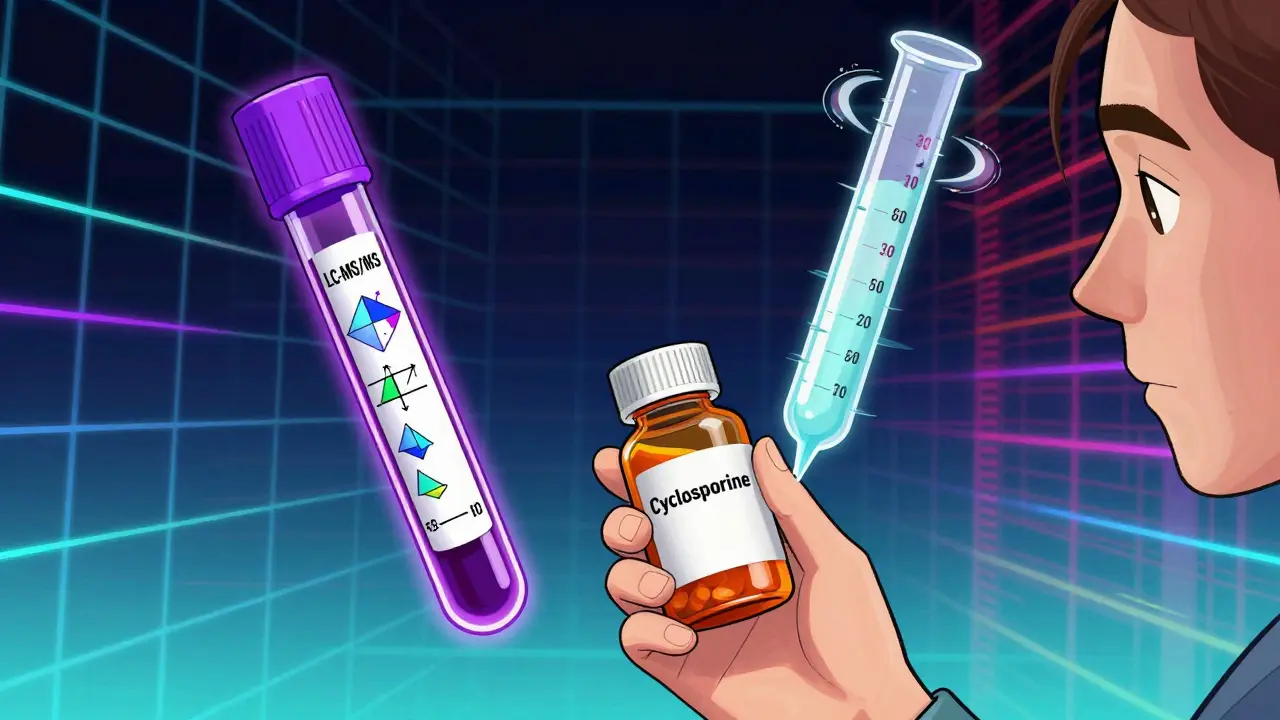
When to Test: Trough vs. C2 Monitoring
Most people think you just check cyclosporine levels right before your next dose-the “trough” level (C0). That’s what most clinics still do. But newer research shows that checking the level 2 hours after you take your pill (C2) gives a much better picture of how much drug is actually in your system over time. Why? Because cyclosporine is absorbed quickly and peaks around 2 hours. The C2 level correlates with the total exposure over 12 hours (AUC) with 87% accuracy. The trough level? Only 63%. That’s a huge gap. In a 2022 review, centers using C2 monitoring saw a 22.4% drop in nephrotoxicity. That’s not a small win. It means fewer patients lose kidney function. The downside? You have to come in at a specific time after taking your pill. If you take it at 8 a.m., you need your blood drawn at 10 a.m. That’s harder than just showing up in the morning before breakfast. But if you’re serious about protecting your kidneys, it’s worth it.What Else to Monitor Alongside Cyclosporine
Cyclosporine doesn’t just hurt your kidneys-it messes with other systems too. That’s why you need more than just one blood test.- Serum creatinine: Keep it under 1.5 mg/dL. Rising levels mean your kidneys are struggling.
- BUN-to-creatinine ratio: Should be under 20:1. Higher numbers suggest dehydration or kidney stress.
- Magnesium: Cyclosporine causes your kidneys to dump magnesium. Normal range is 1.7-2.2 mg/dL. Low magnesium means you’re losing electrolytes and can get muscle cramps, irregular heartbeat, or seizures.
- Blood pressure: Target is under 130/80 mmHg. Cyclosporine raises blood pressure in 30-50% of users. Uncontrolled hypertension speeds up kidney damage.
- Drug interactions: Ketoconazole, erythromycin, and grapefruit juice can spike your cyclosporine levels by 30-50%. Rifampin, phenytoin, and St. John’s wort can slash levels by 40-60%. If you start or stop any new medication-even an OTC one-tell your transplant team immediately.
How Often Should You Get Tested?
The schedule isn’t one-size-fits-all. It depends on how long you’ve had your transplant and how stable your levels are.- First month: Twice a week
- Months 2-6: Weekly
- Months 7-12: Every other week
- After 1 year: Monthly or every 6 weeks if stable
What Happens If You Don’t Monitor?
In centers with poor monitoring, cyclosporine is responsible for 30-50% of long-term kidney transplant failures. That means half the time, the organ doesn’t die from rejection-it dies because the drug meant to save it slowly poisoned the kidney. One study tracked 12,450 patients over two years. Centers using accurate LC-MS/MS and C2 monitoring had 22% fewer dosing errors. That might sound small, but it meant 3.7% more patients kept their transplants alive. That’s hundreds of people who didn’t need to go back on dialysis. The damage isn’t always obvious until it’s too late. You might feel fine. Your numbers might look okay. But if you’re not testing the right way, you’re flying blind.The Future: AI and Point-of-Care Testing
The field is changing fast. New AI models are being tested that use 17 different variables-your weight, liver enzymes, genetics, diet, even your sleep patterns-to predict your ideal cyclosporine dose. Early results show 89.7% accuracy. That could mean fewer blood draws and better outcomes. In the next 2-3 years, point-of-care devices will hit the market. These are small machines that can give you a full cyclosporine level from a finger-prick blood sample in under 15 minutes. Phase 3 trials are underway, with FDA approval expected in late 2025. Imagine checking your level at home, before you take your pill, and adjusting your dose with your doctor’s guidance-no lab trip needed.What You Can Do Today
You don’t need to wait for futuristic tech. Here’s what you can do right now:- Ask your lab: “Are you using LC-MS/MS for cyclosporine testing?” If not, ask why.
- Confirm your blood is drawn in an EDTA (purple top) tube.
- Ask if you should switch from C0 (trough) to C2 (2-hour post-dose) monitoring.
- Keep a log: record your dose, time taken, and any symptoms (swelling, fatigue, high BP).
- Never start a new medication, supplement, or herb without checking with your transplant team.
Can cyclosporine nephrotoxicity be reversed?
Yes, in many cases-if caught early. Studies show that reducing the cyclosporine dose or switching to another immunosuppressant can reverse kidney damage within 2 to 3 months. But if the drug has been at toxic levels for over a year, scarring becomes permanent. The key is early detection through regular monitoring.
How do I know if my cyclosporine level is too high?
Symptoms include high blood pressure, swelling in your legs or face, reduced urine output, fatigue, nausea, and tremors. But many people feel fine even when levels are dangerous. That’s why regular blood tests are critical. If your level is above the target range for your transplant type and time since surgery, your doctor should adjust your dose.
Can I take cyclosporine with grapefruit juice?
No. Grapefruit juice blocks the enzyme that breaks down cyclosporine in your liver. This can cause your blood levels to spike by 30-50%, increasing your risk of kidney damage. Even a single glass can affect you for days. Avoid it completely while on this drug.
Why do I need to test 2 hours after taking my dose (C2)?
Cyclosporine is absorbed quickly, and its peak level happens around 2 hours after you take it. The C2 level tells your doctor how much drug your body is exposed to over time, which is a better predictor of both effectiveness and toxicity than the level right before your next dose (C0). Studies show C2 monitoring reduces kidney damage by over 20%.
Is cyclosporine still used today, or have newer drugs replaced it?
Cyclosporine is still used in about 150,000 transplant patients annually in the U.S. alone. Newer drugs like tacrolimus are more common now because they’re more effective and less toxic to the kidneys. But cyclosporine is still used for patients who can’t tolerate tacrolimus, have allergies, or need a lower-cost option. It’s not outdated-it’s just used more selectively now.
What’s the difference between cyclosporine and tacrolimus?
Both are calcineurin inhibitors and work similarly to prevent rejection. But tacrolimus is about 10-100 times more potent, so you need much smaller doses. It also has a lower risk of nephrotoxicity and better correlation between blood levels and overall exposure. However, tacrolimus can cause more tremors, diabetes, and nerve issues. The choice depends on your health, transplant type, and how your body responds.
Chris Clark
December 18, 2025 AT 04:01Man, I had no idea grapefruit juice could wreck your cyclosporine levels like that. I’ve been drinking it every morning since my transplant. Guess I’m switching to orange juice now. Thanks for the heads-up.
William Storrs
December 18, 2025 AT 11:53You’re not alone in thinking the lab tests are reliable. I was told my levels were fine for months-until I got a second opinion and found out my numbers were 20% higher than they should’ve been. LC-MS/MS isn’t optional. It’s survival. Don’t let your clinic cut corners.
James Stearns
December 19, 2025 AT 16:07It is imperative to underscore the clinical imperative of adhering to the gold-standard laboratory methodology for cyclosporine quantification. The utilization of immunoassay techniques constitutes a grossly inadequate diagnostic modality, fraught with systemic error and potentially catastrophic consequences for transplant recipients. One must insist upon liquid chromatography-tandem mass spectrometry as a non-negotiable standard of care.
Dominic Suyo
December 21, 2025 AT 00:11So let me get this straight-we’re trusting our kidneys to a drug that’s basically a chemical scalpel, and the way we monitor it is still stuck in the 90s? Labs still using serum separator tubes? Are we in a medical dystopia or just a bad episode of House? This is a scandal waiting to happen.
Janelle Moore
December 22, 2025 AT 18:50Did you know the government is secretly using cyclosporine to control organ transplant patients? They want us dependent. That’s why they don’t push point-of-care testing faster. They need us coming back every month. I read it on a forum. It’s not conspiracy-it’s evidence.
Henry Marcus
December 23, 2025 AT 03:48Wait-so if you take cyclosporine and eat grapefruit, your levels spike… and labs lie… and tubes mess with results… and C0 is useless… and they’re still using immunoassays??!! This isn’t medicine-it’s Russian roulette with a stethoscope!!
Carolyn Benson
December 23, 2025 AT 07:38It’s funny how we treat organs like machines you can just swap out. But the body doesn’t care about your transplant anniversary. It remembers every dose, every grapefruit, every wrong tube. We’re not patients-we’re experiments. And someone’s always watching the data. Who’s really in control here?
Aadil Munshi
December 23, 2025 AT 09:20Bro, I’m from India and we still use immunoassays because LC-MS/MS costs more than a month’s rent here. So yeah, we’re all just guessing. But hey-at least we’re alive. Maybe the real lesson isn’t the test-it’s that medicine is a luxury, not a right.
Monte Pareek
December 23, 2025 AT 13:54Listen, if you’re on cyclosporine and you’re not doing C2 monitoring, you’re not trying. I’ve been transplant 5 years now. I track my dose, time, BP, urine output, and magnesium like it’s my job. Because it is. I had a nurse tell me C2 was "overkill"-I told her to go back to school. Your kidneys don’t care about your schedule. They care about your vigilance. Do the work. Don’t wait for the system to fix itself. You’re the only one who can save your own organ.
mark shortus
December 24, 2025 AT 13:49Okay so I just found out my lab uses serum separator tubes and I’ve been getting false lows for 2 years?? I’m going to scream. This is why I almost lost my liver. I’m filing a complaint. Someone needs to pay for this.
Elaine Douglass
December 24, 2025 AT 18:38I just started cyclosporine last month and I’m terrified. But reading this made me feel less alone. Thank you for writing this. I’m going to ask my doctor about LC-MS/MS tomorrow. I’m so nervous but I’m going to do it.
Takeysha Turnquest
December 26, 2025 AT 15:31We’re all just meat machines with pills inside. The drug doesn’t love you. The lab doesn’t care. The doctor’s busy. The only thing that keeps you alive is your own stubbornness. Keep a log. Fight for the purple tube. Demand C2. Don’t let your body become a statistic.
Emily P
December 27, 2025 AT 10:58Is there any data on how often patients switch from cyclosporine to tacrolimus because of nephrotoxicity? I’m curious if the trade-offs are worth it long-term.