
Living with Crohn’s disease means dealing with more than just stomach pain. It’s about unpredictable flares, constant fatigue, and the fear that your body might turn against itself again - even when you’re feeling fine. This isn’t just a bad day with indigestion. It’s a lifelong battle against chronic inflammation that can strike anywhere from your mouth to your anus. For many, conventional treatments like steroids and immunomodulators stop working. That’s where biologic therapy comes in - not as a miracle cure, but as a powerful tool that’s changed the game for millions.
What Exactly Is Crohn’s Disease?
Crohn’s disease is one type of inflammatory bowel disease (IBD). Unlike ulcerative colitis, which only affects the colon’s inner lining, Crohn’s eats through the entire thickness of the gut wall. That’s why complications like fistulas (abnormal tunnels between organs) and strictures (narrowed sections) happen. About 70-80% of cases start in the last part of the small intestine (terminal ileum) or the beginning of the colon. But it doesn’t care where it shows up - it can pop up anywhere along the digestive tract.
The root cause? Your immune system goes rogue. Instead of fighting off bad bacteria, it attacks harmless microbes in your gut. This happens in people with certain genes - especially mutations in the NOD2 gene, found in 30-40% of those with family history. Environmental triggers like smoking, antibiotics in childhood, or a Western diet high in processed foods can turn on this faulty response. The result? A never-ending cycle of inflammation, tissue damage, and healing that leaves scars.
Why Biologics Are a Game Changer
Before biologics, treatment was mostly about putting out fires with steroids - which worked short-term but wrecked your bones, blood sugar, and mood over time. Immunomodulators like azathioprine helped some, but took months to kick in and came with serious risks like liver damage or lymphoma.
Biologics changed all that. These are lab-made proteins that target specific parts of the immune system. Instead of blasting your whole body, they hit the exact culprits driving inflammation. The first big breakthrough came in 1998 with infliximab (Remicade), an anti-TNF drug. TNF-alpha is one of the main inflammatory signals in Crohn’s. Block it, and the fire starts to die down.
Today, there are five anti-TNF drugs: infliximab, adalimumab (Humira), certolizumab pegol (Cimzia), golimumab, and biosimilars like Inflectra. Then there are others that work differently. Vedolizumab (Entyvio) stops immune cells from even reaching the gut - it’s like putting up a roadblock just for the intestines. Ustekinumab (Stelara) blocks IL-12 and IL-23, two other key inflammatory messengers.
Studies show anti-TNF drugs induce remission in 30-40% of patients within weeks - double the rate of placebo. Vedolizumab and ustekinumab aren’t far behind. And here’s the kicker: these drugs don’t just reduce symptoms. They heal the gut lining. Up to 60% of patients on biologics show mucosal healing on colonoscopy - something rarely seen with older meds.
How Do You Know Which Biologic Is Right for You?
There’s no one-size-fits-all. Your doctor doesn’t just pick the most expensive one. They look at your disease pattern, your risks, and your life.
If you have fistulas or deep ulcers - signs of aggressive disease - anti-TNF drugs are usually first. They work fast. You’ll often see improvement in 2 to 4 weeks. But about 30-46% of people lose response over time because their body starts making antibodies against the drug. That’s why therapeutic drug monitoring is now standard. Doctors check your blood levels. If your infliximab is below 3 μg/mL or adalimumab below 5 μg/mL, you’re more likely to flare. Adjusting the dose or shortening the gap between infusions can bring you back into remission.
Vedolizumab is a better pick if you’re worried about infections or have other autoimmune conditions like multiple sclerosis. It’s gut-specific, so it doesn’t mess with your immune system elsewhere. But it takes longer - 10 to 14 weeks before you feel real change. That’s why it’s not usually first-line unless you’ve already tried anti-TNFs.
Ustekinumab is great for people who didn’t respond to anti-TNFs. It’s given as a shot every 8 to 12 weeks. Around 40% of patients hit remission at 8 weeks, and half stay in remission after a year. It’s also safer for long-term use than steroids.
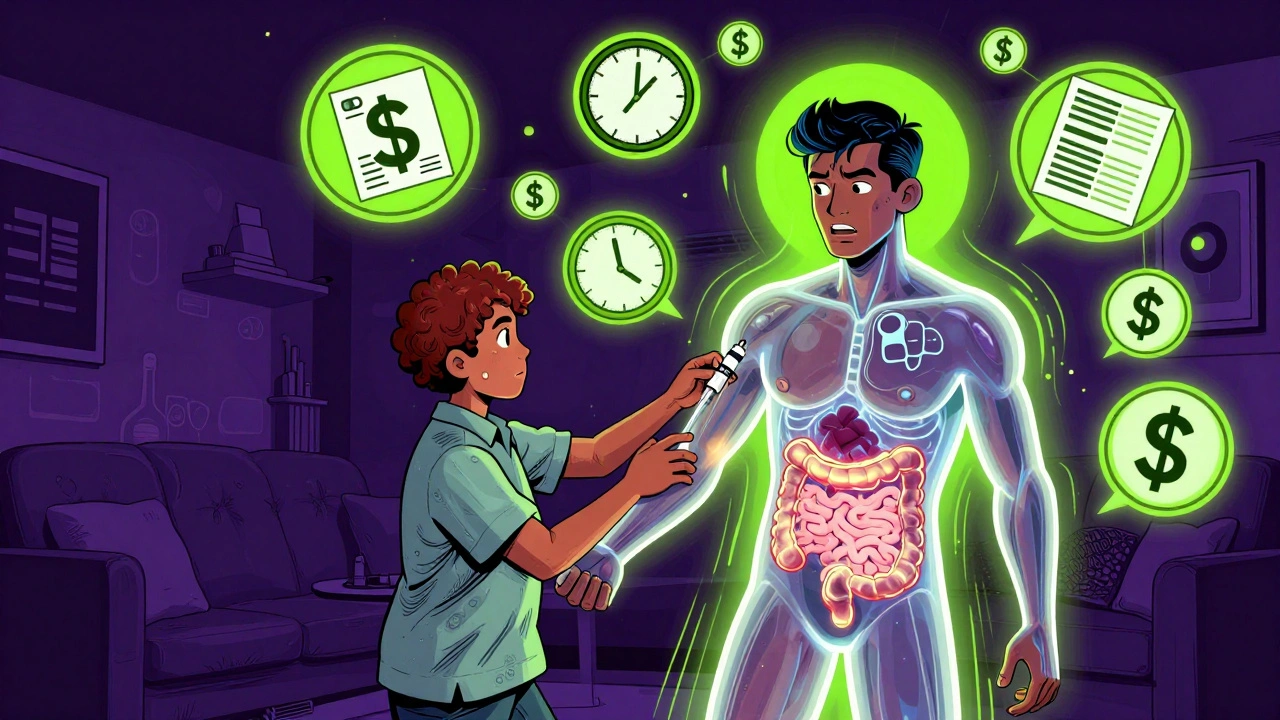
Cost matters too. Annual prices range from $35,000 for adalimumab to $70,000 for ustekinumab. Insurance approvals can take weeks. Many patients delay doses because of high copays - over $150 per injection or infusion. That’s why patient assistance programs and biosimilars are so important. Biosimilars like Inflectra are just as effective as the brand-name infliximab but cost 15-30% less.
What You Need to Know Before Starting
Starting biologics isn’t like picking up a pill from the pharmacy. There’s a process.
Before your first infusion or injection, you’ll need tests: a TB skin test (or Quantiferon Gold), hepatitis B and C screening, and sometimes an echocardiogram to check heart function. Why? Because biologics can reactivate old infections. If you had TB in the past, you’ll need antibiotics before starting. If you’re a carrier for hepatitis B, you’ll need antivirals.
Side effects are real. Most are mild - headache, nausea, or injection site redness (happens in 20-30% of adalimumab users). But serious risks include tuberculosis, fungal infections, and rare cases of lymphoma or lupus-like reactions. One Reddit user reported developing a lupus-like syndrome after 18 months on Humira. It took six months of steroids to recover.
Then there’s the psychological toll. About 25-30% of patients experience what’s called “infusion anxiety.” The thought of sitting for hours hooked to an IV, worrying about a reaction, can be paralyzing. Some need counseling or cognitive behavioral therapy just to get through it.
Real Life: What Patients Actually Experience
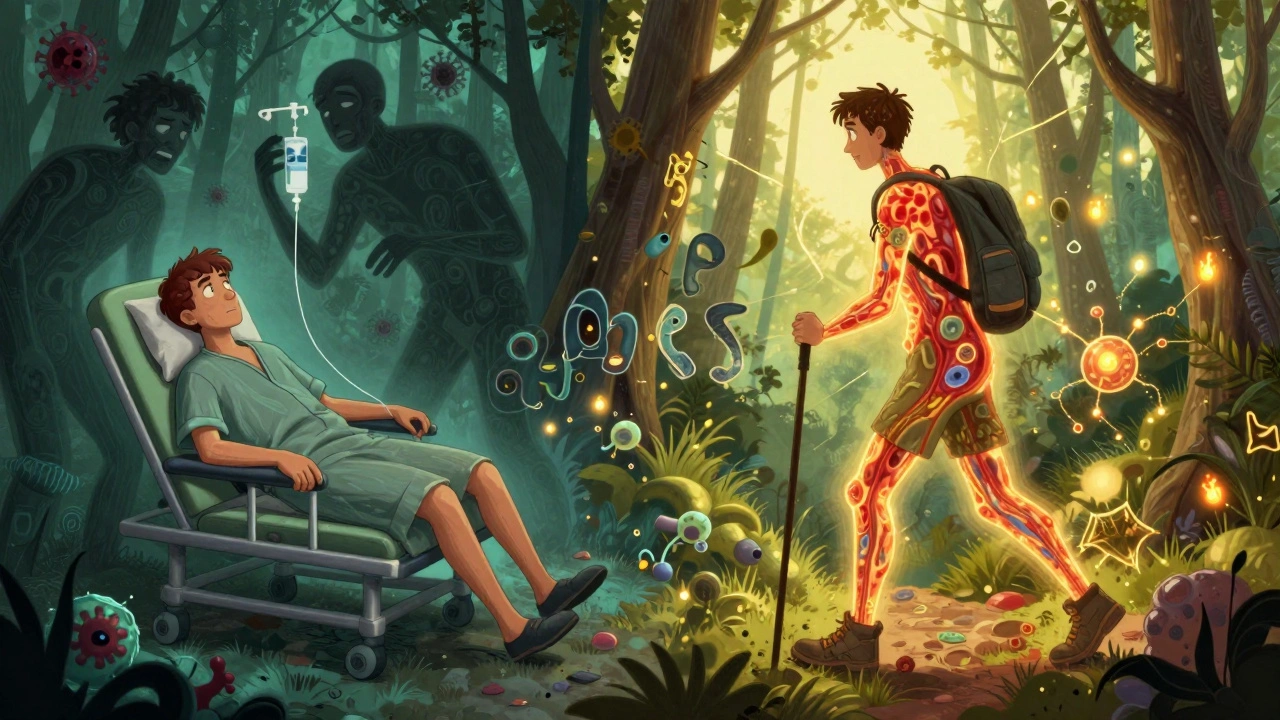
On Reddit’s r/Crohns_Disease forum, users share raw stories. One wrote: “Infliximab took me from 15 bowel movements a day to 2 after three infusions. I got my job back. I slept through the night.” Another said: “I stopped losing weight. I started hiking again.”
But the flip side is real too. A 2023 survey of over 1,200 patients found 65% struggled with cost. Forty percent skipped doses because they couldn’t afford them. Another 35% said scheduling infusions around work was a nightmare. And 22% found the whole process - blood tests, paperwork, waiting rooms - exhausting.
Still, the benefits stack up. Seventy-two percent had fewer hospital visits. Eighty-five percent were able to stop steroids. Sixty-eight percent kept their jobs. For many, biologics didn’t just improve symptoms - they restored their lives.
What’s Next? New Drugs on the Horizon
The pipeline is full. Ozanimod (Zeposia), a pill that traps immune cells in lymph nodes, showed 37% remission rates in trials. Mirikizumab, which blocks just IL-23 (not IL-12), had 40% endoscopic improvement. Both are in late-stage testing.
Biosimilars are already here and growing. By 2028, the global biologics market is expected to hit $21.3 billion. Anti-TNFs still dominate, but vedolizumab and ustekinumab are growing faster. More competition means lower prices - eventually.
The big shift? Starting biologics earlier. Ten years ago, doctors waited until steroids failed. Now, experts like Dr. Jean-Frédéric Colombel say: if you have deep ulcers or fistulas, start biologics right away. Studies show this cuts surgery risk by half within five years.
How to Stay on Track
Success isn’t just about the drug. It’s about sticking with it.
- Track symptoms daily with apps like MyIBDCoach - 45% of users say it helps spot flares early.
- Keep all lab appointments. Trough level checks aren’t optional - they’re lifesaving.
- Learn self-injection techniques. Most people master them after 2-3 supervised sessions.
- Connect with an IBD nurse specialist. Ninety-two percent of major centers have them - they’re your best resource for navigating insurance, side effects, and daily life.
- Ask about patient assistance programs. Many cover 30-50% of out-of-pocket costs.
Don’t let fear stop you. Biologics aren’t perfect. But for most people with moderate to severe Crohn’s, they’re the best shot at living a full, active life - without constant pain, without steroids, without the hospital.
When to Call Your Doctor
Not every side effect needs panic. But watch for:
- Fever, night sweats, or unexplained weight loss - signs of infection
- New joint pain, rash, or chest pain - possible autoimmune reaction
- Shortness of breath or swelling in legs - heart or lung issues
- Severe abdominal pain or vomiting - possible obstruction or perforation
If you’re thinking about stopping because of cost or side effects - talk to your team first. There are options. You don’t have to suffer in silence.
Can biologic therapy cure Crohn’s disease?
No, biologic therapy cannot cure Crohn’s disease. It doesn’t remove the underlying genetic or immune dysfunction. But it can induce deep remission - meaning no symptoms, no inflammation visible on scans, and no need for steroids. Many people live for years without flares. The goal isn’t a cure - it’s control.
How long do I need to stay on biologics?
Most people stay on biologics long-term. Stopping increases flare risk by 50-70% within a year. Even if you feel fine, stopping can cause inflammation to return silently. Some patients, after years of deep remission and normal scans, may try to taper under strict supervision - but this is rare and done only with close monitoring.
Are biosimilars as good as brand-name biologics?
Yes. Biosimilars like Inflectra (infliximab-dyyb) are approved by the FDA and EMA after rigorous testing. They match the original drug in structure, safety, and effectiveness. Studies show identical remission rates and side effect profiles. Many insurance plans now push biosimilars first because they’re cheaper - without sacrificing results.
Do biologics increase cancer risk?
There’s a small increased risk of certain lymphomas and skin cancers, but the absolute risk remains low - about 1 in 1,000 over 10 years. The risk from untreated, active Crohn’s disease is higher. Chronic inflammation itself raises cancer risk. Biologics reduce inflammation, which may actually lower long-term cancer risk. Regular skin checks and reporting unusual lumps or fatigue are key.
Can I get vaccinated while on biologics?
Yes - but timing matters. Get all routine vaccines (flu, pneumonia, shingles, COVID) before starting biologics if possible. Once you’re on them, live vaccines (like MMR or yellow fever) are unsafe. Inactivated vaccines are fine and strongly recommended. Ask your doctor for a vaccination schedule tailored to your treatment plan.
What if my biologic stops working?
It’s common - called secondary loss of response. First, check your drug levels. Low levels? Your dose may need adjusting. High levels? You might have developed antibodies. Your doctor might switch you to a different class - like from an anti-TNF to vedolizumab or ustekinumab. Adding an immunomodulator like azathioprine can also help prevent antibody formation. Don’t wait until you’re in crisis - talk to your team early.
If you’re considering biologics, remember: this isn’t a last resort. It’s a powerful, proven step toward reclaiming your life. The road isn’t easy - there are costs, side effects, and logistics. But for most people with moderate to severe Crohn’s, the trade-off is worth it. You’re not just managing symptoms. You’re stopping the disease before it breaks your body.
Myson Jones
December 2, 2025 AT 06:37Biologics changed everything for me. I was on prednisone for two years - moon face, insomnia, anxiety attacks. Then came Humira. Within six weeks, I was sleeping through the night. Not cured, but alive again. The cost? Brutal. But my employer’s plan covers 80%. If you’re scared, talk to an IBD nurse. They’ve seen it all.
parth pandya
December 3, 2025 AT 11:55hey guys just wanted to add… i started on infliximab last year and my dr said my crp dropped from 18 to 0.8 in 3 months. also got my first biosimilar last month - inflectra - no diff at all. just save your cash. and dont skip doses even if u feel fine. trust me.
Charles Moore
December 3, 2025 AT 18:06For anyone hesitating because of the fear of needles or infusions - I get it. I cried before my first infusion. But the real fear? Going back to how I was. The IV chair became my sanctuary. I read books, listened to podcasts, even made friends with the nurses. It’s not just medicine - it’s reclaiming your rhythm. And yes, the paperwork is insane. But your future self will thank you.
vinoth kumar
December 4, 2025 AT 23:15Just had my 18th infusion last week. Been on Remicade for 4 years. No flares. No steroids. I started hiking again - 10 miles last weekend. People think I’m lying when I say I have Crohn’s. They see me sweating on a trail and think ‘that guy’s healthy’. I smile and say, ‘Yeah, I am now.’ Biologics didn’t fix me - they gave me back the chance to fix myself.
Ignacio Pacheco
December 6, 2025 AT 05:01So let me get this straight - we’re spending $70k a year to stop a body from attacking itself… because we don’t know why it started? Cool. Cool cool cool. At least we’ve got biosimilars now. And by ‘we’, I mean the insurance companies. My copay’s still $150. Thanks, capitalism.
Jim Schultz
December 7, 2025 AT 04:21Let’s be real - this article is a pharma ad disguised as medical advice. ‘Biologics restore your life’? Sure. Until you develop PML or your liver gives out. And don’t get me started on the ‘mucosal healing’ hype - that’s a colonoscopy metric, not a quality-of-life metric. Also, 72% fewer hospital visits? That’s because they’re now billing you $2000 for every ER trip. The real win? Big Pharma’s stock price. Not yours.
Kidar Saleh
December 8, 2025 AT 04:09I’m from London, and I’ve watched the NHS struggle with access to biologics. Some wait over a year. Others get denied because their BMI is ‘too high’. It’s not just about science - it’s about who gets to heal. I met a woman in Manchester who drove 80 miles every 8 weeks for her infusion because her local clinic didn’t offer it. She cried when she told me she almost gave up. This isn’t just medicine. It’s justice.
Chloe Madison
December 9, 2025 AT 12:21You’re not broken. You’re not failing. You’re not weak for needing this. I’ve been there - hiding flares, skipping work, pretending I’m fine. Biologics didn’t make me ‘normal’. They let me be me again. And if you’re scared of the cost? Call your hospital’s patient advocacy office. They’ve got programs you didn’t know existed. You’re not alone. I’m rooting for you.