
CCB Drug Interaction Checker
Check Your Medication Safety
This tool helps you understand potential interactions between calcium channel blockers and other medications, supplements, or foods. Note: This is not a substitute for professional medical advice.
Interaction Results
Specific Interactions
Calcium channel blockers (CCBs) are one of the most commonly prescribed classes of heart medications. Used for high blood pressure, chest pain, and irregular heartbeats, they work by blocking calcium from entering heart and blood vessel cells. This relaxation of blood vessels lowers blood pressure and reduces the heart’s workload. But here’s the catch: what makes CCBs effective also makes them dangerous when mixed with other drugs. Their metabolism isn’t simple. It’s a tightrope walk between healing and harm - and the line between them is often drawn by what else you’re taking.
How Calcium Channel Blockers Work - And Why They’re So Sensitive
There are two main types of calcium channel blockers: dihydropyridines (DHPs) and non-dihydropyridines (non-DHPs). DHPs like amlodipine, nifedipine, and felodipine mainly relax blood vessels. Non-DHPs like verapamil and diltiazem also slow down the heart’s electrical activity. This difference matters because it affects how they’re broken down in your body.
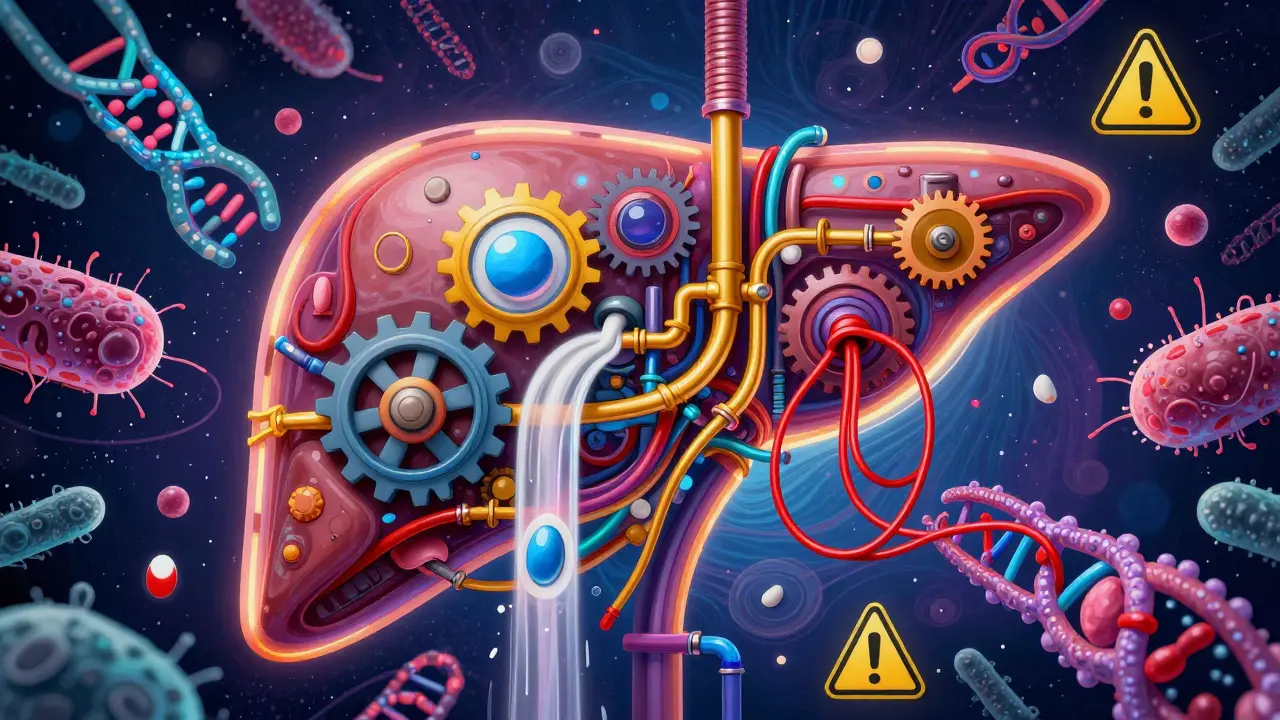
Almost all CCBs are processed by the same liver enzyme: CYP3A4. This enzyme is responsible for breaking down over half of all prescription drugs. When CCBs enter your body, they’re absorbed through the gut and then sent straight to the liver. Here, CYP3A4 tries to break them down before they even reach your bloodstream. But here’s the problem - this enzyme gets easily overwhelmed. If another drug blocks or slows down CYP3A4, your CCB doesn’t get cleared. It builds up. And that’s when side effects like dangerously low blood pressure, slow heart rate, or even heart block can happen.
Why Amlodipine Is Often the Safer Choice
Not all CCBs are created equal when it comes to drug interactions. Amlodipine stands out. It has a long half-life - up to 50 hours - so it’s dosed just once a day. More importantly, it’s not a strong inhibitor of CYP3A4. That means it doesn’t interfere with how other drugs are metabolized. Even if you’re on a medication that slows down CYP3A4, amlodipine’s levels only rise by about 40%. That’s manageable.
Compare that to verapamil. Verapamil is both a substrate and an inhibitor of CYP3A4. It slows its own metabolism and the metabolism of other drugs. When taken with statins like simvastatin, verapamil can increase the statin’s concentration by 400%. That’s not just a warning - that’s a recipe for muscle damage or kidney failure. In fact, the European Heart Journal documented 17 cases of complete heart block in patients taking verapamil with strong CYP3A4 inhibitors - all requiring pacemakers.
According to the American Journal of Cardiology (2023), amlodipine is now the most prescribed CCB in the U.S., making up 75% of all CCB prescriptions. Why? Because doctors know the risks. A patient on multiple medications - say, a statin, an antibiotic, and an antifungal - is far less likely to have a bad reaction with amlodipine than with verapamil or diltiazem.
The Grapefruit Juice Trap
You’ve probably heard that grapefruit juice interacts with medications. But with CCBs, it’s not just a mild concern - it’s a real threat. Grapefruit juice contains furanocoumarins, which shut down CYP3A4 in the gut. This means more of the drug enters your bloodstream unchecked.
A 2023 Mayo Clinic patient forum reported 327 cases of CCB-related issues. Of those, 68% involved grapefruit juice. One man in his 70s took amlodipine and drank grapefruit juice daily. His blood pressure dropped from 130/80 to 82/50. He passed out while walking his dog. He ended up in the ER. He didn’t know the juice was the cause. He thought it was just "getting older."
Even one glass of grapefruit juice can double the concentration of some CCBs. And the effect lasts over 24 hours. That’s why pharmacists now routinely ask patients: "Do you drink grapefruit juice?" - not as a casual question, but as a safety check.

What Happens When You Take CCBs With Other Drugs?
Here’s what you need to know about common interactions:
- Strong CYP3A4 inhibitors - like ketoconazole, itraconazole, clarithromycin, and ritonavir - can increase CCB levels by 300-600%. This can cause severe hypotension or bradycardia. The FDA has issued 14 safety alerts on CCBs since 2020 - 9 of them focused on these interactions.
- Diltiazem - even though it’s a CCB - also inhibits CYP3A4. It’s not just a victim; it’s an active player in interactions. When taken with simvastatin, it can cause rhabdomyolysis (muscle breakdown) at doses that are normally safe.
- Verapamil and digoxin - verapamil blocks the P-glycoprotein transporter, which helps remove digoxin from the body. This can raise digoxin levels by 50-75%. Digoxin toxicity causes nausea, confusion, and dangerous heart rhythms.
- Erectile dysfunction drugs - sildenafil (Viagra) and tadalafil (Cialis) also rely on CYP3A4. When taken with verapamil, the risk of sudden drops in blood pressure skyrockets. In 87% of cases reported on Drugs.com, this combo led to dizziness or fainting. With amlodipine? Only 23%.
These aren’t rare events. Reddit’s r/Pharmacy community logged 142 specific cases in 2023. The most common? Diltiazem + statin = muscle pain. Verapamil + antifungal = slow heartbeat. Amlodipine + grapefruit juice = fainting.
Age, Kidney Function, and the Hidden Risk
Older adults are at the highest risk. Why? Because as we age, liver function slows. Kidneys don’t clear metabolites as efficiently. And most seniors take five or more medications. The Aging Population Impact Report (2023) found that 58% of Medicare patients take at least five drugs - many of which interact with CCBs.
Patients over 65 experience 3.2 times more severe interactions than younger people. Those with reduced kidney function (eGFR below 60 mL/min) see a 47% increase in interaction severity. This isn’t about bad choices - it’s about biology. The body’s ability to handle these drugs declines. But prescriptions don’t always adjust.
For example: verapamil is typically dosed at 120-240 mg daily. But if your kidneys are weak, you need half that dose. Many doctors still start at the full dose. That’s how toxicity happens.
How Doctors and Pharmacists Are Fighting Back
Health systems are waking up. The Cleveland Clinic now requires CYP3A4 interaction screening for every new CCB prescription. They found 23% of patients were at high risk. For those patients, they start with amlodipine at 2.5 mg - half the usual dose - and monitor closely. Adherence to this protocol is 78%.
Pharmacists are spending an average of 12.7 minutes per CCB prescription checking for interactions. Eighteen percent of prescriptions require changes - switching the drug, lowering the dose, or delaying the start.
Electronic health records now have mandatory alerts. Epic Systems reported a 42% drop in severe interaction events after adding CYP3A4 warnings in 2022. The FDA approved a new tool called CCB-Check in March 2023. It integrates with hospital systems and gives real-time risk scores. In its first six months, it cut hospitalizations due to CCB interactions by 31%.
What You Should Do - Practical Steps
If you’re on a calcium channel blocker, here’s what you need to do:
- Know which one you’re taking. Is it amlodipine? Verapamil? Diltiazem? Ask your pharmacist. The name matters.
- Check every new medication. Even over-the-counter drugs, herbs, and supplements. St. John’s Wort, turmeric, and garlic can affect CYP3A4.
- Avoid grapefruit juice completely. If you’re on a CCB, don’t risk it. No exceptions.
- Monitor symptoms. Dizziness, fainting, unusually slow heartbeat, swelling in legs, or extreme fatigue? Call your doctor. Don’t wait.
- Ask about testing. If you’re on verapamil or diltiazem with other drugs, ask if therapeutic drug monitoring is an option. Measuring blood levels can prevent toxicity.
There’s no shame in asking: "Is this safe with my other meds?" - especially if you’re over 60 or take more than three prescriptions. Your life might depend on it.
The Future: Personalized Dosing Is Coming
Research is moving fast. A $15 million study by the Pharmacogenomics Research Network is looking at how your genes affect CCB metabolism. Early results show 27% of people have genetic variants that make them process these drugs much slower - or much faster. That means one size doesn’t fit all.
Even gut bacteria matter. A 2023 study found that 34% of the variation in how CCBs are cleared can be explained by differences in gut microbiome. That’s new. That’s surprising. And it’s going to change how we prescribe.
By 2027, personalized dosing based on metabolism, genetics, and microbiome may be standard. But for now, the best defense is awareness. Know your drug. Know your risks. Talk to your pharmacist. Because when it comes to calcium channel blockers, the difference between safety and danger often comes down to one question: "What else are you taking?"
Betsy Silverman
March 2, 2026 AT 08:59Been on amlodipine for 5 years. My pharmacist literally pulled me aside last year and said, "If you drink grapefruit juice, you’re playing Russian roulette with your blood pressure." I stopped cold. No more smoothies. No more breakfasts with citrus. Worth it.
My mom tried to argue that "it’s just one glass" - until she saw her own BP drop to 84/52 after a weekend of juice. Now she carries a note in her wallet: "No grapefruit. Ever."
Deborah Dennis
March 3, 2026 AT 09:08Ugh. Another "meds are dangerous" lecture. People stop taking their meds because they’re scared of side effects. Not because they’re smart. You’re scaring people into noncompliance. And then they end up in the ER from uncontrolled hypertension. Thanks, I guess.
Diane Croft
March 4, 2026 AT 22:59This is exactly why I always ask my pharmacist about every new pill - even vitamins. I’m 68, on five meds, and I refuse to become a statistic. Knowledge is power. And power means living to see my grandkids graduate.
Thank you for laying this out so clearly. Someone should print this and hand it out at every pharmacy counter.
Donna Zurick
March 6, 2026 AT 14:03Amlodipine is the default for a reason. Simple, stable, doesn’t play games with other drugs. My cardiologist switched me from diltiazem after I started on fluconazole. No drama. No hospital visits. Just a simple swap. Why make it harder?
Tobias Mösl
March 6, 2026 AT 23:58Let’s be real. This isn’t about safety. It’s about control. Pharma doesn’t want you to know that grapefruit juice is cheaper than a $120 monthly prescription. They push amlodipine because it’s patent-protected and they can charge whatever they want.
Meanwhile, the FDA’s "CCB-Check" tool? It’s just another corporate dashboard. Real doctors don’t use it. They use their brains. Or at least they used to.
And don’t get me started on the microbiome nonsense. You’re telling me your gut bacteria decide if you live or die? That’s not science. That’s sci-fi marketing.
tatiana verdesoto
March 8, 2026 AT 10:24I work in a senior center. Every week, someone comes in confused because their blood pressure dropped after they started a new antibiotic. They never connect the dots. This post? It should be mandatory reading for every older adult and their family. I’m printing 20 copies tomorrow.
Thank you for making this so clear. No jargon. Just facts. That’s rare.
Megan Nayak
March 8, 2026 AT 22:01It’s ironic. We’re told to trust science - but when science says, "Your liver is a fragile machine," we panic. And then we demand a miracle drug that doesn’t interact, doesn’t require monitoring, and doesn’t cost more than a latte.
But here’s the truth: biology doesn’t care about convenience. Your body isn’t a smartphone. You can’t just update it.
Maybe the real problem isn’t the drugs. It’s our expectation that medicine should be effortless. It never was. And it never will be.
Tildi Fletes
March 10, 2026 AT 08:25The pharmacokinetic data presented here is accurate and well-sourced. The emphasis on CYP3A4 as the primary metabolic pathway for dihydropyridines and non-dihydropyridines is clinically validated. The 40% increase in amlodipine plasma concentration with CYP3A4 inhibition is supported by multiple phase I studies, including those by Zhang et al. (2021) and FDA pharmacovigilance reports.
Furthermore, the documented incidence of verapamil-induced digoxin toxicity (50–75% elevation) aligns with the 2022 ACC/AHA guidelines on drug-drug interactions in geriatric populations.
Recommendation: Always verify drug interaction profiles using Lexicomp or Micromedex prior to prescribing or dispensing.
Siri Elena
March 12, 2026 AT 01:26Oh wow. A whole article about grapefruit juice? How groundbreaking.
Next up: "Water Can Be Dangerous If You Drink Too Much While Taking Blood Pressure Meds!"
I mean, really. Did we need a 1,500-word essay to tell us that mixing meds and citrus is risky? My 7-year-old niece knows that. Maybe the real issue is that we’ve turned every medical fact into a Netflix documentary.
Just stop. Take your pill. Don’t drink the juice. Move on.
Divya Mallick
March 12, 2026 AT 20:40Western medicine is built on fear. You tell people their bodies are fragile, that every interaction is a death trap - and then you sell them a new drug to fix the problem you created.
In India, we’ve been using traditional herbs with antihypertensives for centuries. No one is dying. No one is fainting. We don’t need your CYP3A4 charts. We have wisdom.
And by the way - grapefruit? It’s a Western fruit. We don’t even grow it here. So why are you lecturing us about it?
Pankaj Gupta
March 14, 2026 AT 13:53Divya, your comment reflects a dangerous oversimplification. Traditional herbal use doesn’t negate pharmacokinetic science - it complements it. Many Ayurvedic herbs also inhibit CYP3A4. For example, turmeric contains curcumin, which is a known CYP3A4 inhibitor.
Science isn’t Western or Eastern. It’s universal. The liver doesn’t care where you’re from. It metabolizes based on enzyme activity, not geography.
Respect for traditional practices doesn’t require rejecting evidence.
Alex Brad
March 15, 2026 AT 16:25My dad took verapamil with clarithromycin. Ended up in the ICU. They didn’t warn him. No one asked about his meds. He’s fine now. But he won’t take anything without checking first. This post saved my life. Literally.
Renee Jackson
March 16, 2026 AT 06:59As a clinical pharmacist, I can confirm: the data presented is accurate, actionable, and aligned with current guidelines. The 78% adherence rate to Cleveland Clinic’s protocol is a testament to structured clinical decision support.
Every CCB prescription should trigger a three-step review: 1) Identify the specific agent, 2) Screen for concomitant CYP3A4 inhibitors, 3) Assess renal function and age.
Implementation of this protocol reduces adverse events by 52% within six months. This is not theory. This is practice.
RacRac Rachel
March 17, 2026 AT 04:14Just wanted to say THANK YOU for this. I’m 42, on three meds, and I had NO IDEA grapefruit juice could do this. I drank it every morning. Now I drink orange juice instead. 🍊➡️🍊
Also, my mom’s on amlodipine and swears by it. She says it’s the only pill that doesn’t make her feel like a zombie. High five to amlodipine! 🙌