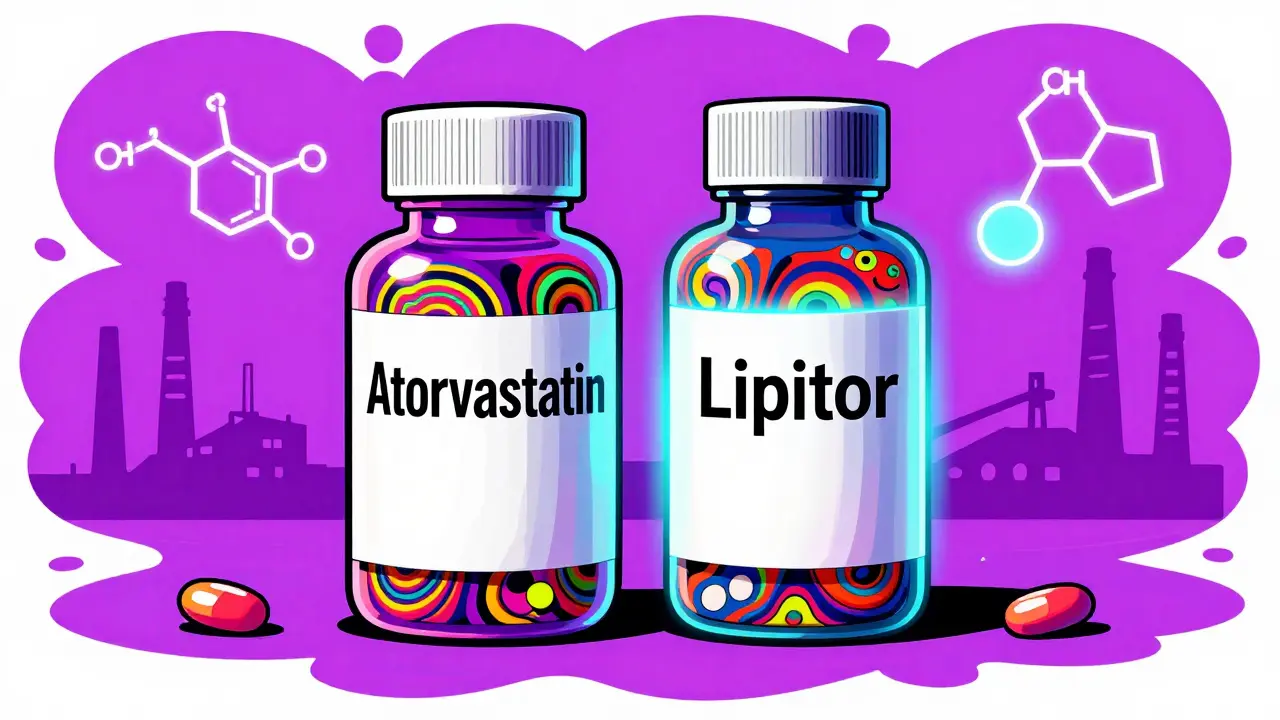
Ever picked up a prescription and noticed the pill looks different - maybe a different color or shape - but the name on the bottle is the same as your usual brand? You might think you got a cheaper version. But what if I told you that pill is exactly the same as the brand-name drug you’ve been taking? No difference in ingredients. No difference in how it works. Just a different label. That’s an authorized generic.
What Exactly Is an Authorized Generic?
An authorized generic is the exact same medication as the brand-name drug you know, made by the same company, in the same factory, with the same active and inactive ingredients. The only thing that changes is the label. No brand name. No fancy packaging. Just the drug’s chemical name on the bottle. It’s like buying the same car straight from the manufacturer, but without the logo on the hood. The FDA defines it clearly: an authorized generic is a drug approved under the original brand’s New Drug Application (NDA). That means it doesn’t go through the usual generic approval process. It doesn’t need to prove it’s bioequivalent - because it’s not a copy. It’s the real thing, just sold under a different name. You’ll find authorized generics sold by companies like Greenstone (Pfizer), Prasco (Procter & Gamble), and Patriot. These aren’t separate generic drug makers. They’re subsidiaries of the original brand companies. So when Pfizer makes an authorized version of Lipitor, it’s still Pfizer making it - just without the Lipitor name on the bottle.How Is It Different From Regular Generics?
Regular generics are made by other companies after the brand’s patent expires. They have to prove they work the same way as the brand drug. That means testing, clinical data, and FDA review. But they can use different fillers, dyes, or coatings - which is why some people say generic pills feel different or cause minor side effects. Those aren’t the active ingredients. They’re the extras. Authorized generics don’t need any of that. They’re made under the original brand’s approval. Same formula. Same factory. Same quality control. The only allowed difference? A slightly different color or marking on the pill - just so you can tell it apart from the branded version. Here’s a quick comparison:| Feature | Brand Name | Authorized Generic | Regular Generic |
|---|---|---|---|
| Manufacturer | Original brand company | Original brand company (or subsidiary) | Separate generic company |
| Active Ingredient | Identical | Identical | Identical |
| Inactive Ingredients | Original formula | Original formula | May differ |
| Approval Path | New Drug Application (NDA) | Uses brand’s NDA | Abbreviated New Drug Application (ANDA) |
| Appears in FDA Orange Book? | Yes | No | Yes |
| Price | High | Low (similar to generics) | Low |
Why Do Companies Make Authorized Generics?
It’s not about helping patients save money - though they do. It’s about staying in the game after the patent runs out. When a brand drug’s patent expires, the first generic company to file gets 180 days of exclusive rights to sell the generic version. That’s a huge financial incentive. But the brand company doesn’t want to lose all its customers. So they launch their own version - an authorized generic - and sell it at the same low price as the generic. Suddenly, the first generic company isn’t the only one on the market. Their 180-day monopoly gets split. This move is controversial. Critics say it undermines the whole point of the Hatch-Waxman Act - which was to encourage generic competition by rewarding the first challenger. When the brand company jumps in with its own generic, it can crush that first mover’s profits before they even get started. But from the brand company’s view? It’s smart business. They keep revenue flowing. They keep control over quality. And they keep patients who trust the brand from switching to an unknown generic maker.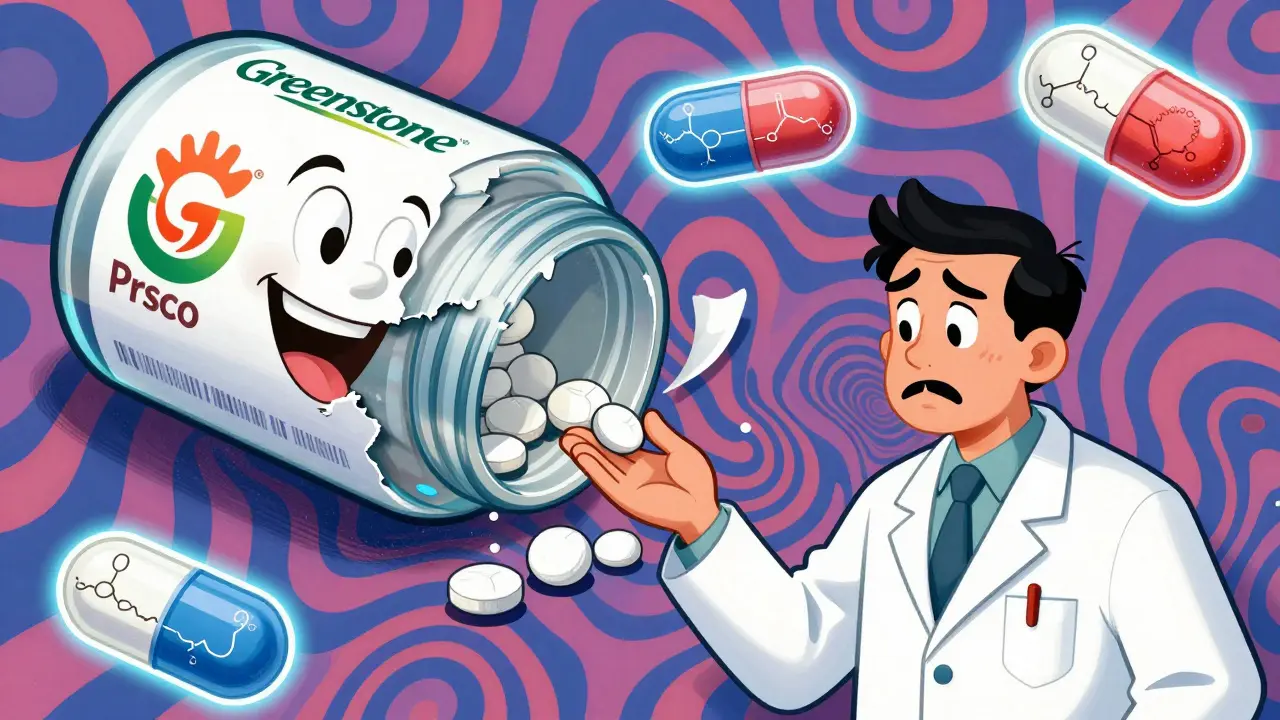
What Does This Mean for You as a Patient?
If you’re on a long-term medication - say, a blood pressure pill or a cholesterol drug - you might be getting an authorized generic right now and not even know it. The good news? You’re getting the exact same drug. No compromise in effectiveness. No hidden differences. If your brand drug worked for you, the authorized version will too. The tricky part? You might not realize it. Your pharmacist might switch you without telling you. The pill looks different. The bottle says something else. You might think it’s a mistake - or worse, a counterfeit. That’s why some patients panic when they see a new-looking pill. Always check the name on the bottle. If it’s the chemical name (like “atorvastatin”) instead of “Lipitor,” ask your pharmacist. It’s likely an authorized generic. And if you’re worried, you can ask for the brand instead. But you’ll pay more.Why Aren’t Authorized Generics Listed in the FDA’s Orange Book?
The FDA’s Orange Book is the official list of approved drugs and their therapeutic equivalents. Regular generics are in there. Brand drugs are in there. But authorized generics? Not listed. That’s because they’re not approved under a separate ANDA. They’re covered under the original NDA. So the FDA doesn’t treat them as a new drug entry. They’re just the brand drug in disguise. This creates a small headache for pharmacists. If a doctor prescribes “Lipitor,” and the pharmacy only has the authorized generic (atorvastatin), the pharmacist has to know they’re the same. But since it’s not in the Orange Book, they can’t rely on the system to auto-substitute. They have to manually verify. That’s why the FDA keeps a separate list: the List of Authorized Generic Drugs. It’s not as well-known as the Orange Book, but it’s the real source for checking if a generic version is authorized.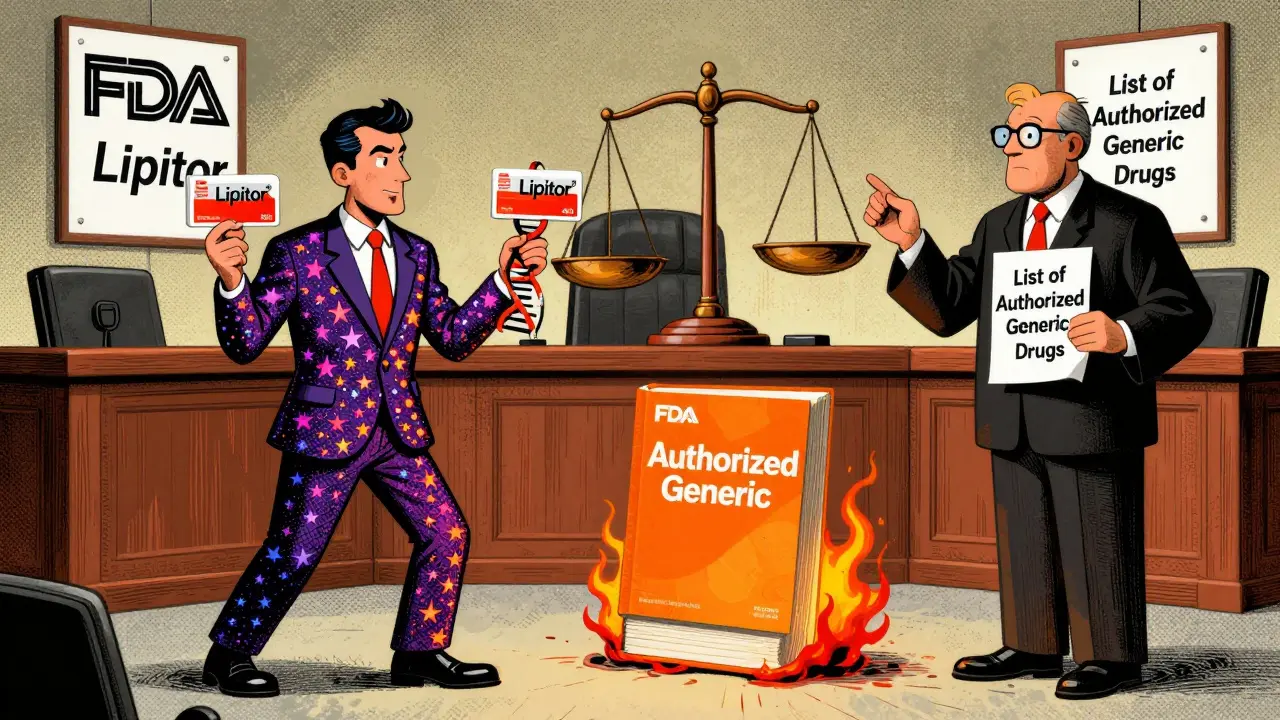
Should You Choose an Authorized Generic?
If cost matters - and it usually does - then yes. Authorized generics are priced like regular generics. Often cheaper than the brand. And because they’re identical to the brand, you’re not taking a risk. Some people swear by the brand. They say the generic makes them feel off. But if you’ve tried a regular generic and had issues, try the authorized one. It’s the same formula. No different fillers. No surprises. If you’re on a tight budget, ask your doctor or pharmacist: “Is there an authorized generic for this?” You might save 50% or more. And if you’re switching from brand to generic and you’re nervous? Call your pharmacy. Ask them to confirm it’s an authorized generic. They’ll know.What’s the Future of Authorized Generics?
More drugs are losing patents every year. Big names like Humira, Enbrel, and others are opening up to generics. And brand companies aren’t going to sit back and let someone else take their market. We’ll see more authorized generics. More subsidiaries popping up. More confusion among patients. More debates in Congress about whether this practice should be restricted. But for now? It’s legal. It’s common. And it’s a real way to get the same medicine for less. If you’re paying full price for a brand drug that has an authorized generic version - you’re overpaying. You don’t need to. You just need to ask.Are authorized generics as safe as brand-name drugs?
Yes. Authorized generics are made by the same company, in the same facility, with the exact same ingredients as the brand-name drug. The FDA considers them therapeutically equivalent because they are identical. There is no difference in safety or effectiveness.
Can I ask my pharmacist for an authorized generic?
Absolutely. You can ask your pharmacist if an authorized generic is available for your prescription. Many pharmacies stock them because they’re cost-effective and reliable. Just say: “Is there an authorized generic version of this drug?” They’ll check their inventory and the FDA’s authorized generic list.
Why does the pill look different if it’s the same drug?
The FDA allows authorized generics to have different colors, shapes, or markings - but only to distinguish them from the brand-name version. The active ingredients and how the drug works are unchanged. The difference is purely cosmetic and for regulatory clarity, not medical reasons.
Do authorized generics cost less than regular generics?
Usually not - they’re priced similarly. But because they’re made by the brand company, they sometimes come with better consistency in quality. Some patients find them more reliable than regular generics, especially if they’ve had bad experiences with fillers or coatings in other versions.
How do I know if my drug is an authorized generic?
Check the label. If the drug name is the chemical name (like “metformin”) and not a brand name (like “Glucophage”), ask your pharmacist. You can also check the FDA’s List of Authorized Generic Drugs online. If the manufacturer is a known brand subsidiary - like Greenstone or Prasco - it’s likely an authorized generic.
Aadil Munshi
December 18, 2025 AT 14:53Let me break this down like you’re five: authorized generics are the brand’s way of saying ‘we made this, you’re welcome’ while still squeezing cash out of your wallet. It’s not altruism-it’s capitalism with a smiley face. The FDA’s ‘List of Authorized Generics’? More like a hidden Easter egg only pharmacists and conspiracy theorists know about. And yes, your pill looks different because the brand doesn’t want you confused with their $200 version. Smart? Yes. Ethical? Ask your bank account.
Frank Drewery
December 20, 2025 AT 02:20This is actually really helpful info. I had no idea my blood pressure med was an authorized generic-I thought I got the cheap knockoff. Glad to know it’s the exact same stuff. Thanks for clarifying the difference between these and regular generics. Makes me feel way better about switching.
Danielle Stewart
December 21, 2025 AT 05:18As someone who’s been on the same med for 8 years, this post saved me from a panic attack when my pill changed color. I thought I’d been given the wrong prescription. Turns out, I just got the *same* drug with a new outfit. Always ask your pharmacist-they’re the unsung heroes of the healthcare system. You’re not being annoying, you’re being smart.
mary lizardo
December 22, 2025 AT 05:21It is a matter of considerable concern that the FDA permits such obfuscation under the guise of market efficiency. The deliberate omission of authorized generics from the Orange Book constitutes a systemic failure in pharmaceutical transparency. One cannot reasonably expect patients to navigate regulatory labyrinthine structures simply because corporations wish to preserve profit margins. This is not innovation; it is exploitation dressed in bureaucratic semantics.
Sajith Shams
December 22, 2025 AT 11:45You think this is bad? Wait till you find out Big Pharma is selling the same exact pill under 3 different brand names in 3 different countries with different prices. They don’t care if you know. They care if you pay. And you’re still buying it. Wake up.
Adrienne Dagg
December 23, 2025 AT 16:29OMG I JUST REALIZED MY CHOLESTEROL PILLS ARE AN AUTHORIZED GENERIC 😱 I’ve been paying $120 for Lipitor for years and now I’m like… wait, I’ve been getting the same thing for $15? I feel both ripped off and relieved. 🙌
bhushan telavane
December 24, 2025 AT 12:34In India, we call this ‘same medicine, different box’-we’ve been doing it since the 90s. Brand companies don’t own the science, they just own the marketing. If you’re getting the same chemical, why pay extra? My uncle takes the same blood pressure med as his neighbor but saves 80% because he asks for the generic. Simple.
Mahammad Muradov
December 24, 2025 AT 18:09It’s irresponsible to promote authorized generics without acknowledging the ethical breach. The Hatch-Waxman Act was designed to incentivize competition, not enable monopolistic retaliation. This is corporate sabotage disguised as consumer savings. You’re not saving money-you’re enabling a rigged system.
holly Sinclair
December 25, 2025 AT 15:11What’s fascinating here isn’t just the regulatory loophole-it’s the psychological architecture of trust. We’ve been conditioned to equate brand names with safety, even when the science says otherwise. The color change, the label shift, the absence of a logo-it triggers a cognitive dissonance that’s been engineered by decades of advertising. We don’t distrust the drug; we distrust the unfamiliar. The real innovation isn’t in the pill-it’s in the branding that makes us think we need it to be branded at all.
Emily P
December 27, 2025 AT 02:20Wait, so if it’s the same drug, why does the pharmacy sometimes refuse to substitute it without a doctor’s note? Is that because they don’t know it’s authorized? Or because they’re afraid of liability?
Jedidiah Massey
December 27, 2025 AT 17:48Authorized generics are the epitome of NDA arbitrage. The brand leverages its original regulatory capital to preempt ANDA entrants-essentially deploying a ‘me-too’ strategy within the very framework meant to disrupt monopolies. It’s a regulatory capture play disguised as consumer benefit. The Orange Book exclusion? Pure opacity engineering. You’re not getting a discount-you’re getting a controlled market experiment.
Alex Curran
December 28, 2025 AT 21:51Been using authorized generics for years and never had an issue. My doc doesn't even mention it but I always ask. Saves me a fortune. If your pill looks different but the name matches the chemical you're prescribed you're golden. No drama. Just cheaper meds. Simple as that
Edington Renwick
December 28, 2025 AT 23:45They’re lying to you. All of them. The FDA. The pharmacists. The brand companies. They want you to think it’s ‘the same’ so you’ll stop complaining about the price. But if it’s the same, why does the brand cost 10x more? Why hide it? Because they know you’ll panic. And panic means you’ll pay. Don’t be fooled.