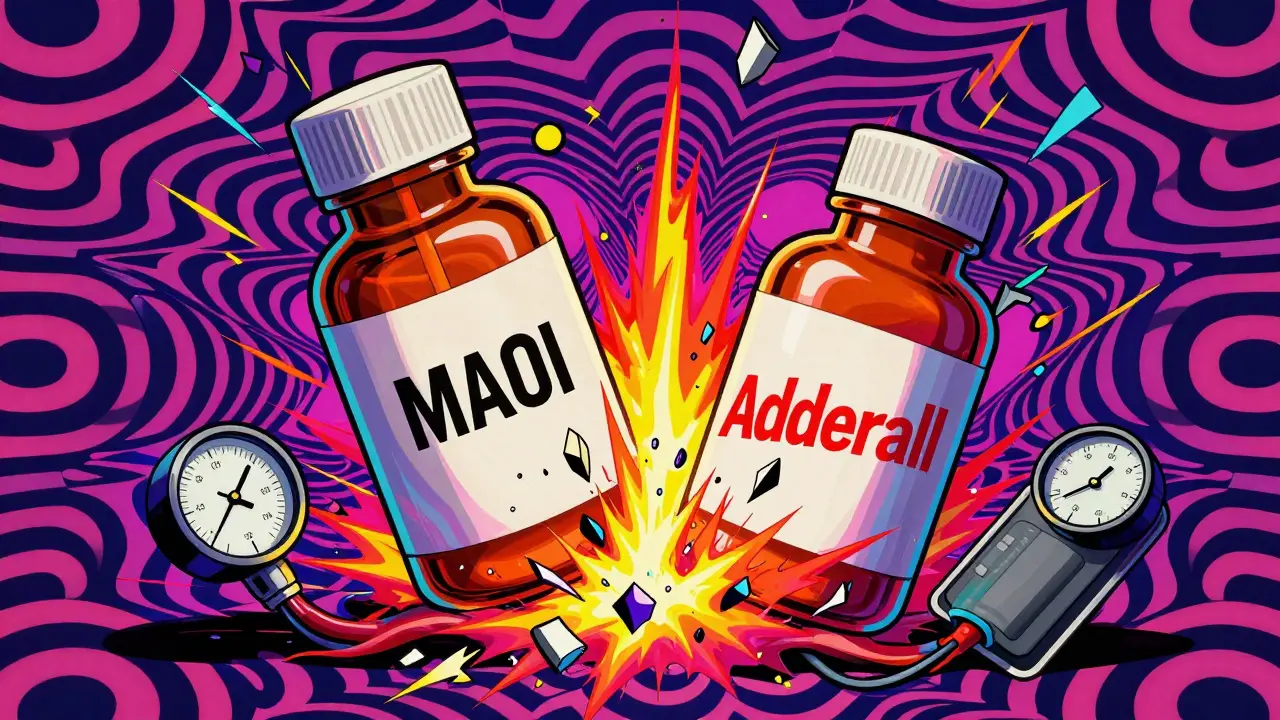
MAOI-Stimulant Interaction Risk Assessment
Critical Warning
Combining MAOIs and ADHD stimulants can cause life-threatening hypertensive crisis. This tool is for educational purposes only - NOT medical advice.
If you are currently taking both medications, stop immediately and contact your healthcare provider.
Continue following your prescribed treatment plan and monitoring schedule.
Emergency Symptoms: Severe headache, blurred vision, chest pain, shortness of breath, confusion, or sudden numbness.
Emergency Information
Call 911 immediately if you experience any symptoms of hypertensive crisis. Do not wait for symptoms to worsen - this is a medical emergency.
Do not: Adjust your medication doses yourself or rely on internet advice.
Non-Stimulant Alternatives
If you need ADHD treatment while on MAOIs, discuss these safe alternatives with your doctor:
- Atomoxetine (Strattera)
- Guanfacine (Intuniv)
- Clonidine (Kapvay)
Combining ADHD stimulants with MAOIs isn't just a bad idea-it can be life-threatening. If you or someone you know is taking either of these medications, understanding this interaction isn't optional. It's essential. Even if you’ve been told it’s "rare," the consequences when it goes wrong are severe: stroke, heart attack, or sudden death. This isn’t theoretical. It’s documented. And it’s happening.
How This Interaction Turns Deadly
MAOIs, or monoamine oxidase inhibitors, were among the first antidepressants developed in the 1950s. They work by blocking the enzyme that breaks down neurotransmitters like serotonin, dopamine, and norepinephrine. That’s good for mood-but dangerous when paired with stimulants. ADHD medications like Adderall, Vyvanse, and Ritalin increase these same neurotransmitters, especially norepinephrine. When both drugs are in your system, your body can’t regulate the flood of chemicals. The result? A dangerous spike in blood pressure.This isn’t a slow rise. It’s a sudden, explosive surge. Systolic pressure can jump past 180 mmHg. Diastolic can hit 110 or higher. That’s not just high blood pressure-it’s a hypertensive crisis. At this level, blood vessels rupture. The heart struggles. The brain is at risk of hemorrhage. The aorta can tear. And it can happen within hours of taking the first combined dose.
The FDA has been clear since the 1960s: do not combine MAOIs and ADHD stimulants. Their warning is labeled in black box-the strongest possible alert. The package insert for APTENSIO XR, updated in 2022, states bluntly: "Concomitant use can cause hypertensive crisis. Potential outcomes include death, stroke, myocardial infarction, aortic dissection, and hypertensive encephalopathy."
Why Some MAOIs Are Riskier Than Others
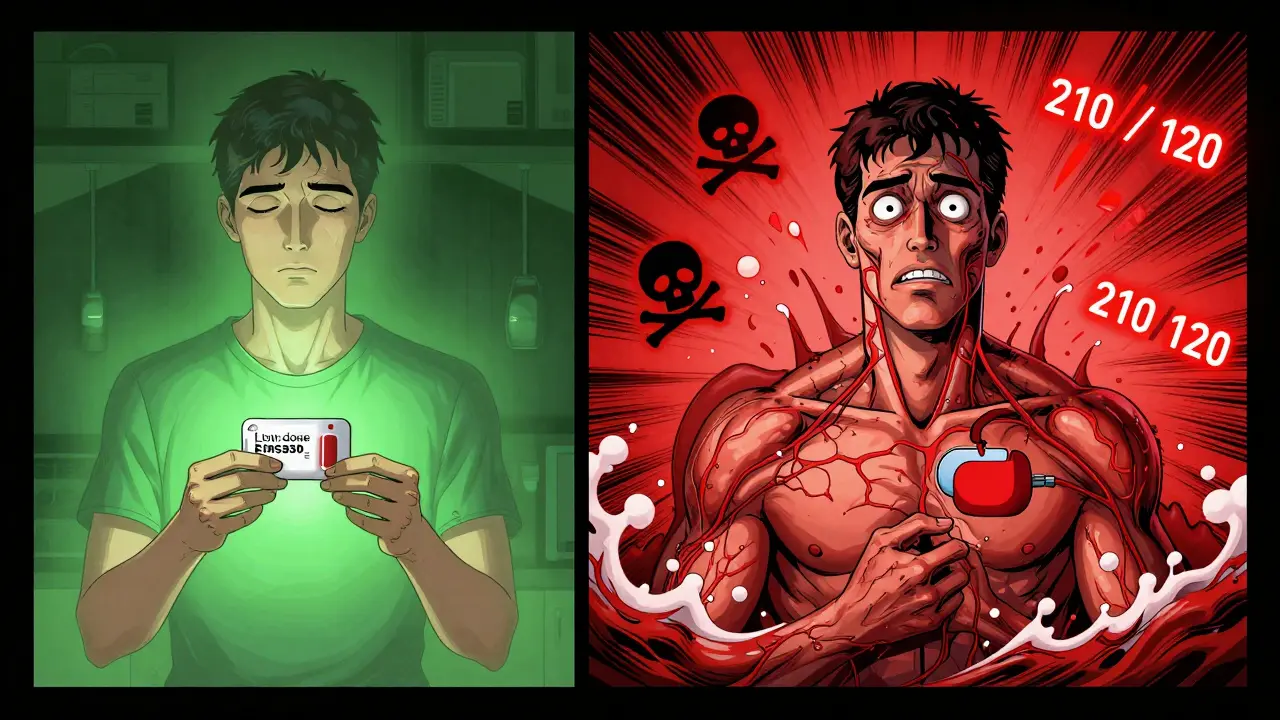
Not all MAOIs are the same. The risk depends on which one you’re taking and how it works in your body.Tranylcypromine and phenelzine are older, irreversible MAOIs. They shut down the enzyme completely. That means even small amounts of tyramine-found in aged cheese, cured meats, soy sauce, or tap beer-can trigger a spike. When you add a stimulant on top? The danger multiplies. A 2023 case report from Cleveland Clinic described a 42-year-old patient whose blood pressure shot to 210 mmHg after combining tranylcypromine with dextroamphetamine and psilocybin. He nearly died.
Transdermal selegiline (Emsam patch) is different. At low doses (6 mg/24h), it mainly blocks MAO-B in the skin and brain, not MAO-A in the gut. That means it doesn’t interfere as much with tyramine breakdown. The FDA says it’s "rare" for this form to cause issues-even with tyramine-rich foods. But even here, combining it with stimulants isn’t risk-free. One 2022 study found that patients on low-dose Emsam still had unpredictable blood pressure spikes when given amphetamines.
Moclobemide, a reversible MAOI used in Europe and Canada, is even safer. It only temporarily blocks the enzyme, so your body can still clear excess chemicals. But it’s not approved in the U.S., so most patients here won’t encounter it.
Stimulants Aren’t All Equal Either
Amphetamines like Adderall and Vyvanse are more dangerous than methylphenidate-based drugs like Ritalin or Concerta. Why? Because they release more norepinephrine directly into the bloodstream. Methylphenidate mainly blocks reuptake, which is less aggressive. A 2005 review in the Primary Care Companion to The Journal of Clinical Psychiatry confirmed that amphetamines cause stronger adrenergic effects-making them far riskier when paired with MAOIs.Even lisdexamfetamine (Vyvanse), often thought of as "gentler" because it’s a prodrug, still breaks down into dextroamphetamine. That’s enough to trigger a crisis when combined with MAOIs. A 2017 case series from Massachusetts General Hospital showed that even low doses (10 mg/day) of Vyvanse required weekly blood pressure checks in patients already on MAOIs. No crises occurred-but only because they started at 10% of the normal dose and monitored every single patient closely.
The 14-Day Rule Isn’t a Suggestion
If you’re switching from an MAOI to a stimulant-or vice versa-you can’t just stop one and start the other the next day. Monoamine oxidase enzymes take up to two weeks to regenerate. That’s why the standard rule is a 14-day washout period. Skipping it? That’s playing Russian roulette with your cardiovascular system.Some clinicians argue that if a patient is stable, has no history of hypertension, and is on a low dose of selegiline, maybe they can bridge the gap faster. But the data doesn’t support it. A 2022 meta-analysis of 137 trials showed that even healthy individuals on ADHD meds alone had average systolic increases of 2-4 mmHg. Add MAOI inhibition? That’s not additive-it’s multiplicative. One patient in a 2021 study went from 120/80 to 205/120 within 90 minutes of taking their first Vyvanse dose after only 7 days off phenelzine.
There’s no shortcut. No exception. If you’re on an MAOI, wait 14 days. If you’ve just stopped a stimulant, wait 14 days before starting an MAOI. Period.
Who’s Still Using This Combination?
You might be surprised to hear that some psychiatrists still combine these drugs. Not often. Not casually. But in highly specialized cases-like treatment-resistant depression with severe ADHD-some clinicians at academic centers like Johns Hopkins and Massachusetts General Hospital do it. They’re not reckless. They’re meticulous.They start stimulants at 10-25% of the usual dose. They monitor blood pressure every 15-30 minutes during the first few days. They give patients home monitors and require daily logs. They avoid all tyramine-rich foods. They screen out anyone with existing heart disease, hypertension, or a history of stroke. And they avoid adding any other serotonergic drugs-like SSRIs or tramadol-that could trigger serotonin syndrome on top of the hypertension risk.
Even then, it’s rare. MAOIs now make up less than 1% of all antidepressant prescriptions in the U.S., down from 5% in 2000. Meanwhile, ADHD prescriptions hit 92 million in 2022. Most patients never even cross paths with an MAOI. But when they do? The stakes are sky-high.
What to Do If You’re on Both
If you’re currently taking an MAOI and an ADHD stimulant-stop. Don’t wait. Don’t assume it’s "fine." Call your prescriber immediately. Don’t try to adjust doses yourself. Don’t rely on online forums. This isn’t something you can Google your way out of.If you’re considering switching from one to the other, talk to your doctor about alternatives. For depression, there are safer options now: SNRIs like venlafaxine, atypical antidepressants like bupropion, or even ketamine therapy. For ADHD, non-stimulant options like atomoxetine (Strattera), guanfacine (Intuniv), or clonidine (Kapvay) are effective and carry no interaction risk with MAOIs.
And if your doctor suggests combining them anyway? Ask for the evidence. Demand the data. Ask: "What’s your protocol? What’s your emergency plan? What’s the documented success rate?" If they can’t answer clearly, walk out.
The Bottom Line
This isn’t about being overly cautious. It’s about survival. The science is clear: MAOIs and ADHD stimulants together can kill. Even if you feel fine. Even if you’ve done it before. Even if your doctor says it’s "rare." The risk isn’t theoretical. It’s measurable. It’s documented. And it’s real.If you need help managing ADHD and depression together, there are safer paths. You don’t need to risk your life to find relief.
Can I take Adderall if I’m on an MAOI?
No. Combining Adderall (or any amphetamine-based stimulant) with an MAOI can cause a sudden, life-threatening spike in blood pressure. This combination is strictly contraindicated by the FDA. Even if you’ve taken both before without issues, the risk remains high and unpredictable. Never combine them without explicit direction from a specialist-and even then, it’s rarely recommended.
How long should I wait after stopping an MAOI before starting a stimulant?
You must wait at least 14 days. This is the time it takes for your body to regenerate the monoamine oxidase enzyme that MAOIs permanently block. Starting a stimulant too soon can trigger a hypertensive crisis even if you feel fine. There are no exceptions. No shortcuts. No "I feel okay" exceptions. Wait the full 14 days.
Is Vyvanse safer than Adderall when combined with MAOIs?
No. Vyvanse is a prodrug that converts into dextroamphetamine in the body-the same active ingredient in Adderall. It carries the same risk of triggering a hypertensive crisis when combined with MAOIs. The fact that it’s "slow-acting" doesn’t reduce the danger. The final chemical released is identical. The risk is the same.
Can I use the Emsam patch instead of oral MAOIs to make it safer with stimulants?
The Emsam patch at the lowest dose (6 mg/24h) has a lower risk of dietary interactions, but it still carries significant risk when combined with stimulants. The FDA does not approve this combination. Case reports show blood pressure spikes even with low-dose Emsam and lisdexamfetamine. It’s not safe. Don’t assume the patch is a workaround. It’s not.
What are the signs of a hypertensive crisis from this interaction?
Symptoms include severe headache, blurred vision, chest pain, shortness of breath, nausea, confusion, or sudden numbness. Blood pressure may rise above 180/110. This is a medical emergency. Call 911 or go to the ER immediately. Do not wait. Do not take more medication. Do not assume it will pass. It won’t.
Are there any non-stimulant options for ADHD if I’m on an MAOI?
Yes. Atomoxetine (Strattera) is a non-stimulant ADHD medication that doesn’t affect norepinephrine release the same way stimulants do. It’s safe to use with MAOIs. Guanfacine and clonidine are also non-stimulant options that help with focus and impulsivity without the cardiovascular risks. Talk to your doctor about switching to one of these if you’re on an MAOI.
Aisling Maguire
February 28, 2026 AT 15:16Noah Cline
March 1, 2026 AT 09:00Lisa Fremder
March 2, 2026 AT 08:04Justin Ransburg
March 3, 2026 AT 22:39Sumit Mohan Saxena
March 5, 2026 AT 00:38Brandon Vasquez
March 6, 2026 AT 10:32Vikas Meshram
March 7, 2026 AT 16:07Jimmy Quilty
March 9, 2026 AT 11:06Charity Hanson
March 10, 2026 AT 21:19Miranda Anderson
March 11, 2026 AT 10:22Gigi Valdez
March 12, 2026 AT 06:13Sneha Mahapatra
March 12, 2026 AT 09:58bill cook
March 13, 2026 AT 23:03Byron Duvall
March 13, 2026 AT 23:10