Medication Risk Calculator for Acute Interstitial Nephritis
Understand Your Risk
Acute interstitial nephritis (AIN) is a preventable cause of sudden kidney injury triggered by medications. This tool helps you assess your risk based on medications you're taking and other factors.
Important: This tool is for educational purposes only. Always consult your healthcare provider for medical advice and diagnosis.
Your Risk Assessment
Recommendations
When your kidneys start to fail, you don’t always feel it coming. Unlike a stomach bug or a headache, kidney problems often creep up silently-until you can’t pee properly, your legs swell, or your energy vanishes. One of the most preventable but frequently missed causes of sudden kidney injury is acute interstitial nephritis (AIN), especially when it’s triggered by common medications. It’s not rare. In fact, it’s now the second most common cause of drug-related kidney damage in older adults, and it’s rising fast.
What Exactly Is Acute Interstitial Nephritis?
Acute interstitial nephritis means inflammation in the spaces between the kidney’s tubules-the tiny structures that filter waste and balance fluids. When these areas swell, the kidneys can’t work right. Blood tests show rising creatinine levels, urine output drops, and toxins build up. The worst part? Many people don’t realize their meds are the cause until it’s too late.
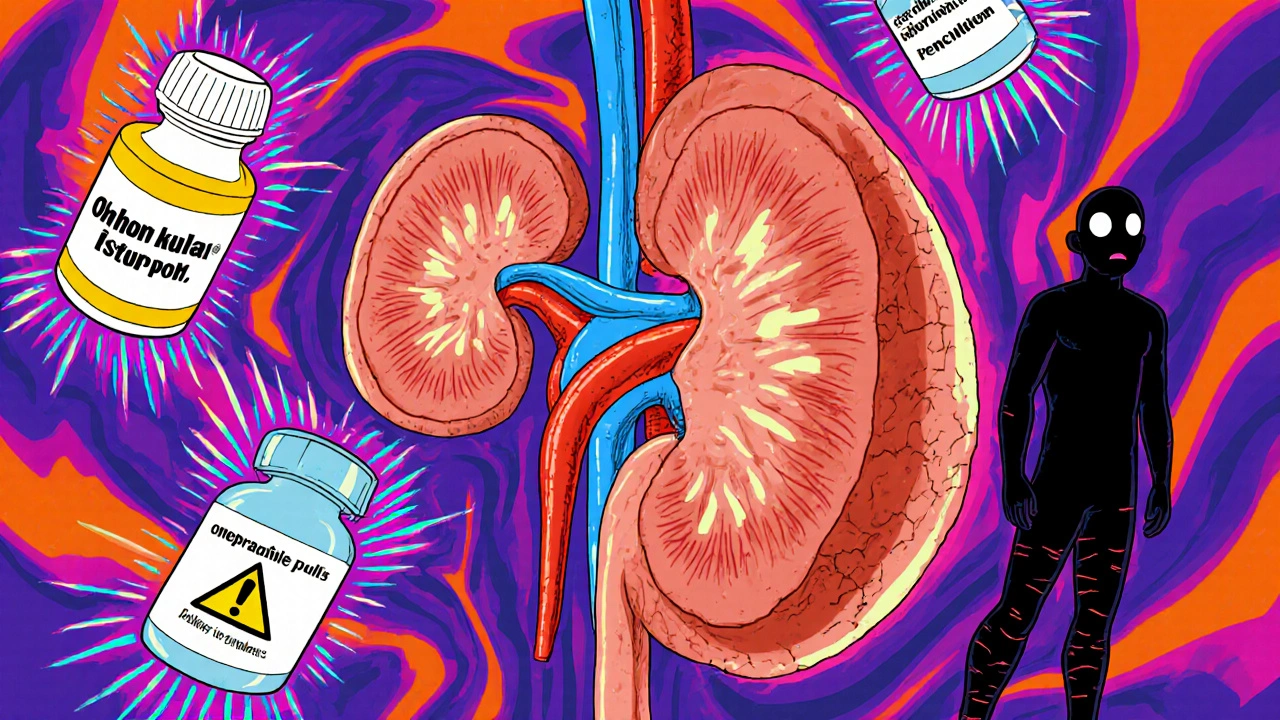
It’s not just antibiotics. Over 250 medications have been linked to AIN. The top offenders? Proton pump inhibitors (PPIs) like omeprazole, NSAIDs like ibuprofen, and certain antibiotics like penicillin and ciprofloxacin. Even over-the-counter painkillers taken daily for arthritis or back pain can trigger it. And here’s the kicker: symptoms often show up weeks or months after you started the drug. You think it’s just aging, or maybe a urinary infection. It’s not.
Signs You Might Be Developing Kidney Inflammation
There’s no single symptom that screams "AIN." That’s why so many cases go undiagnosed. But if you’ve recently started a new medication and notice any of these, don’t brush them off:
- Less urine than usual-or no urine at all
- Fever without a clear cause
- Rash or skin itching, especially on arms or torso
- Swelling in ankles, feet, or hands
- Unexplained fatigue or nausea
- Flank pain (dull ache just below the ribs on either side)
Here’s what’s misleading: the classic "hypersensitivity triad"-rash, fever, and high eosinophils in blood-only shows up in fewer than 10% of cases. Most people get just one or two of these signs. One patient I read about took omeprazole for heartburn for three months, then woke up with a rash and couldn’t pee. Her doctor thought it was a UTI. It wasn’t. By the time she saw a nephrologist, her kidney function had dropped to 30%.
Which Medications Are Most Likely to Cause It?
Not all drugs carry the same risk. Here’s what the data shows:
| Drug Class | Percentage of AIN Cases | Typical Onset Time | Key Risk Factors |
|---|---|---|---|
| Antibiotics (penicillins, fluoroquinolones) | 35-40% | 1-2 weeks | Younger patients, recent infection |
| Proton Pump Inhibitors (omeprazole, pantoprazole) | 20-25% | 10-12 weeks | Over 65, long-term use |
| NSAIDs (ibuprofen, naproxen) | 15-20% | 3-6 months | Chronic pain, dehydration, over 50 |
| Immune Checkpoint Inhibitors (cancer drugs) | 5-10% | Weeks to months | Cancer patients on immunotherapy |
NSAIDs are especially tricky. They don’t just cause mild kidney stress-they can trigger nephrotic-range proteinuria, meaning you’re losing more than 3 grams of protein in your urine daily. That’s a red flag for serious damage. PPIs, meanwhile, are the fastest-growing cause. Their use in people over 65 has jumped from 28% in 2010 to nearly 40% today. And most people don’t realize they’re taking them long-term-often prescribed for "just a few weeks," then continued for years.
Why Diagnosis Is So Often Delayed
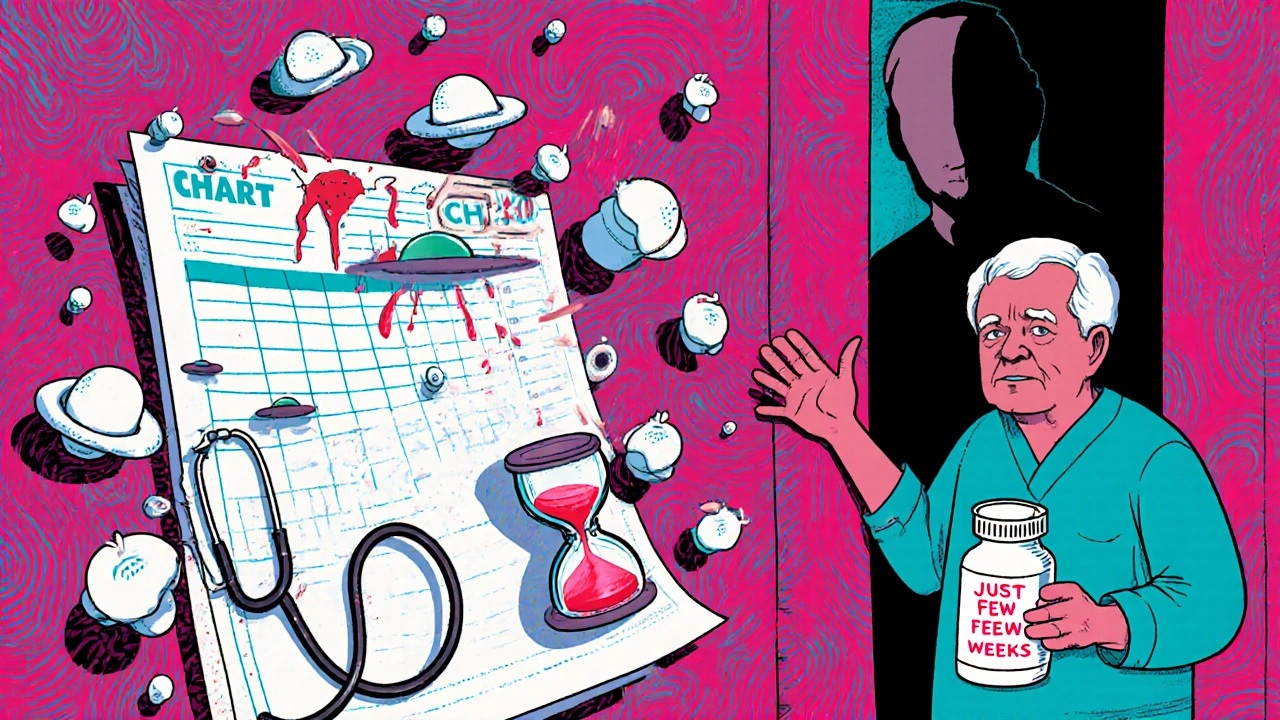
Doctors aren’t ignoring you. They’re just not looking for AIN. In one study, 65% of patients with biopsy-proven AIN were first diagnosed with a urinary tract infection or "dehydration." Another 20% were told their kidneys were "just tired" from age.
Here’s why it’s missed:
- Urine tests often show sterile pyuria (white blood cells without infection), which looks like a UTI-but antibiotics don’t help.
- Doctors rarely check for eosinophils in urine, even though it’s present in 30-70% of cases.
- Medication history is incomplete. Patients forget to mention OTC drugs, herbal supplements, or even occasional painkillers.
One patient on a health forum wrote: "I told my doctor I was on Prilosec, but I didn’t think it mattered. He didn’t ask how long I’d been taking it. By the time they tested me, I’d lost 40% of my kidney function."
The key? If you have unexplained acute kidney injury and you’ve started a new medication in the last three months-AIN should be on the list. No waiting. No "watch and see."
What Happens If It’s Not Treated
Early intervention can reverse most cases. But delay? That’s where permanent damage starts.
Studies show that 15-25% of untreated AIN cases progress to chronic kidney disease. For older adults or those with other health problems, the risk is even higher. One 2022 study found that patients over 65 had only a 50% chance of full recovery-even after stopping the drug-compared to 85% in younger patients.
And recovery isn’t instant. Even with prompt action, it takes weeks to months for kidney function to bounce back. Some people never fully recover. One nurse practitioner shared on Reddit: "I’ve seen five cases from antibiotics. Three had permanent damage. One needed dialysis for six months."
The goal isn’t just to fix the kidneys-it’s to prevent them from failing long-term. That’s why timing matters more than almost anything.
How It’s Diagnosed and Treated
There’s no blood test that confirms AIN. The only sure way is a kidney biopsy-where a tiny sample of kidney tissue is examined under a microscope. But you don’t need to wait for a biopsy to act.
Here’s the clinical pathway:
- Stop the suspected drug immediately. Don’t wait for test results.
- Get a urinalysis within 24 hours. Look for white blood cells, eosinophils, or protein.
- If suspicion remains high, get a biopsy within 72 hours. The best window is 3-7 days after symptoms start.
- See a nephrologist within 48 hours. This isn’t optional. Primary care doctors aren’t trained to manage this.
Treatment? First, stop the drug. That’s 80% of the battle.
Corticosteroids like prednisone are used in about half of cases-but only if kidney function hasn’t improved after 3-7 days of stopping the drug. There’s no consensus. Some nephrologists use steroids aggressively. Others wait. The European guidelines say yes if creatinine is still high after a week. The American guidelines say only if it’s above 3.0 mg/dL.
There’s no magic pill. But stopping the drug early gives you the best shot.
Who’s at Highest Risk?
You’re not equally at risk for AIN. Certain factors make it far more likely:
- Age over 65: 65% of cases happen here, even though this group is only 16% of the population.
- Taking five or more medications: That increases your risk nearly fivefold.
- Women: 1.8 times more likely than men to develop drug-induced AIN.
- Chronic NSAID or PPI use: Daily painkillers or heartburn meds for over 3 months.
- Recent hospitalization: Especially if you were given IV antibiotics or contrast dye.
And here’s something new: genetic risk. A 2023 study found that people with the HLA-DRB1*03:01 gene variant are over four times more likely to develop AIN from PPIs. It’s not tested routinely yet-but if you’ve had AIN before, you should ask about it.
What You Can Do Right Now
You don’t need to wait for symptoms to get worse. Here’s your action plan:
- Make a list of every medication you take-including vitamins, supplements, and OTC drugs.
- Check how long you’ve been on each one. If it’s been more than 3 months, ask your doctor if you still need it.
- Ask: "Could any of these cause kidney inflammation?" Don’t let them dismiss it.
- If you’re on PPIs for heartburn, ask if you can try stopping them for 4 weeks. Many people don’t need them long-term.
- If you’re on NSAIDs daily for pain, talk about alternatives like physical therapy or acetaminophen (in safe doses).
- Get a basic kidney panel (creatinine, eGFR) once a year if you’re over 50 and on chronic meds.
The biggest mistake? Thinking "I’m fine because I don’t feel sick." Kidneys don’t hurt until they’re failing. By then, it’s often too late to undo the damage.
The Bottom Line
Acute interstitial nephritis isn’t rare. It’s not mysterious. It’s preventable. And it’s being missed every day because we assume kidney problems only happen to people with diabetes or high blood pressure.
But if you’re taking common meds-especially PPIs, NSAIDs, or antibiotics-and you notice changes in your body, don’t wait. Talk to your doctor. Get your urine checked. Ask about a biopsy if things don’t improve.
Most people who catch AIN early recover well. But the ones who don’t? They live with reduced kidney function for the rest of their lives. That’s not just a medical outcome. It’s a lifestyle change. More doctor visits. More restrictions. More fear.
Don’t let a pill you took for heartburn or arthritis steal your kidney health. Know the signs. Speak up. Act fast.
Sherri Naslund
November 19, 2025 AT 08:02Ashley Miller
November 20, 2025 AT 18:05Martin Rodrigue
November 21, 2025 AT 06:29Herbert Scheffknecht
November 21, 2025 AT 07:30Jessica Engelhardt
November 22, 2025 AT 17:34Greg Knight
November 23, 2025 AT 20:25rachna jafri
November 24, 2025 AT 06:21darnell hunter
November 25, 2025 AT 07:43Hannah Machiorlete
November 27, 2025 AT 02:38Bette Rivas
November 28, 2025 AT 21:48prasad gali
November 29, 2025 AT 20:27